DrillPre-K to KGrades 1 to 2Grades 3 to 4
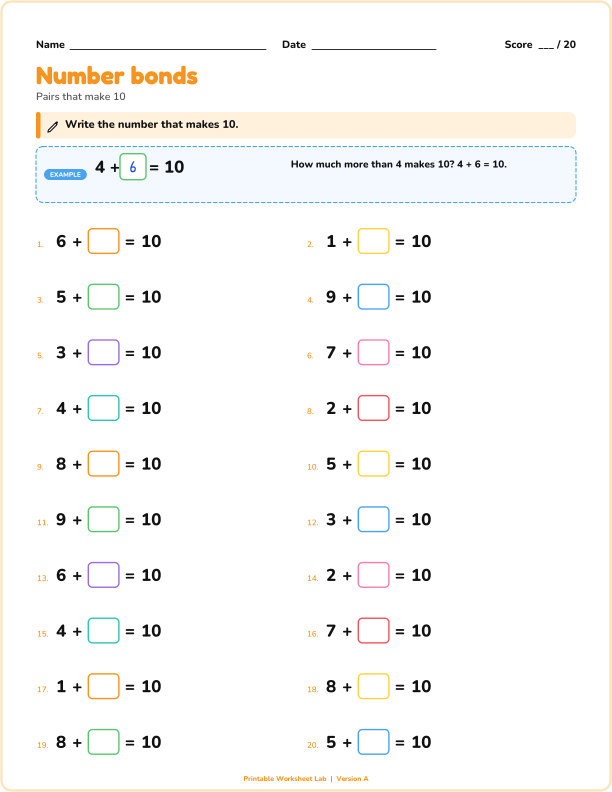
Number bonds and complements
Pairs that make 10, 20, 100 or 1000 (and the 9s, 99s and 999s), as missing-number sums or as subtraction.
Tenths, hundredths and thousandths: the value of a digit, the digit in a place, and expanded form both ways.
Decimals follow the same place-value rules as whole numbers, continued to the right of the decimal point. Pick one skill or mix all four: write the value of a circled digit (the 4 in 0.346 is worth 0.04), name the digit in a place such as the hundredths place, add up an expanded form, or break a decimal into its parts.
Choose the digits before the point (1 to 4) and after it (1 to 3). A decimal never ends in a zero here, so every digit after the point counts. Every sheet has a solved example and an answer key, and there is a large-print version.
US Letter or A4, portrait: choose your paper size above. Print at 100 percent (actual size). Use "Black and white" for the copier, or "Color" for display pages and mini books.
Ready-made settings for common topics.
Pairs that make 10, 20, 100 or 1000 (and the 9s, 99s and 999s), as missing-number sums or as subtraction.
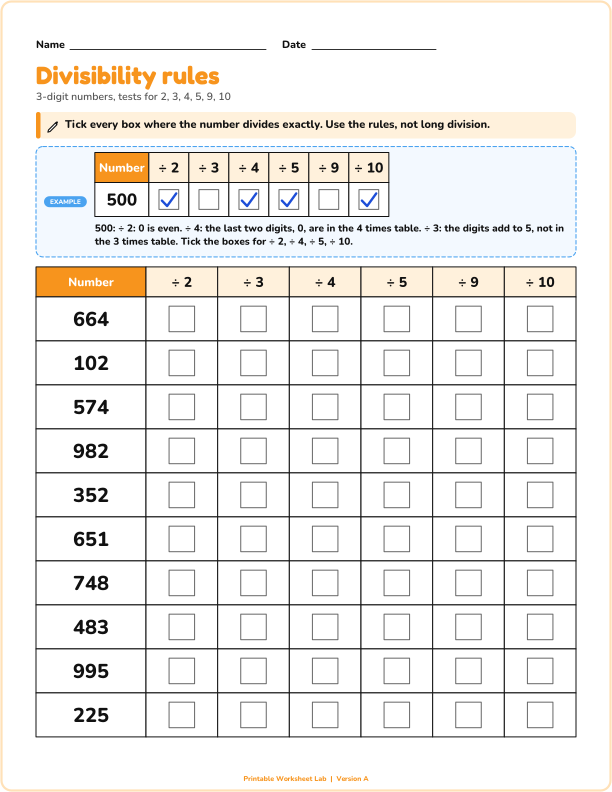
Tick the boxes for every number a given number divides by, using the rules for 2, 3, 4, 5, 6, 8, 9 and 10.
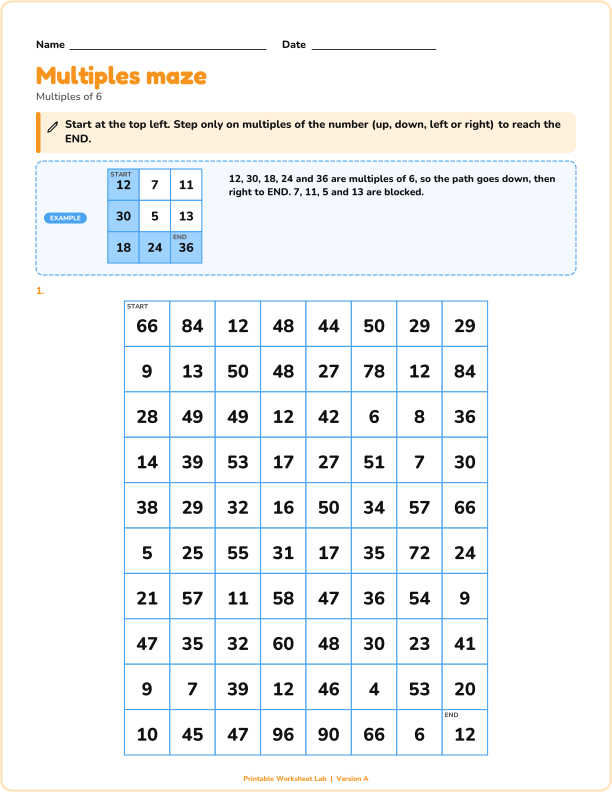
Mazes where you may only step on multiples of a chosen number. One route, no guessing.