DrillGrades 1 to 2Grades 3 to 4
Addition worksheets
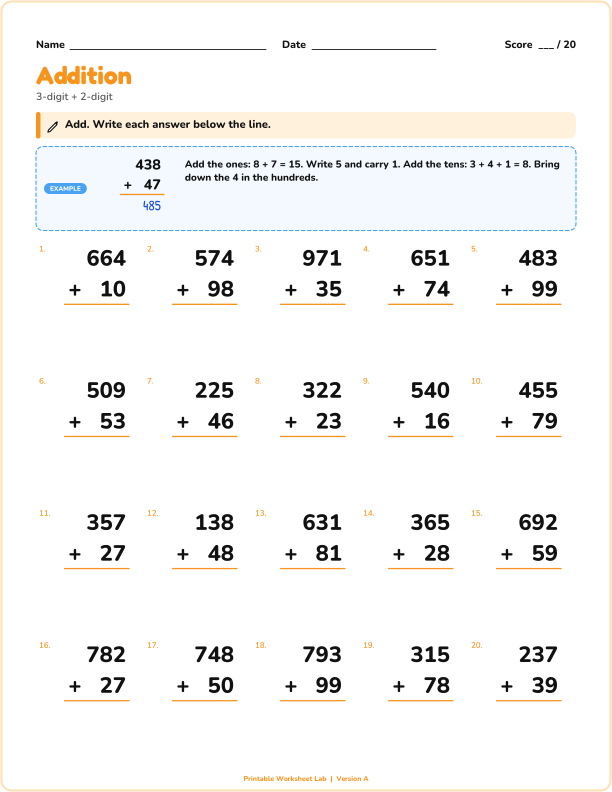
Printable addition practice with control over digits, regrouping and layout.
Printable worksheets for grades 1 and 2. Every worksheet has an answer key and comes in color and black and white.
Printable addition practice with control over digits, regrouping and layout.
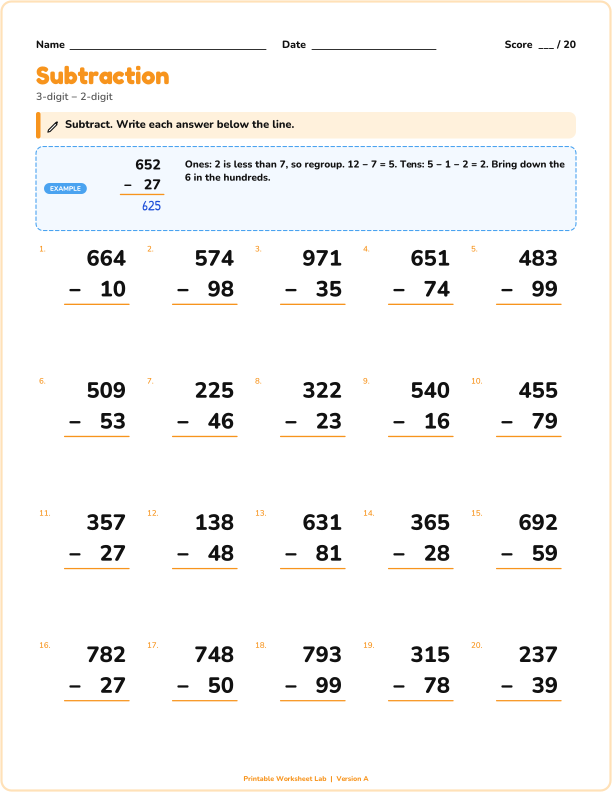
Printable subtraction practice with control over digits, borrowing and layout.
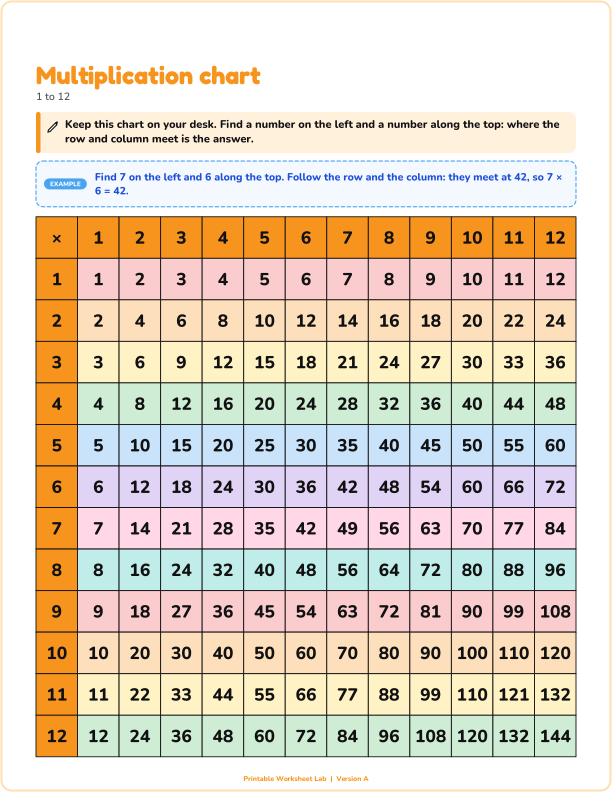
A printable times-table chart in color-coded rows, Montessori bead colors or plain, up to 12 × 12.
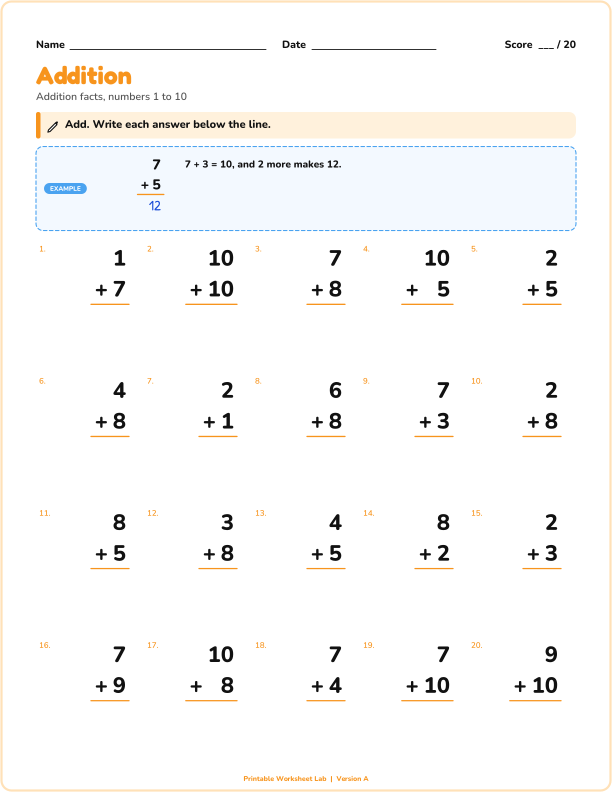
Practice one number at a time (+7, +8), doubles, near doubles, or all the facts, with the sums kept as small as you like.
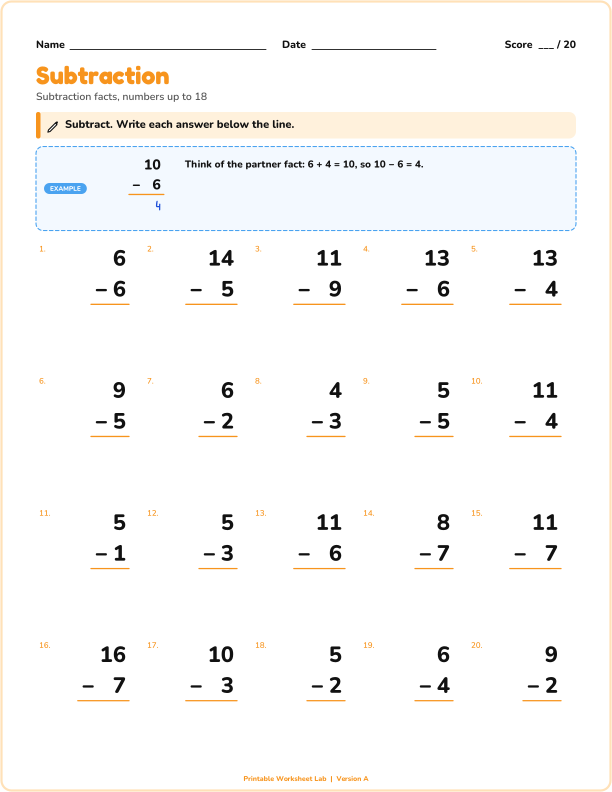
Practice taking away one number at a time, or all the facts, with answers from 0 to 9 so each fact has a partner addition fact.
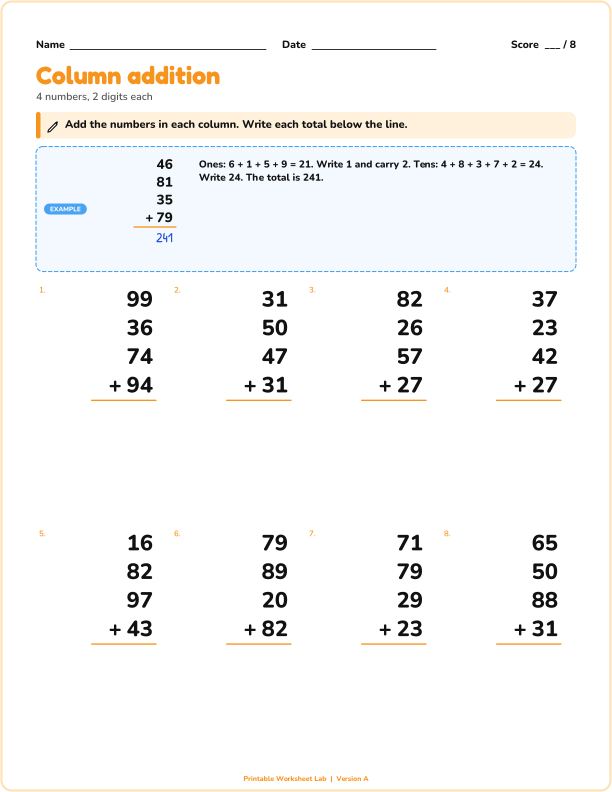
Add three to six numbers stacked in a column, with one to five digits each.
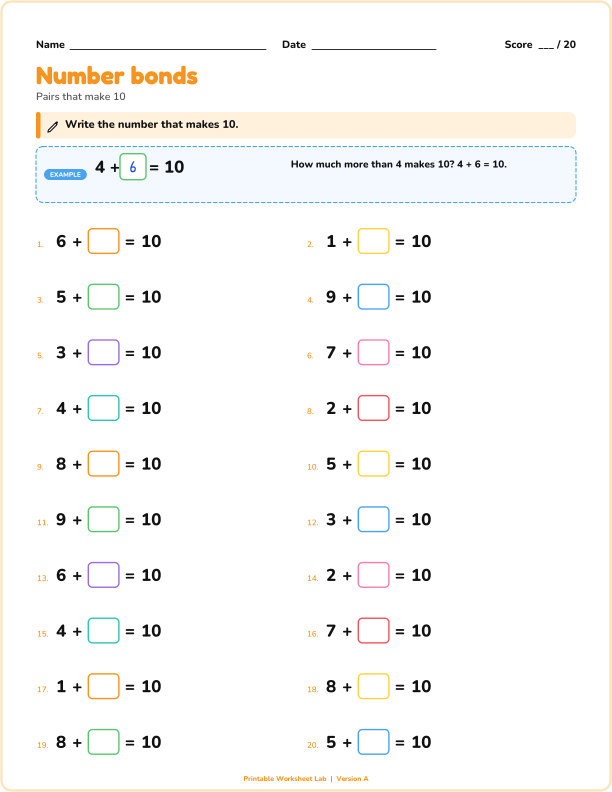
Pairs that make 10, 20, 100 or 1000 (and the 9s, 99s and 999s), as missing-number sums or as subtraction.
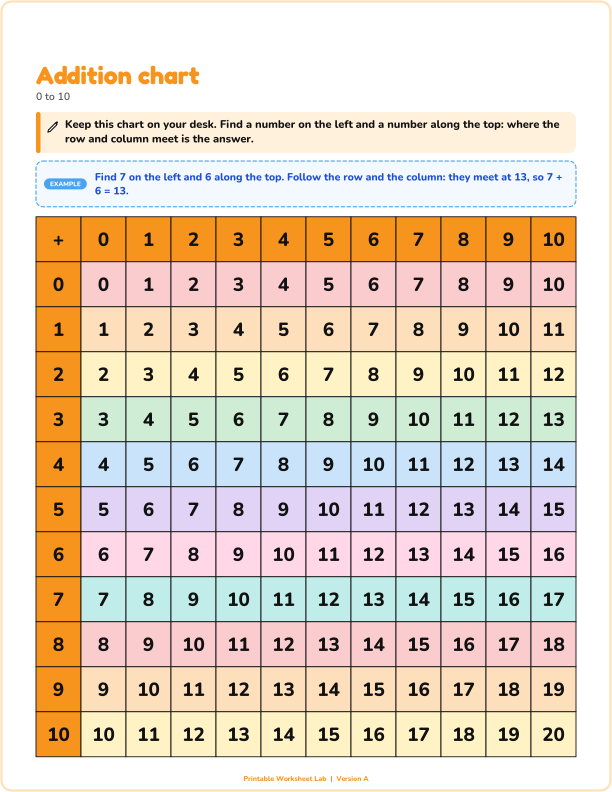
A printable addition chart up to 20 + 20, in color-coded rows or plain.
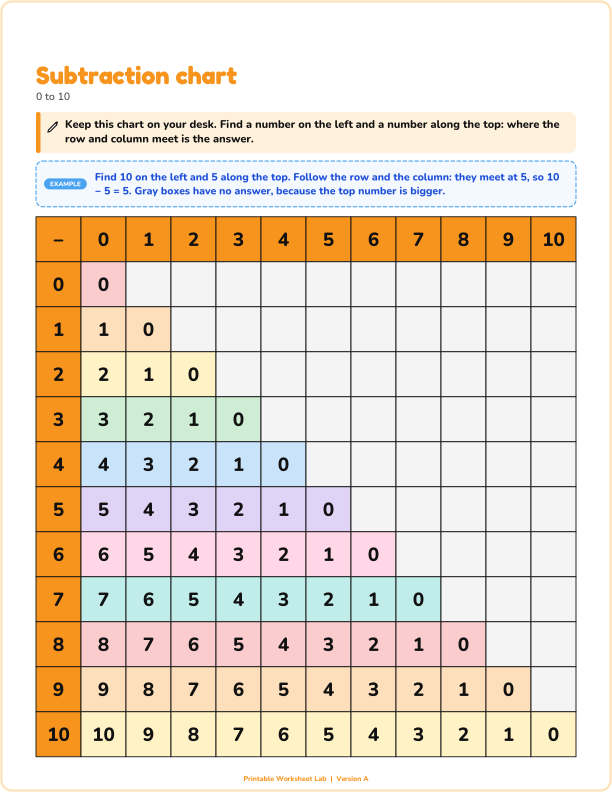
A printable subtraction chart (row minus column) up to 20, with the impossible boxes grayed out.
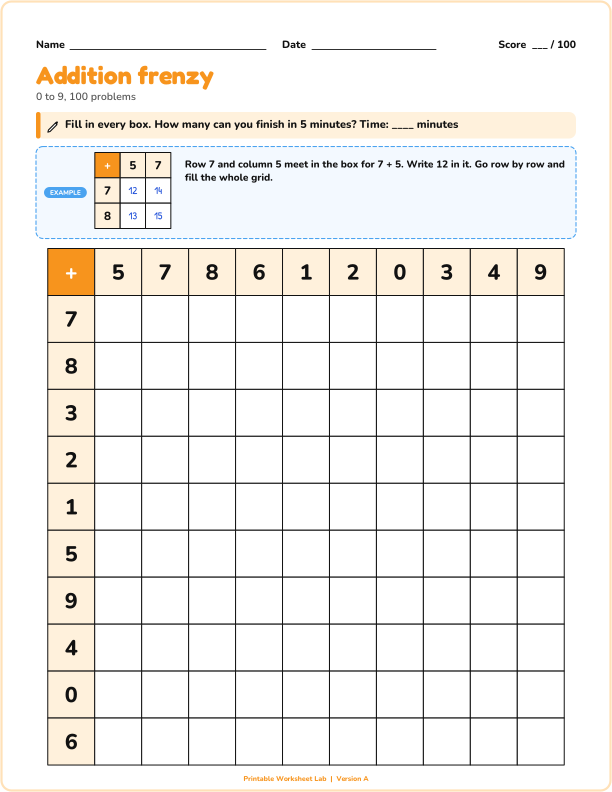
A timed addition grid: fill in all 100 sums. Headers are shuffled so every version is different.
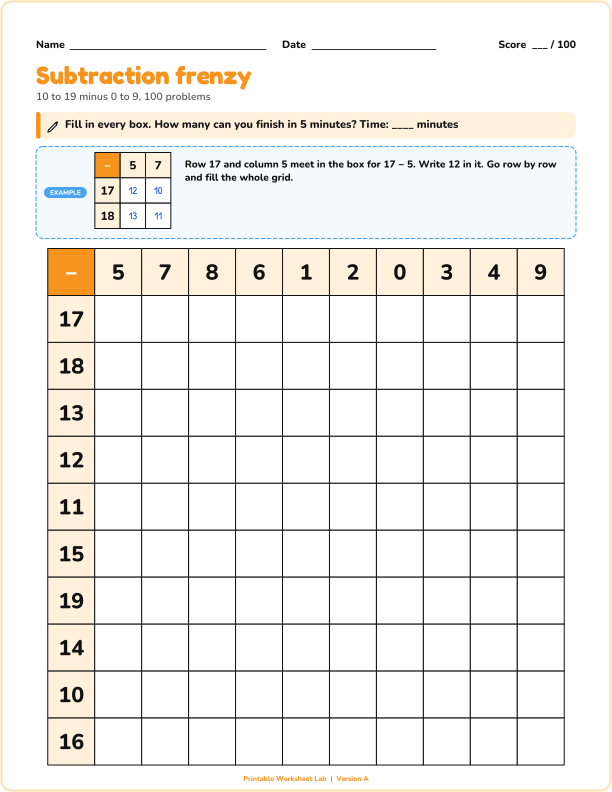
A timed subtraction grid: fill in all 100 differences. Headers are shuffled so every version is different.
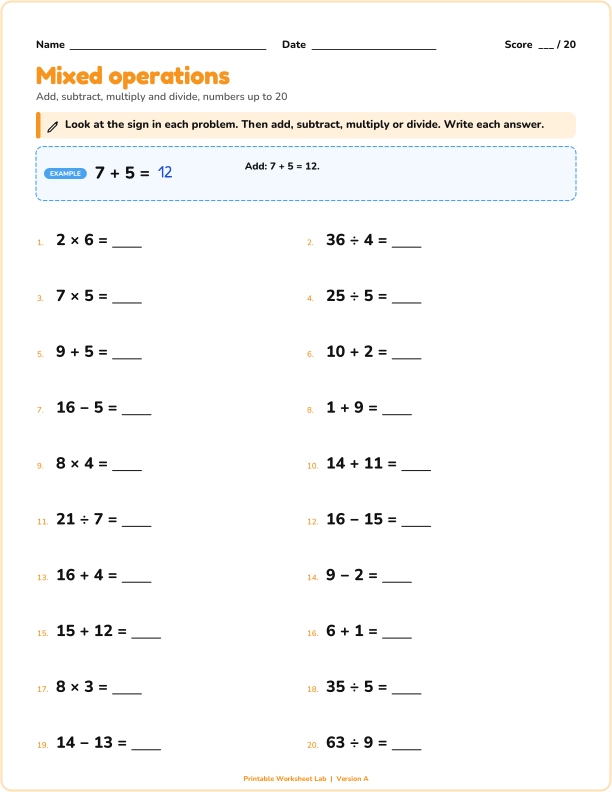
Addition, subtraction, multiplication and division on the same page: read the sign, then work the problem.
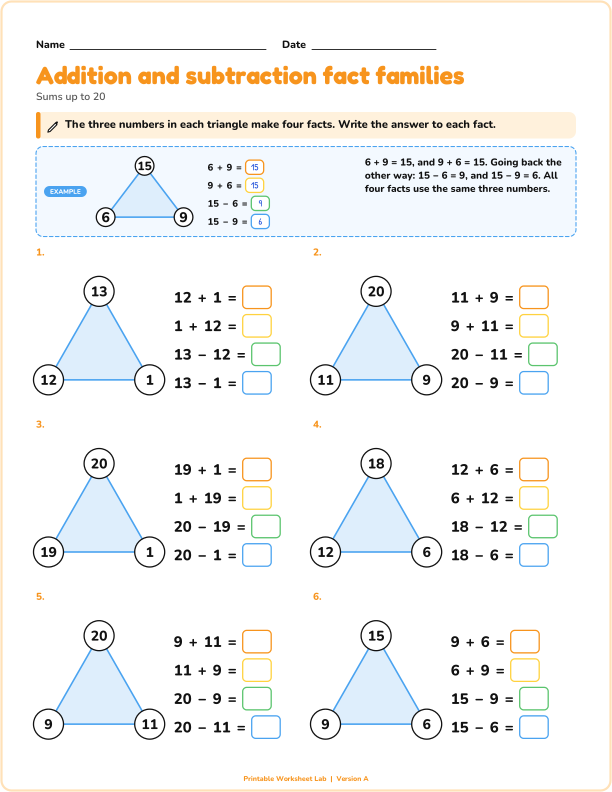
Three numbers in a triangle make four facts: two to add or multiply and two to subtract or divide.
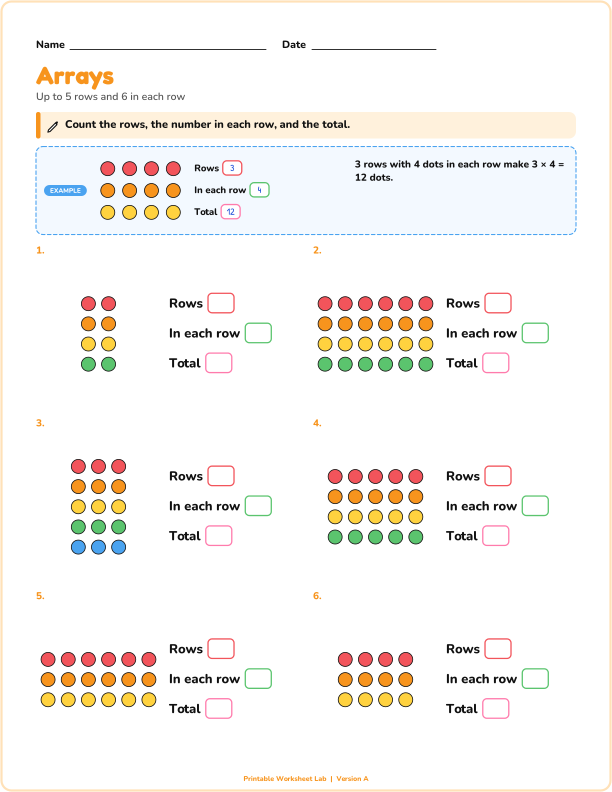
Count rows and columns of dots, or equal groups, and write the multiplication sentence that matches.
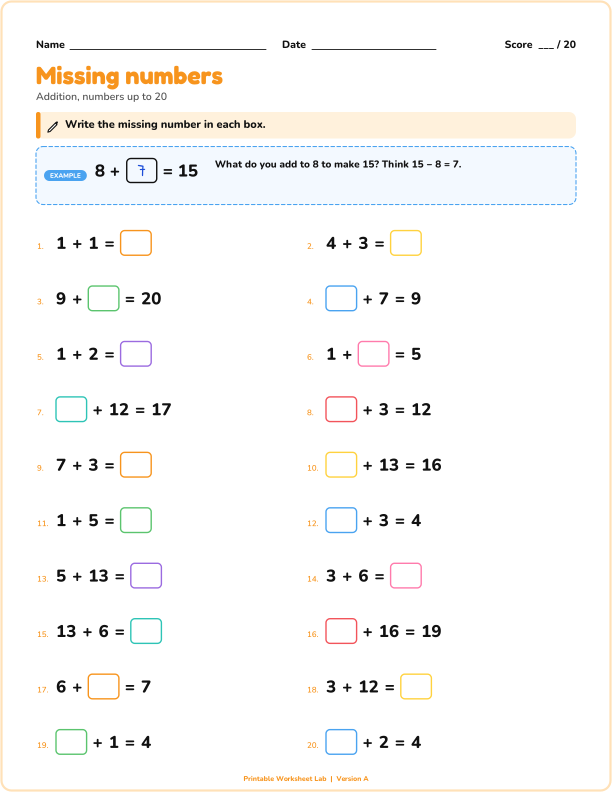
Equations with one empty box, for addition, subtraction, multiplication, division or a mix.
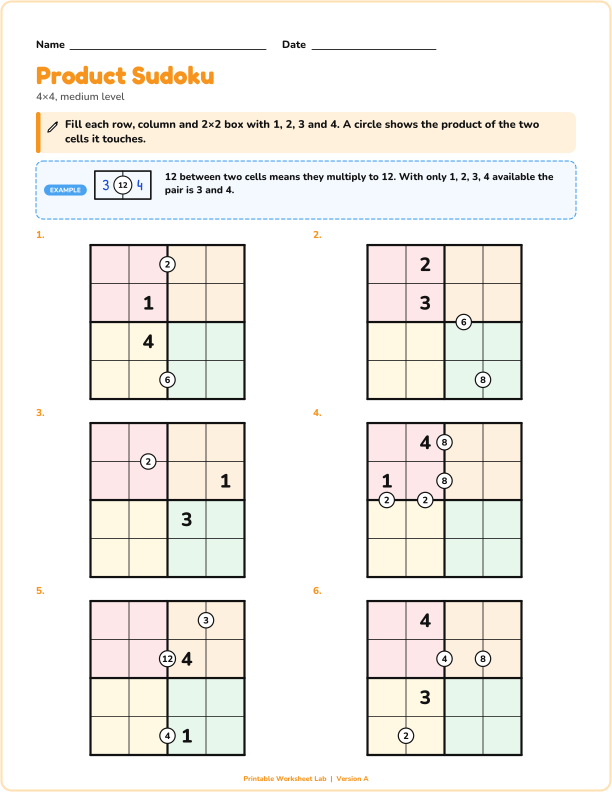
A 4×4 sudoku where circles show the product of two neighboring cells. Practices factors and logic together.
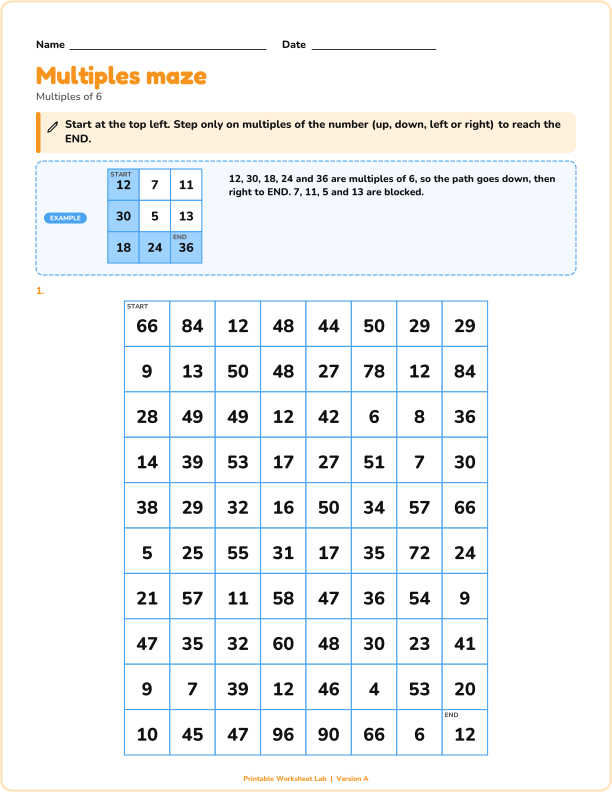
Mazes where you may only step on multiples of a chosen number. One route, no guessing.
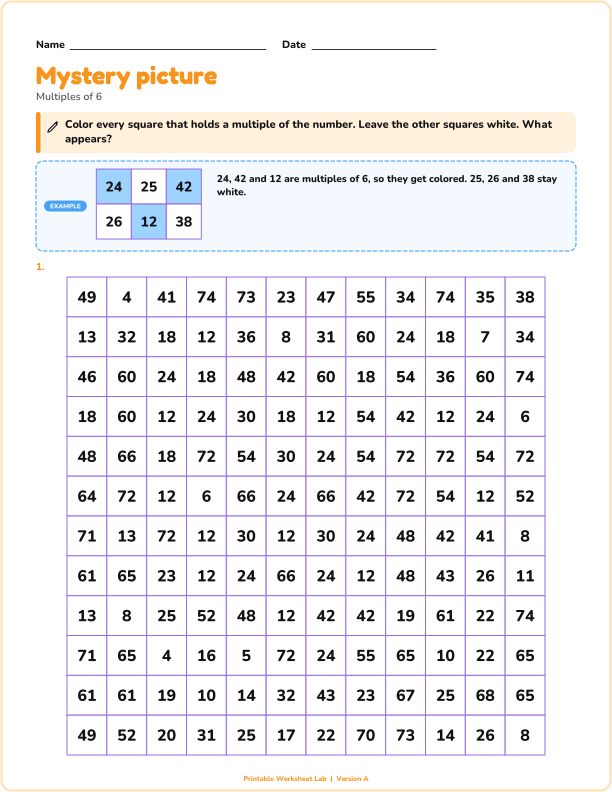
Color every multiple of a number to reveal a hidden picture.
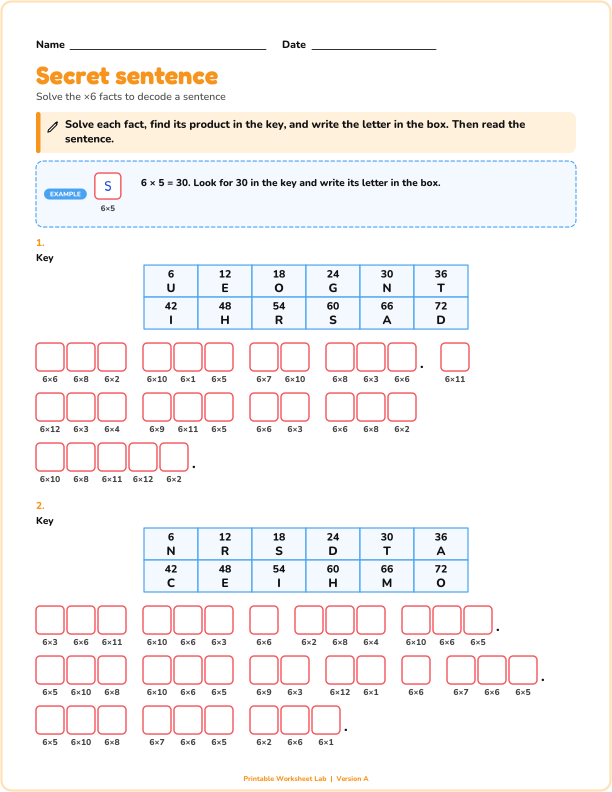
Solve multiplication facts to decode a short, readable sentence.
A 14-page print-and-fold booklet for one addition family, such as +3: ten activities, an answer key and a progress tracker.
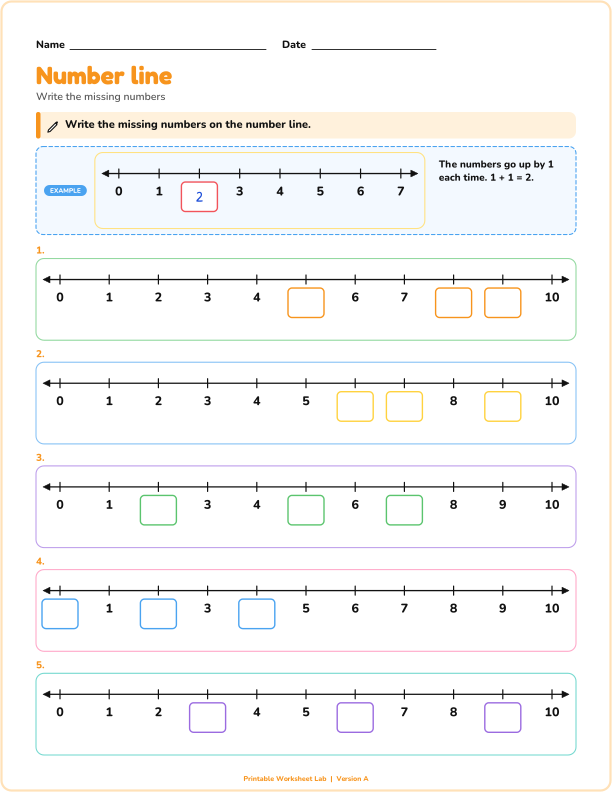
Write the missing numbers on a number line that counts by 1, 2, 3, 4, 5 or 10.
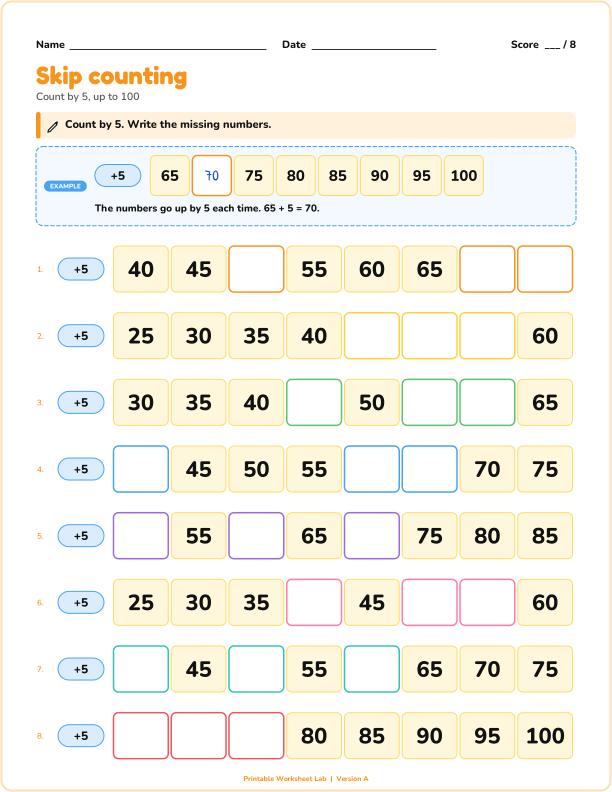
Fill in the missing numbers when counting by 2, 3, 4, 5 or 10, forwards, backwards or both.
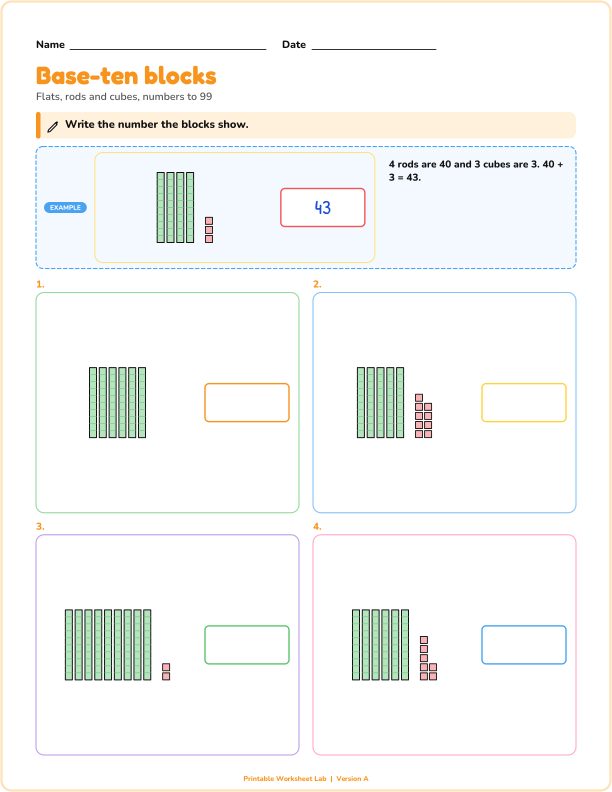
Read the number shown by hundreds flats, tens rods and ones cubes, up to 99 or 999.
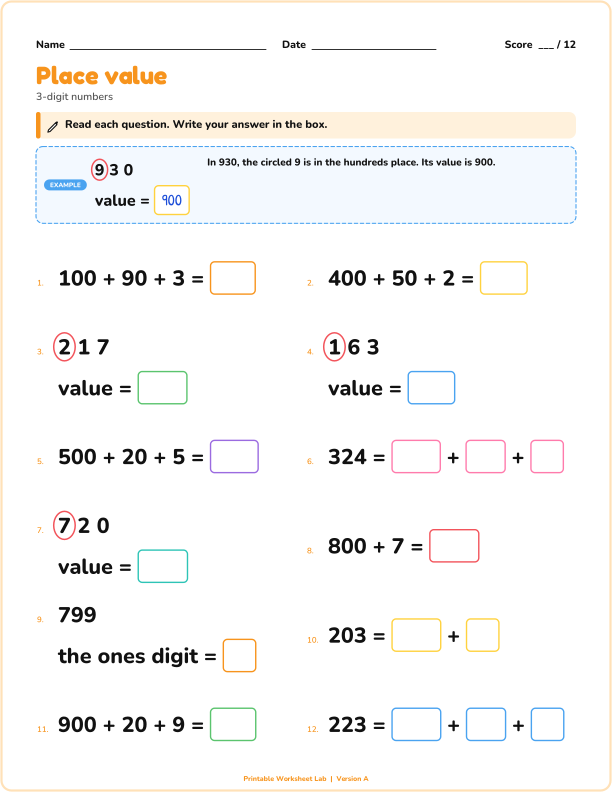
The value of a digit, the digit in a place, and expanded form both ways, for numbers from 2 to 6 digits.
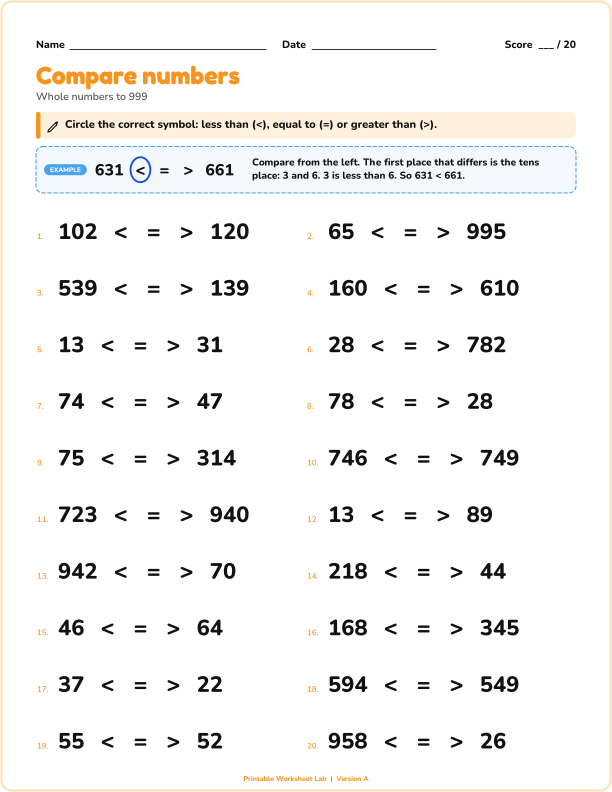
Circle <, = or > to compare whole numbers, decimals or integers, from numbers to 99 up to 999,999.
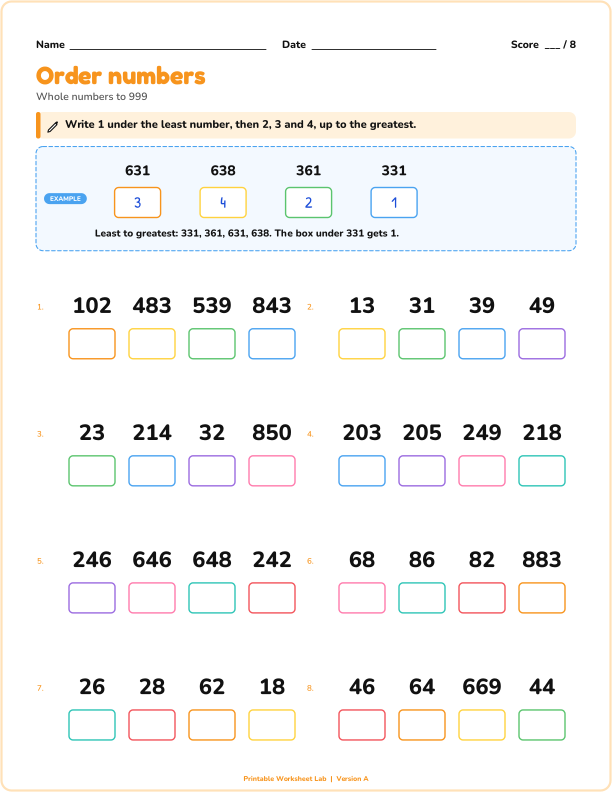
Put three, four or five numbers in order from least to greatest, or greatest to least, by numbering the boxes.
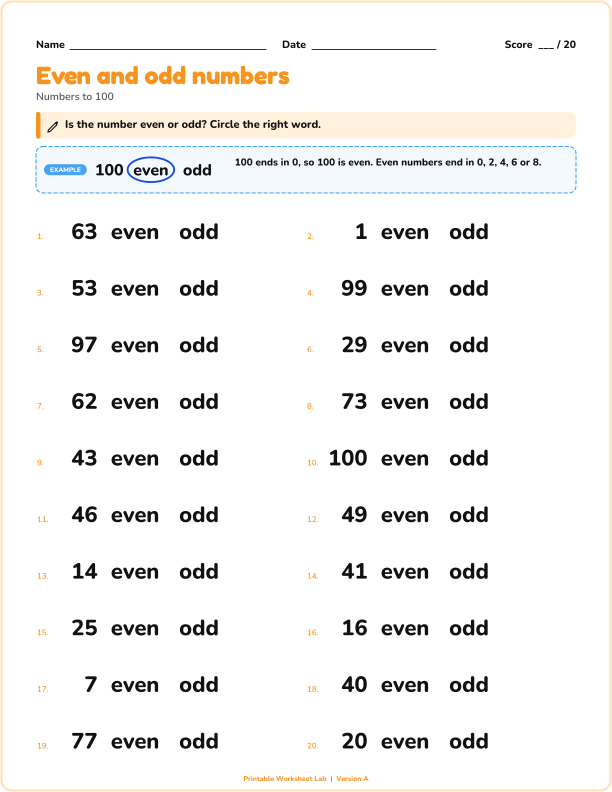
Circle even or odd for each number, or find and circle every even (or odd) number in a grid.
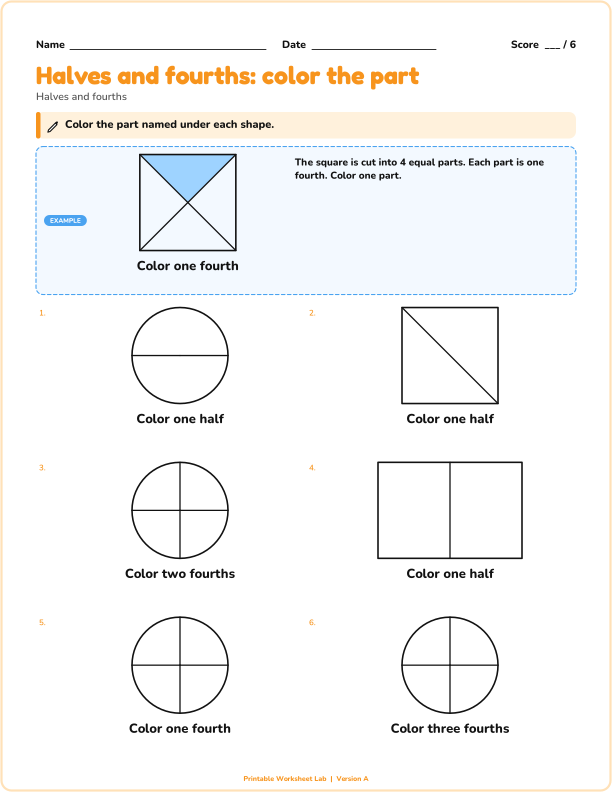
Color the part named, spot the shape cut into equal parts, count the equal shares, or name the colored part, on circles, rectangles and squares.
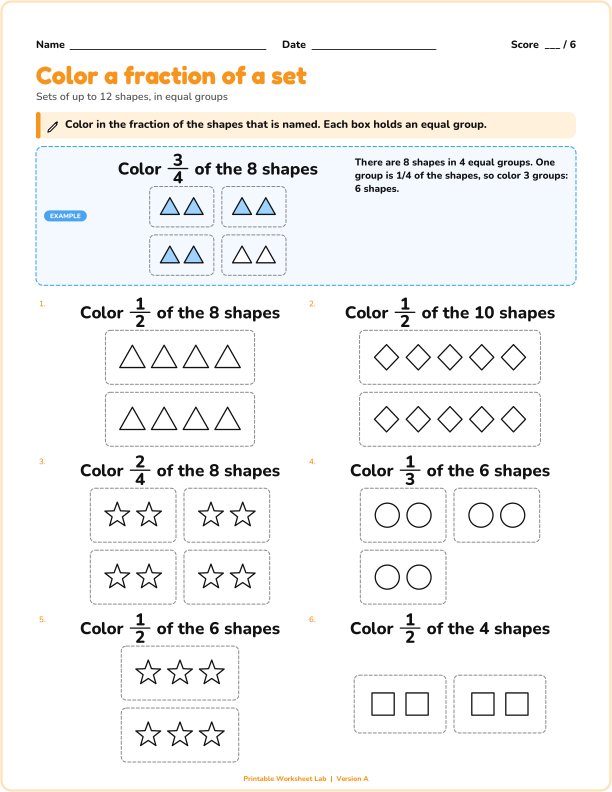
Color a fraction of a group of shapes, write the fraction that is colored, or find a fraction of a number with equal groups to help.
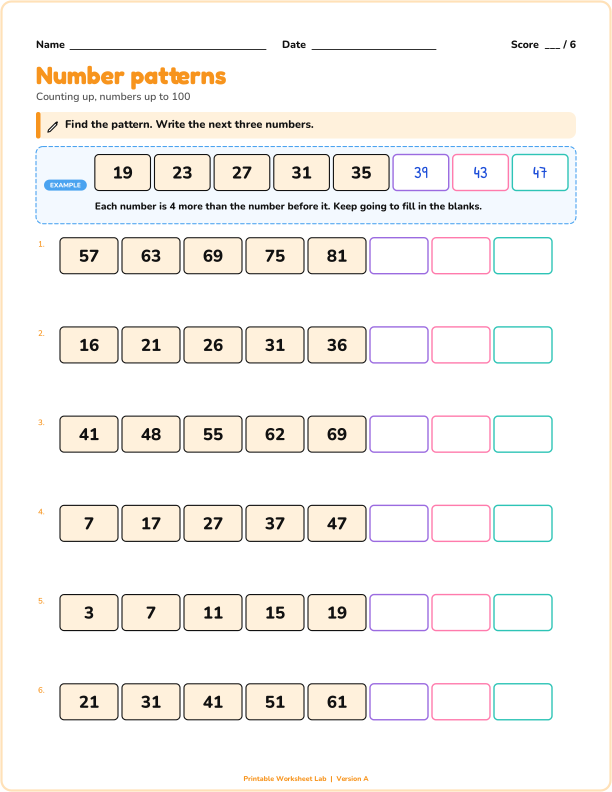
Continue number patterns, fill in missing numbers, or find the rule: counting up, counting down and multiplying.
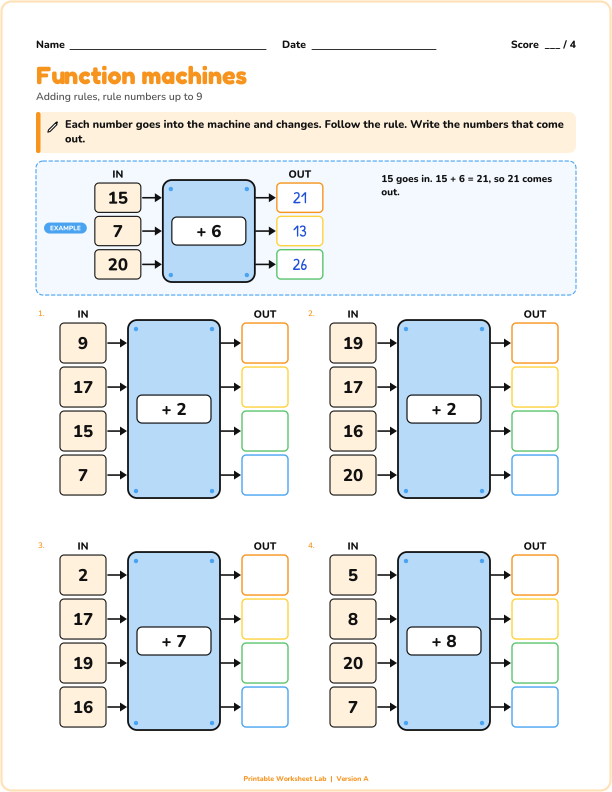
Numbers go into a machine and change by a rule: find what comes out, what went in, or the rule itself.
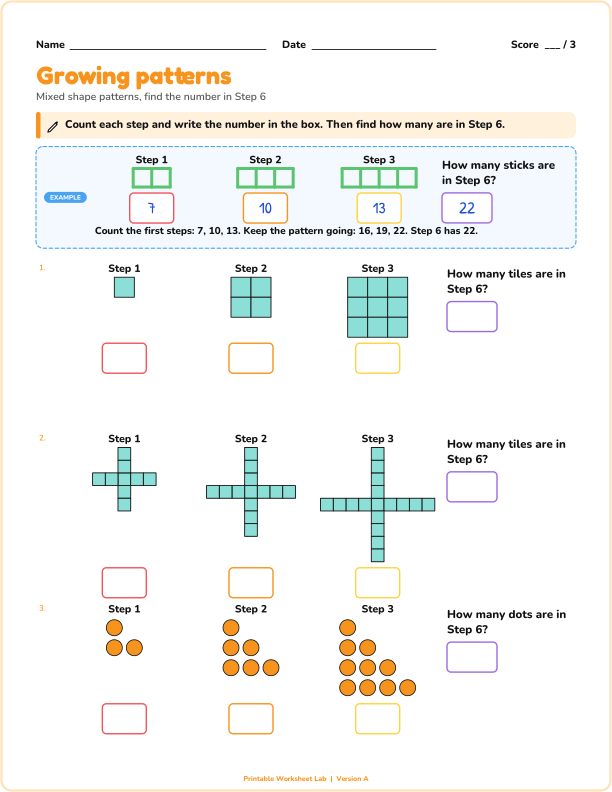
Count the steps of a growing pattern of tiles, dots or matchsticks, then find how many are in a later step.
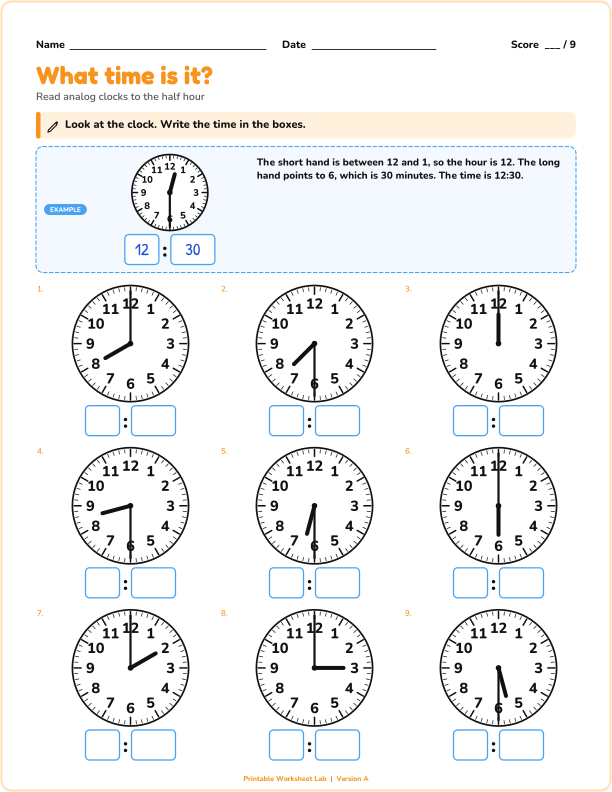
Read analog clocks to the hour, half hour, quarter hour, five minutes or the minute, and write the time.
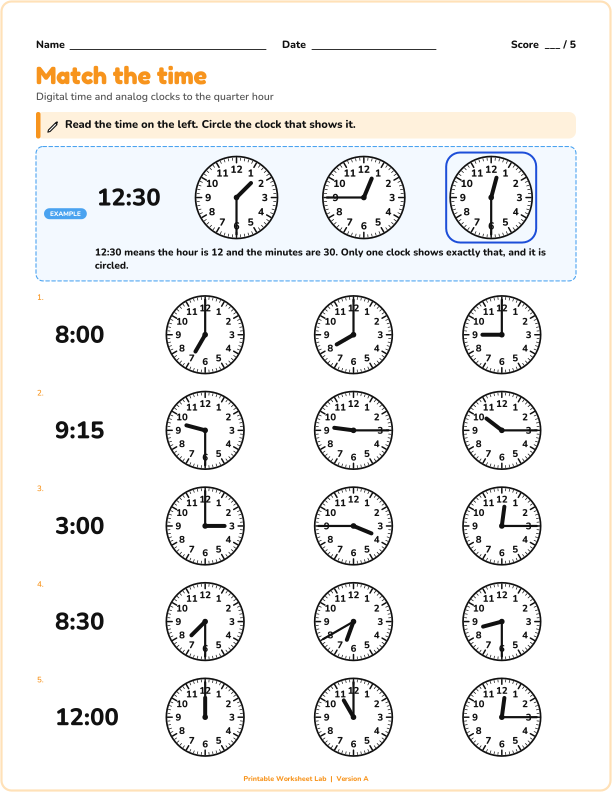
A digital time is given. Circle the analog clock that shows it among near misses.
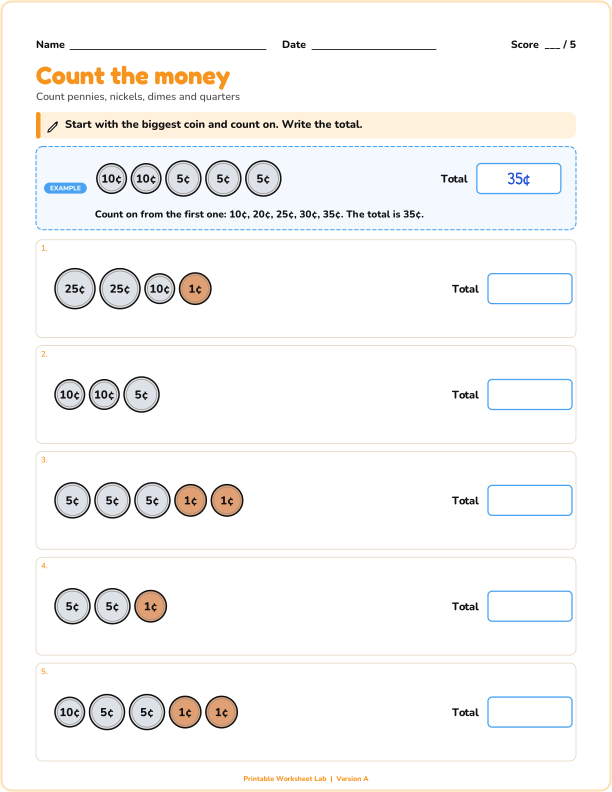
Count a set of coins and bills, circle the coins that make an amount, or find the change.
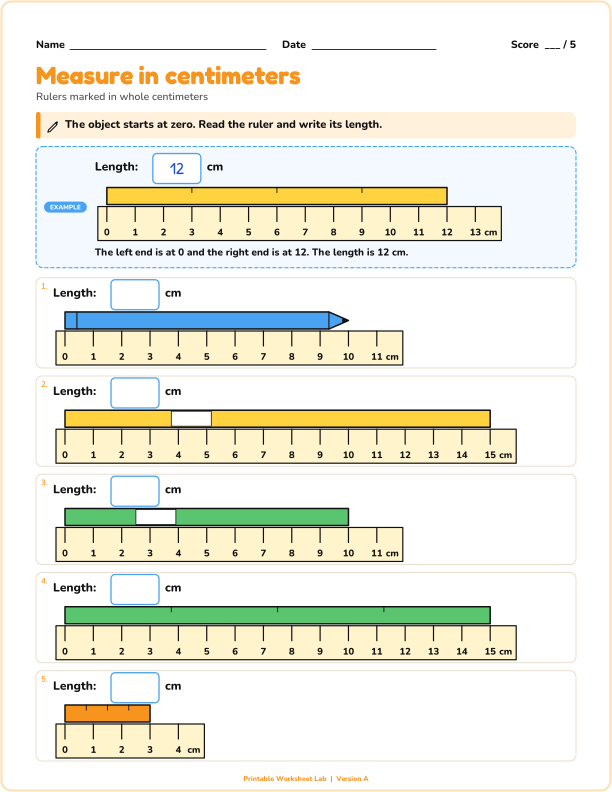
Read the length of a pencil, strip or crayon against a centimeter or inch ruler.
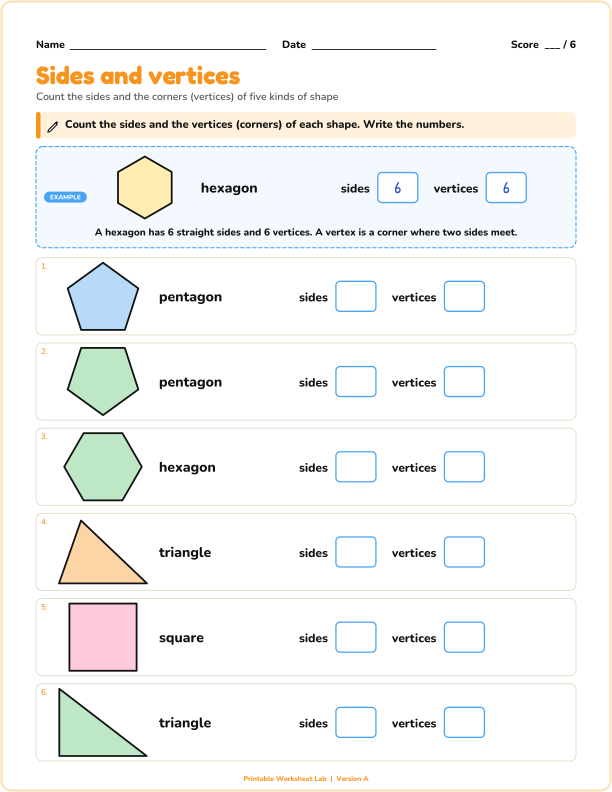
Count the sides and vertices (corners) of triangles, quadrilaterals, pentagons, hexagons and more.
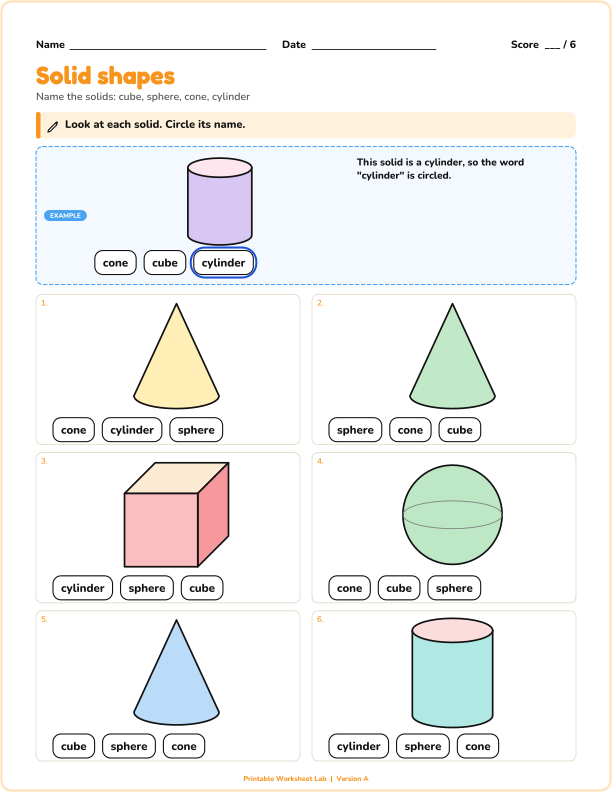
Name cubes, spheres, cones and cylinders, and optionally rectangular prisms and pyramids.
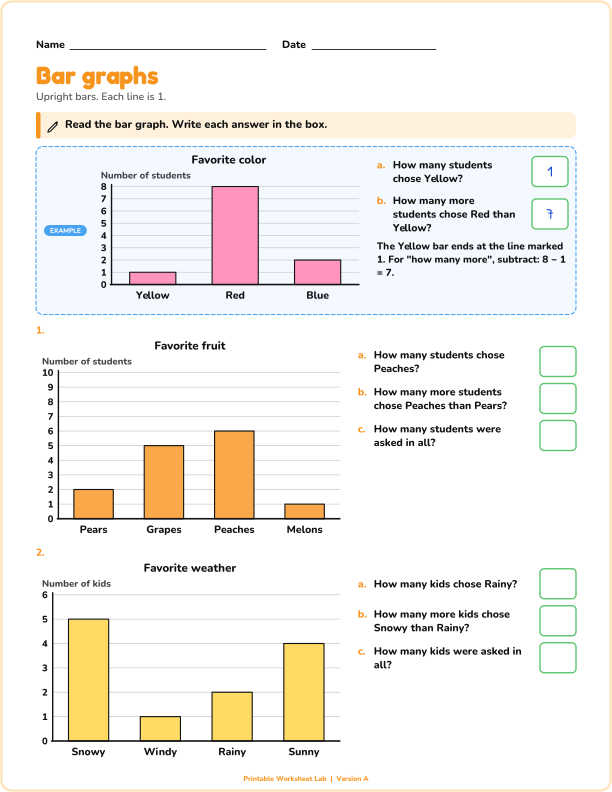
Read a bar graph and answer questions, or shade the bars to match a table.
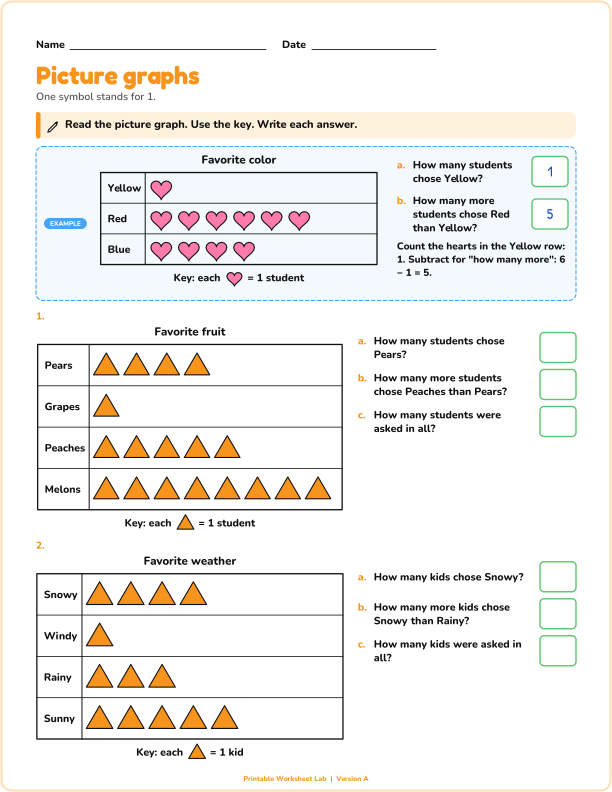
Read a picture graph where one symbol stands for 1, 2, 5 or 10 and answer questions.
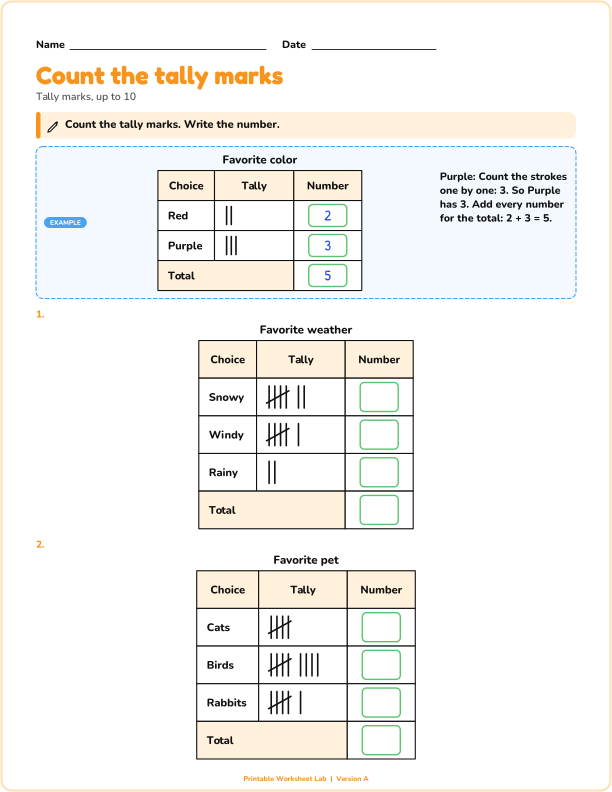
Count tally marks, draw tally marks for a number, or tally a list into a frequency table.
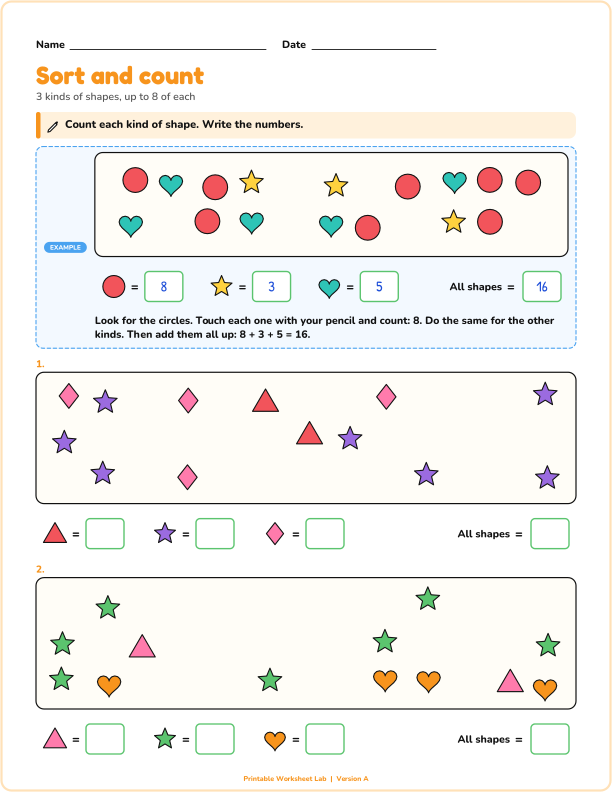
Count each kind of shape in a mixed group and write how many of each, and how many in all.
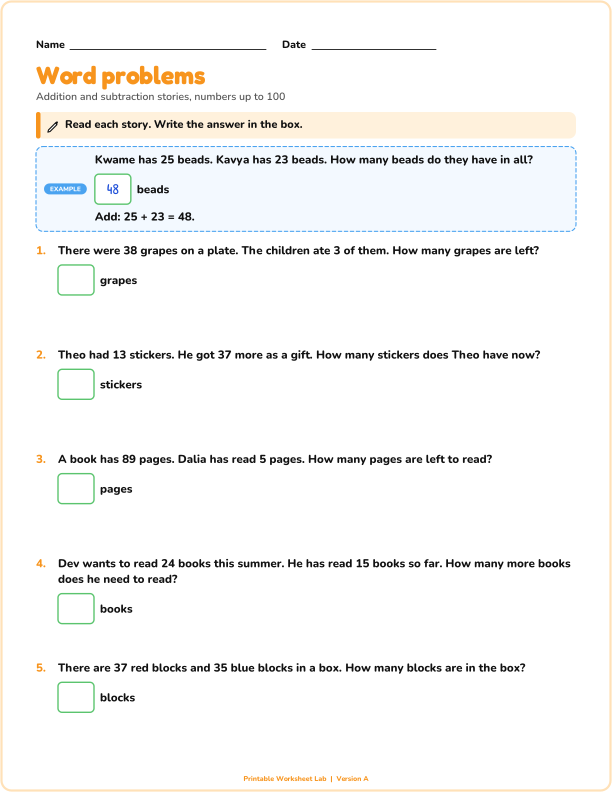
Short one-step stories with different names, objects and settings, each with one numeric answer.
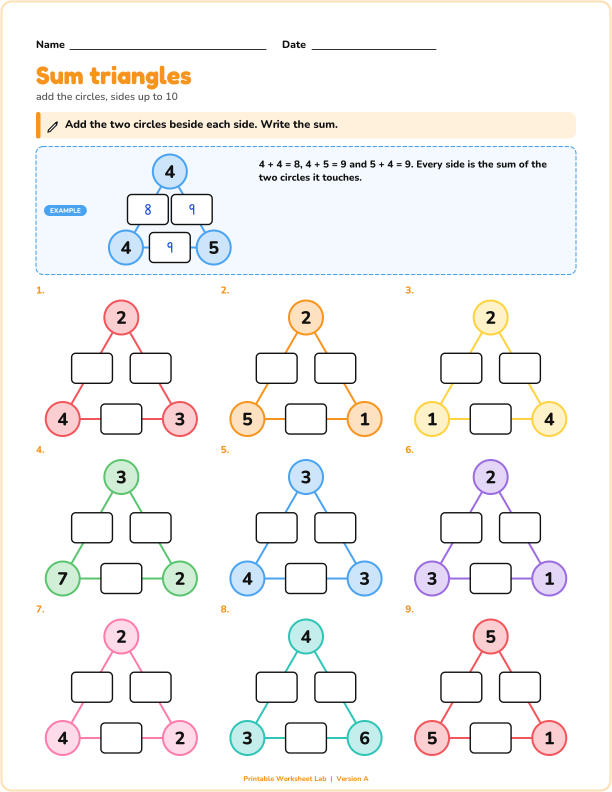
Triangles where each side is the sum of the two circles it joins, to fill in by adding or by working back.
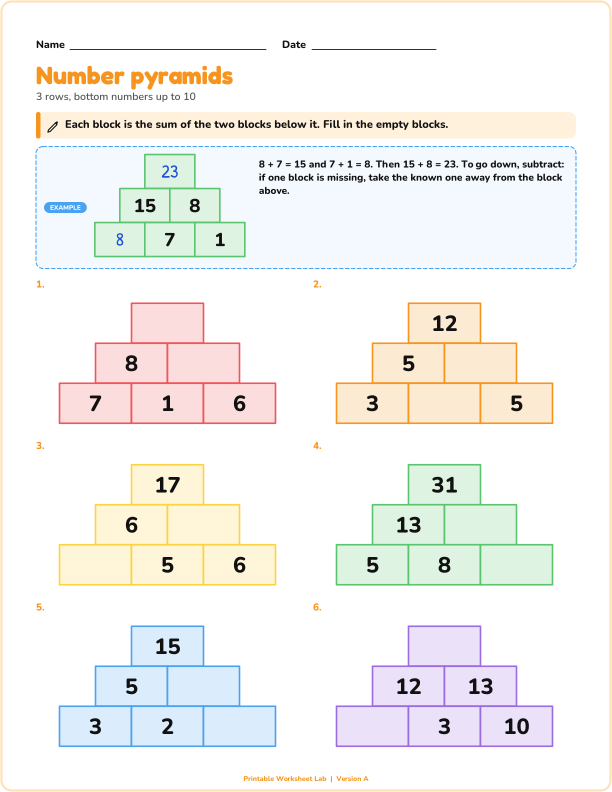
Pyramids where each block is the sum of the two blocks below it, with some blocks given and the rest to work out.
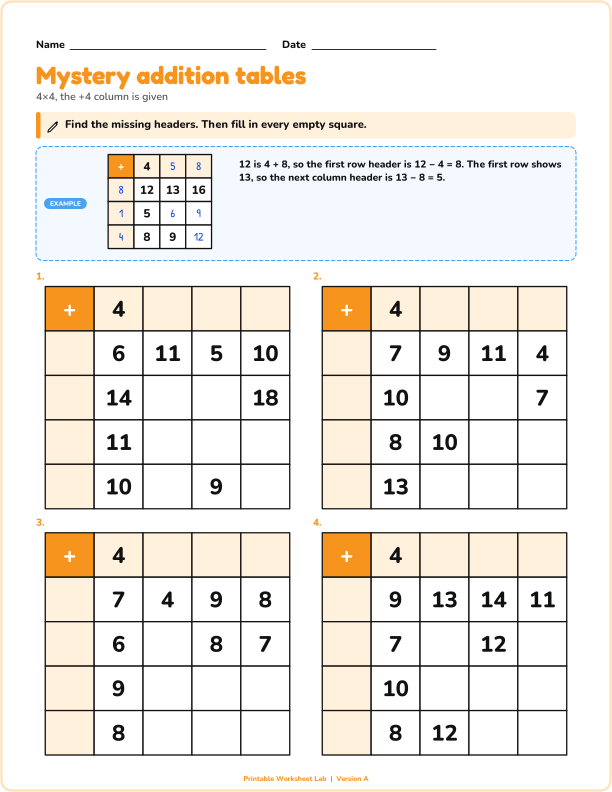
Addition tables with the headers hidden: work out the headers, then fill in the table.
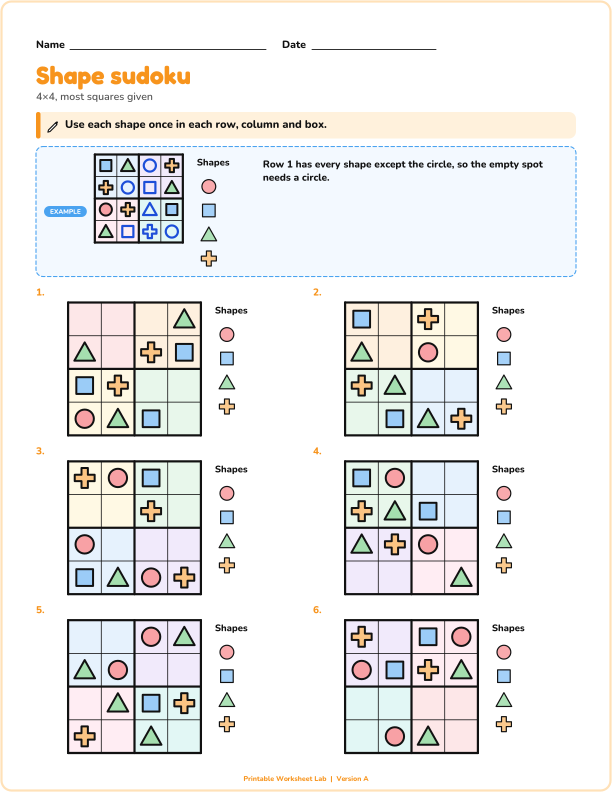
Logic grids with no arithmetic: fill each row, column and box with every shape or number once, with one solution for each puzzle.
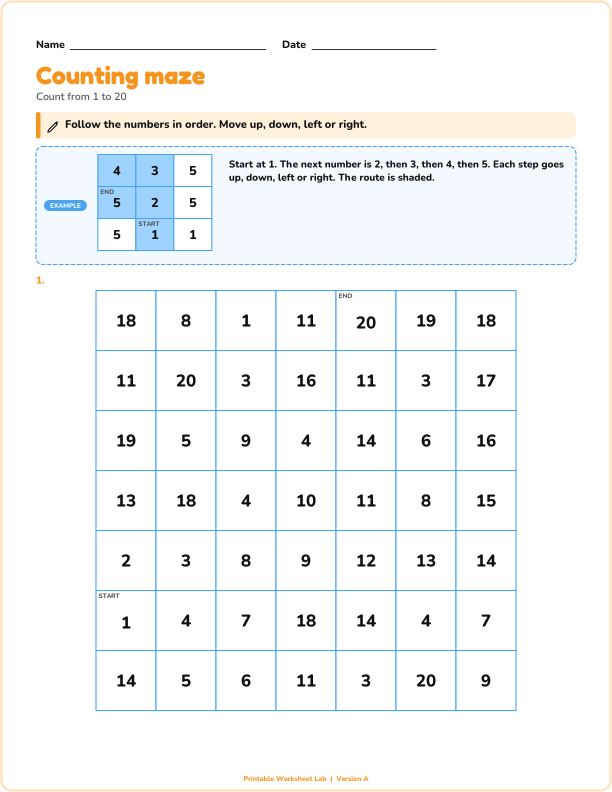
Mazes that follow the counting order: 1 to 20, or skip counting by 2s, 3s, 5s and 10s.
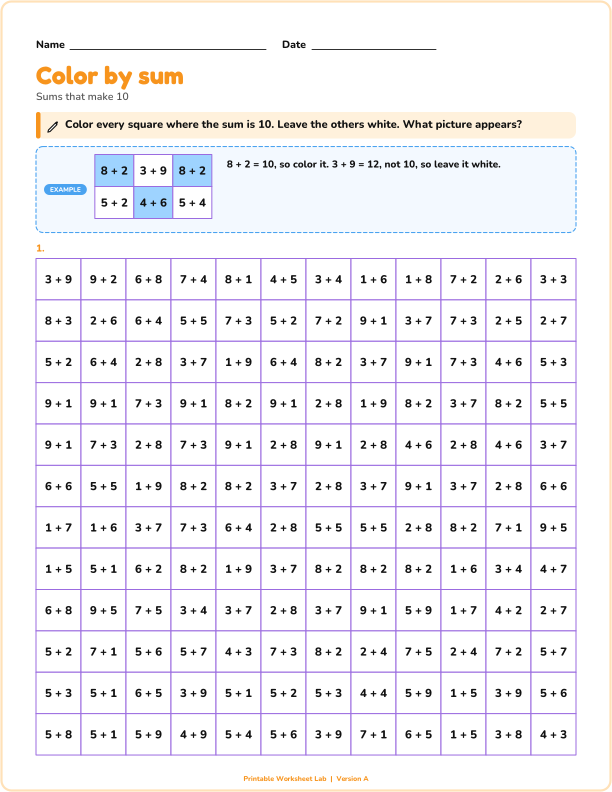
Color every square whose sum makes the target number, for example 10, to reveal a hidden picture.
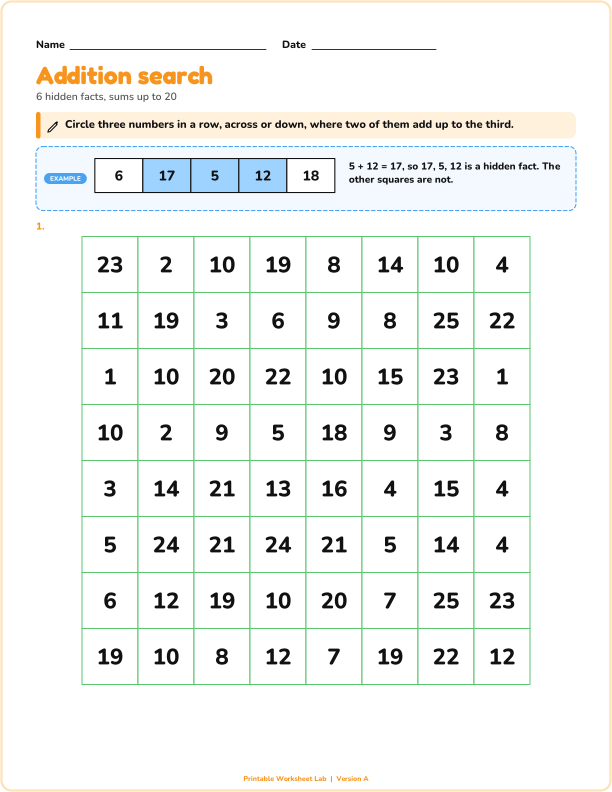
Find hidden addition facts in a grid of numbers: three in a row where two of the numbers add up to the third.
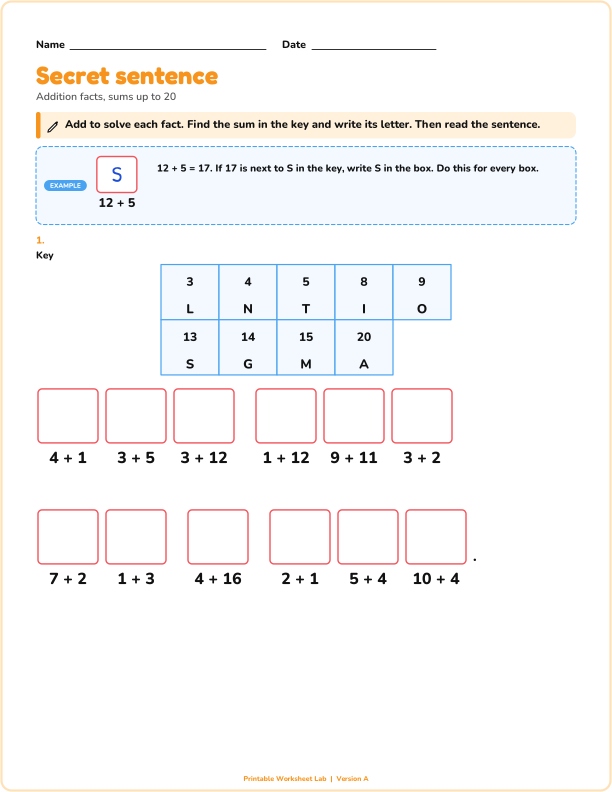
Solve addition facts to decode a short, readable sentence.
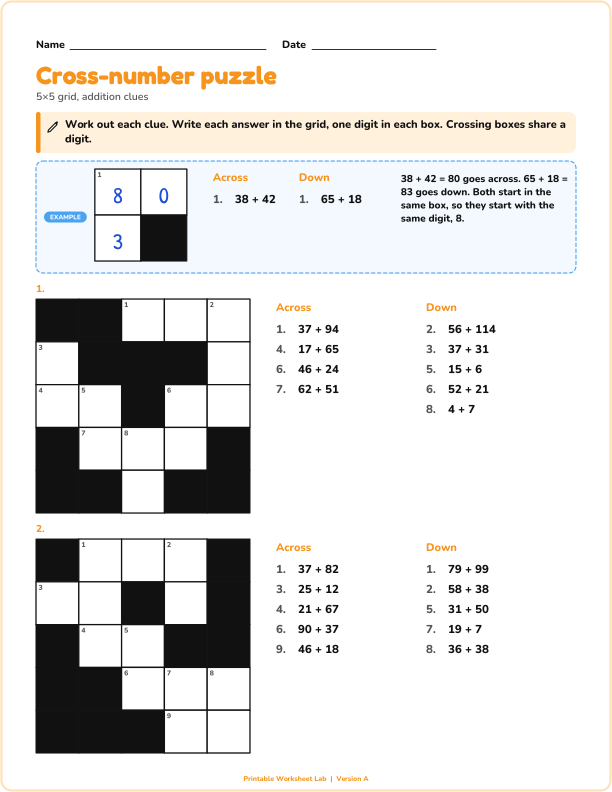
A crossword where every clue is a calculation and every answer is a number written one digit per box.
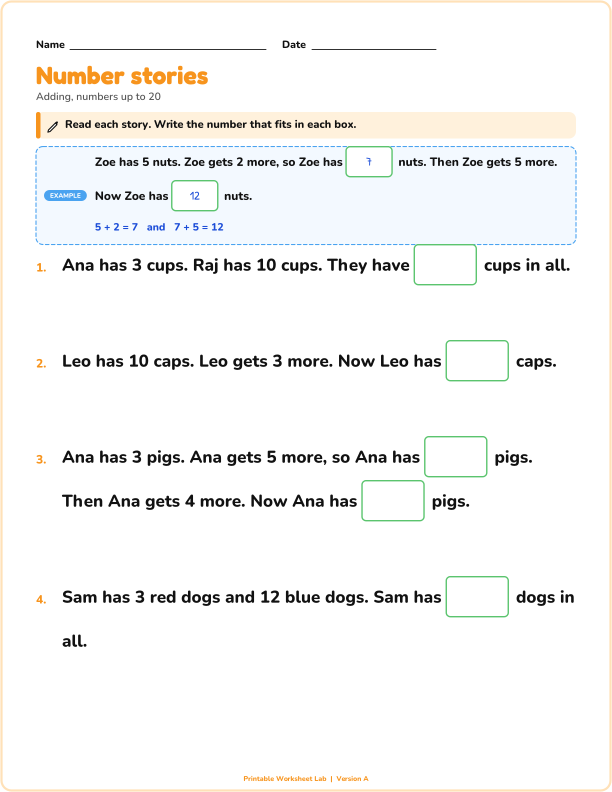
Short stories with boxes to fill: each box is the result of an addition, subtraction, multiplication or division fact.
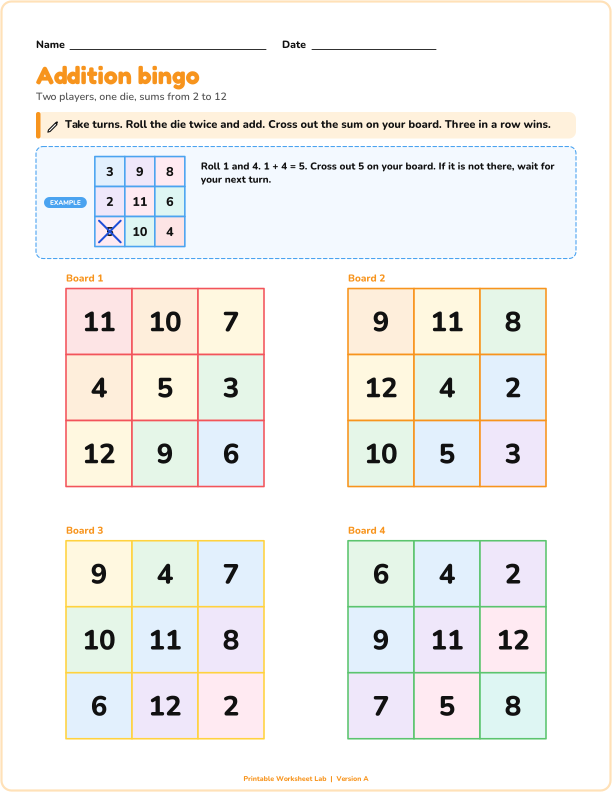
Bingo boards of sums from 2 to 12, played by rolling one die twice, adding and crossing out the sum.
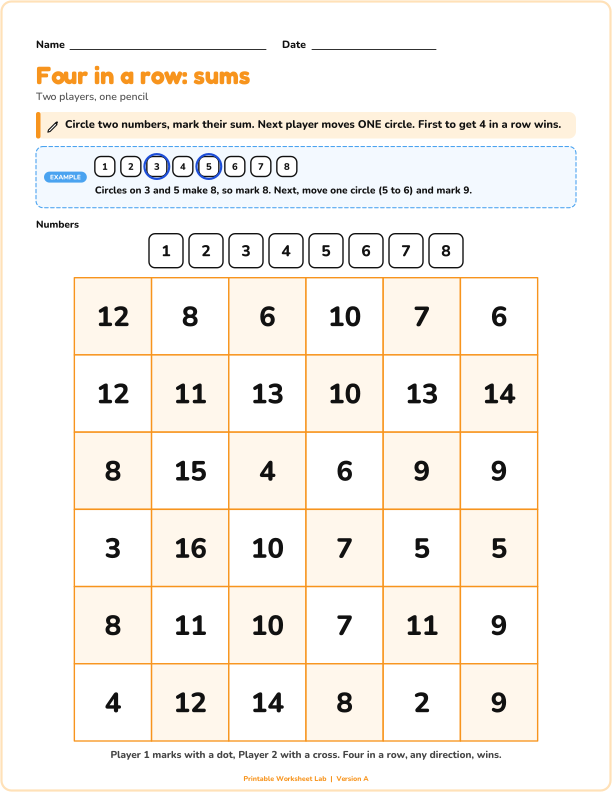
A two-player strategy game: circle two numbers, mark their sum or product, and get four in a row.
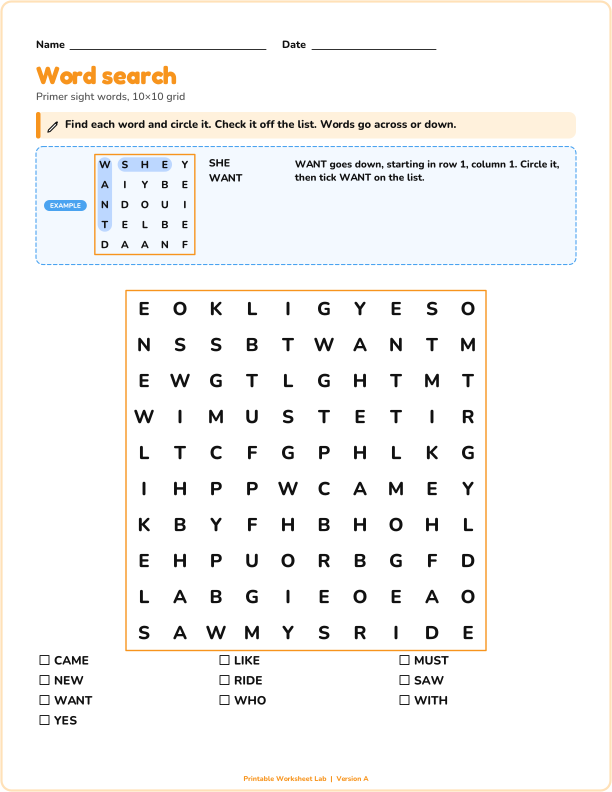
Word searches for sight words, phonics patterns and ten topics, with every word hidden exactly once.
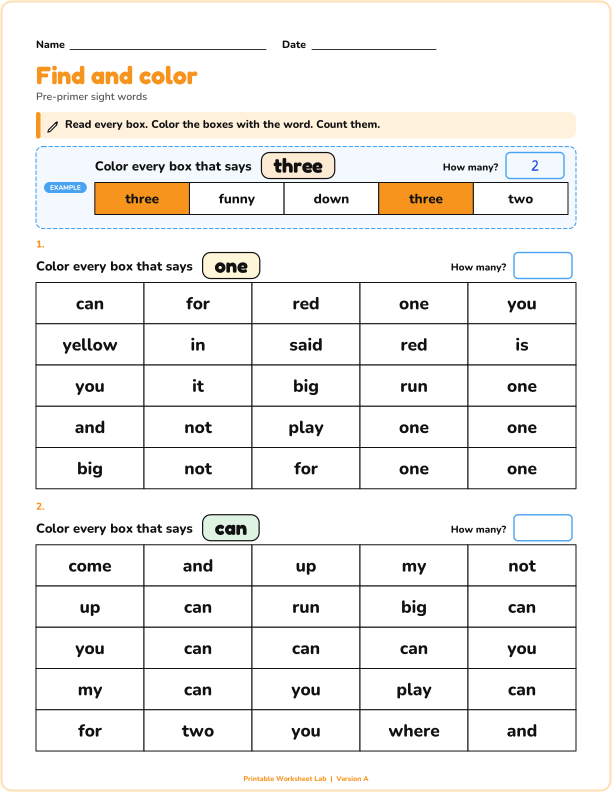
A grid of look-alike words: color every box with the sight word and count them.
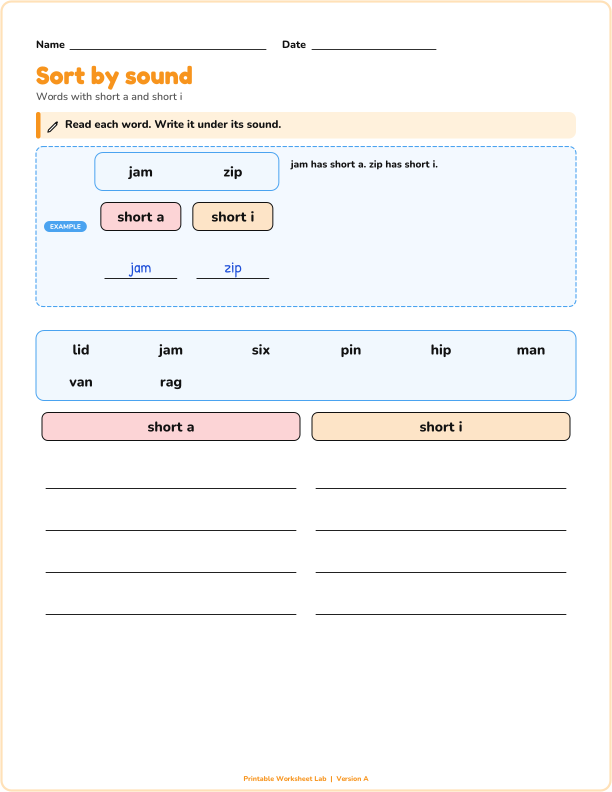
Read each word and write it under its sound: short vowels, long vowels with silent e, vowel teams or digraphs.
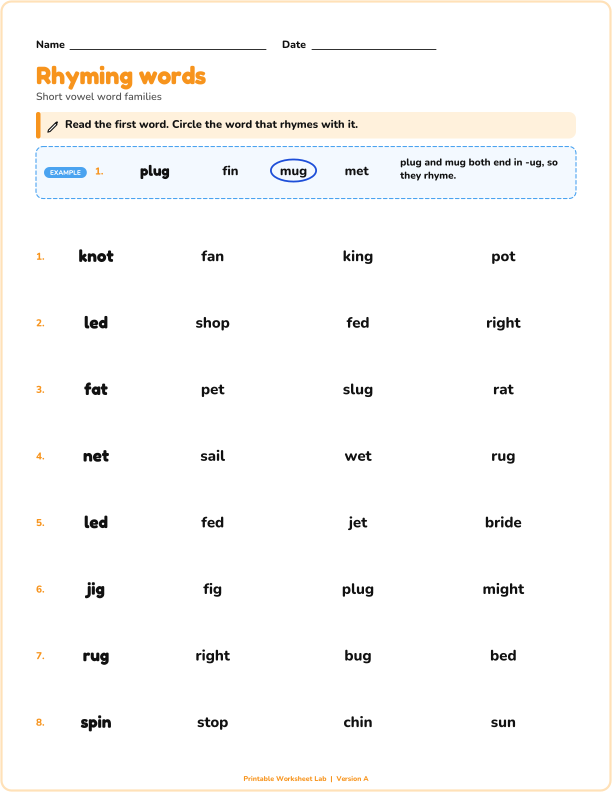
Read a word and circle the one of three words that rhymes with it.
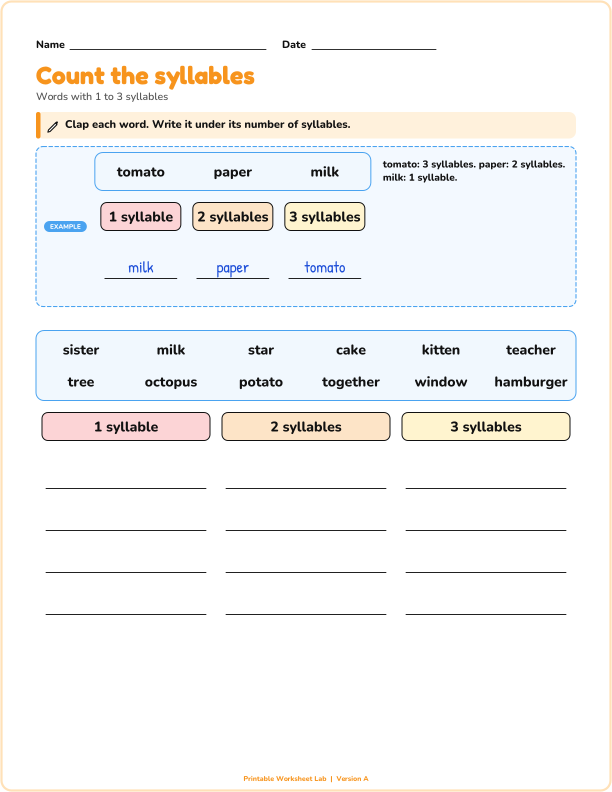
Clap each word and write it under its number of syllables, from one to three or four.
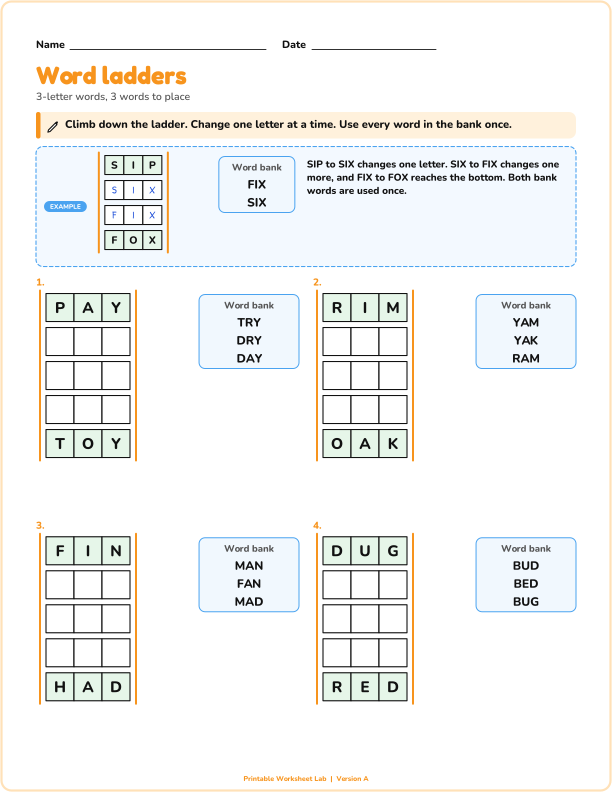
Change one letter at a time to climb from the top word to the bottom word, using the words in the bank.
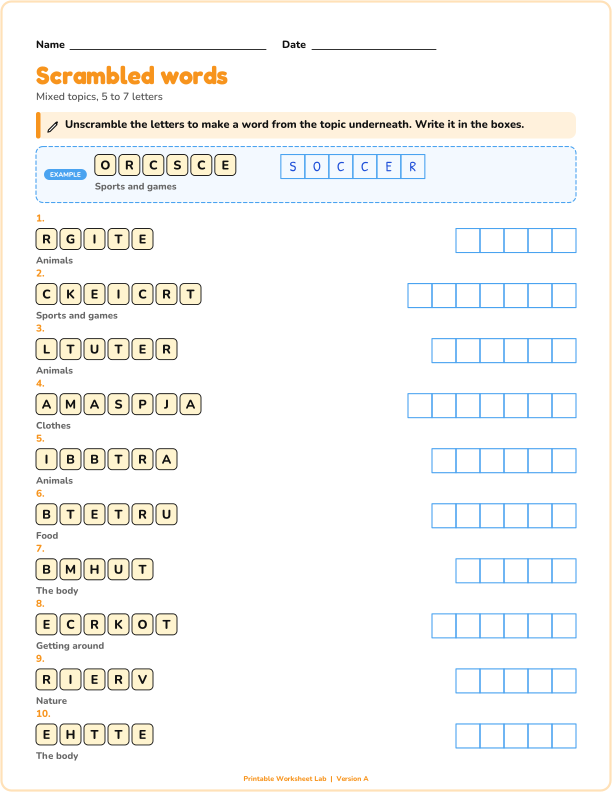
Unscramble the letters to spell a word from a topic, where the letters can spell only that one word.
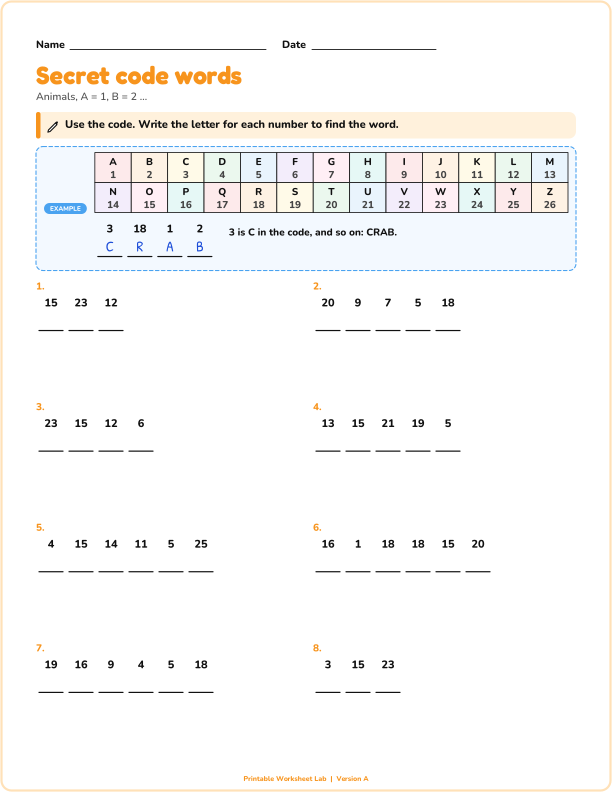
Use a number code to find hidden words from a topic, a phonics pattern or a sight word list.
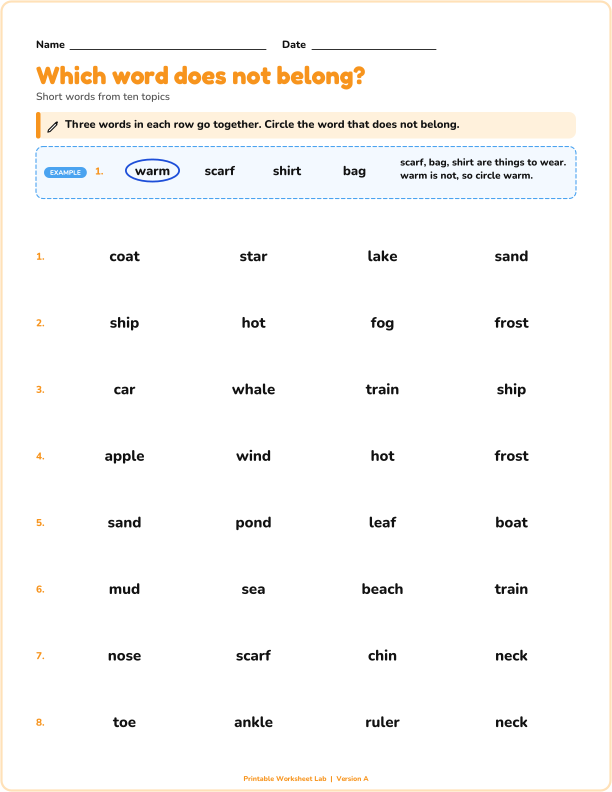
Rows of four words where three go together, and children circle the one that does not belong.
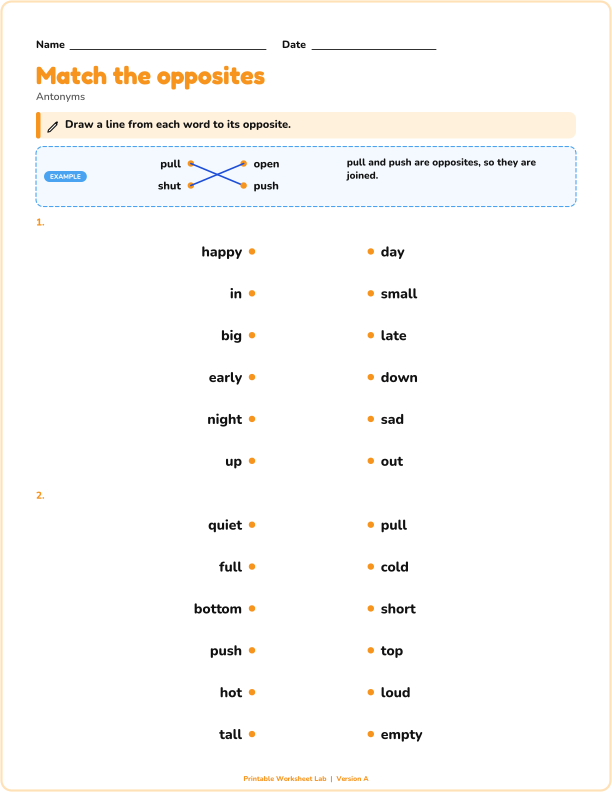
Draw lines to match each word with its opposite (antonym) or a word that means almost the same (synonym).
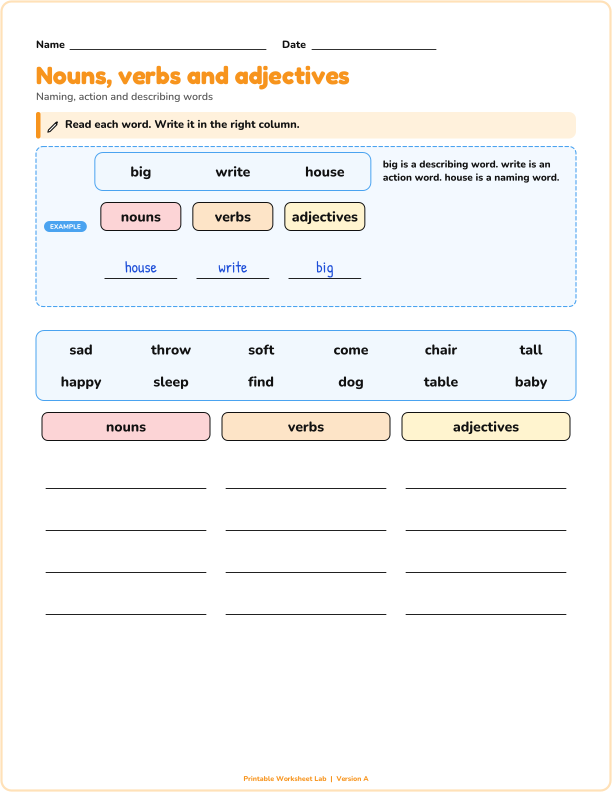
Sort a word bank into naming words (nouns), action words (verbs) and describing words (adjectives).
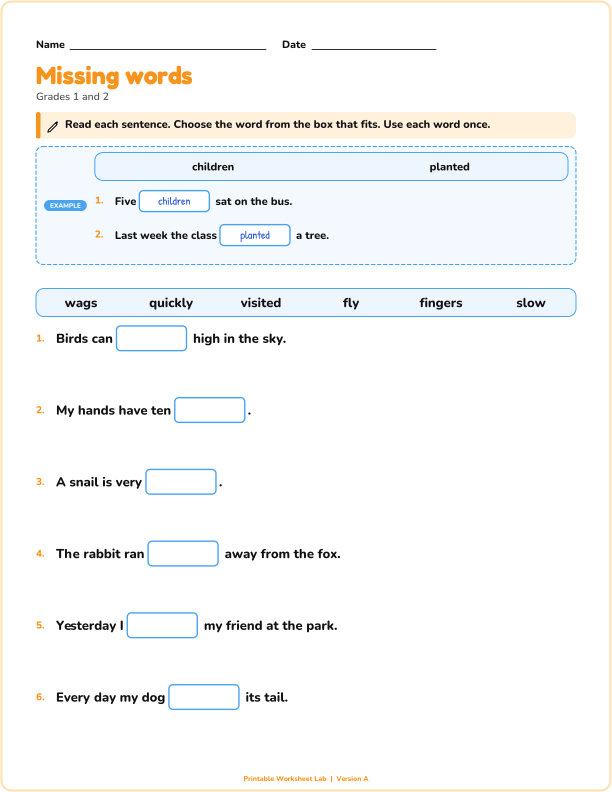
Sentences with one missing word and a word bank in which every word fits only one sentence.
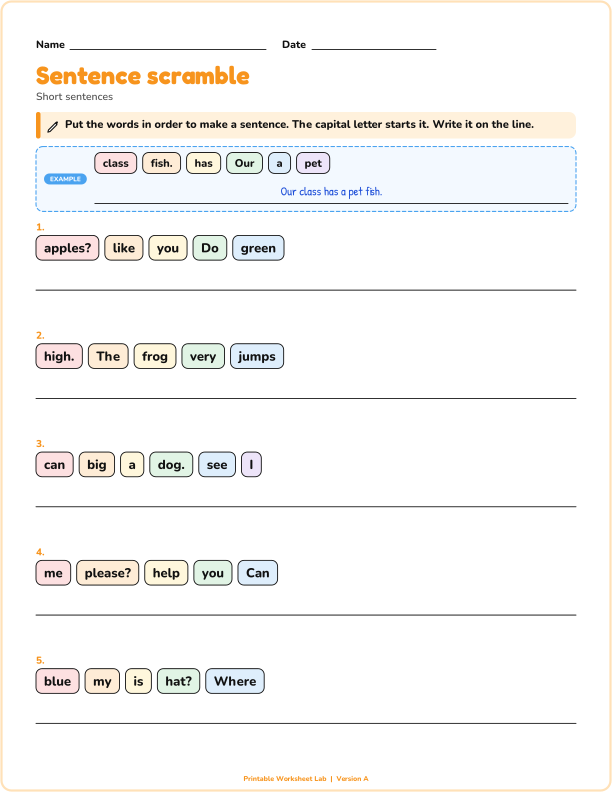
Put the mixed-up words in order to make a sentence, then write it on the line.