DrillGrades 1 to 2Grades 3 to 4
Addition worksheets
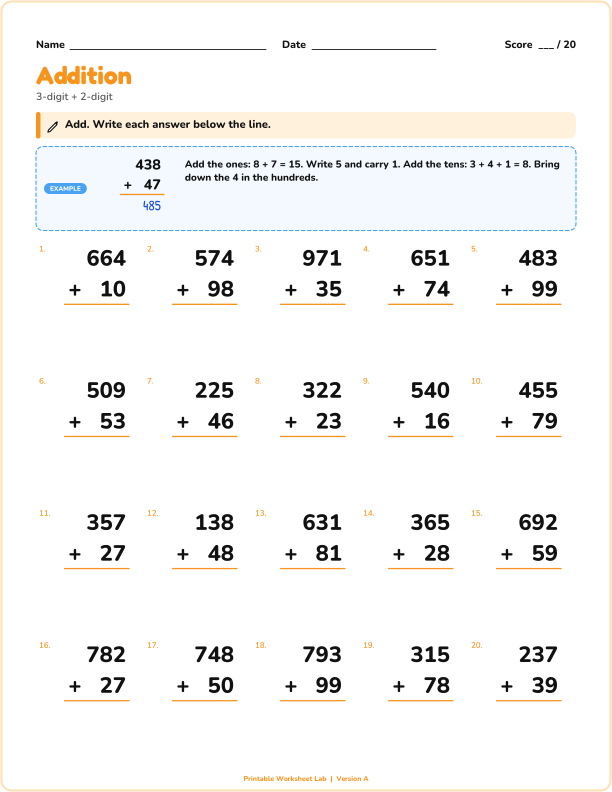
Printable addition practice with control over digits, regrouping and layout.
Facts, regrouping and multi-digit practice. Printable worksheets, puzzles, games and mini books with answer keys.
Printable addition practice with control over digits, regrouping and layout.
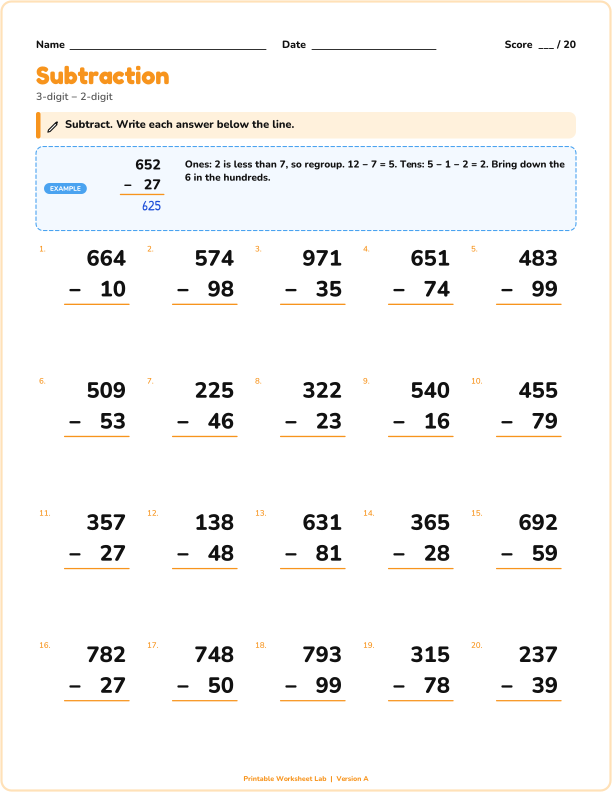
Printable subtraction practice with control over digits, borrowing and layout.
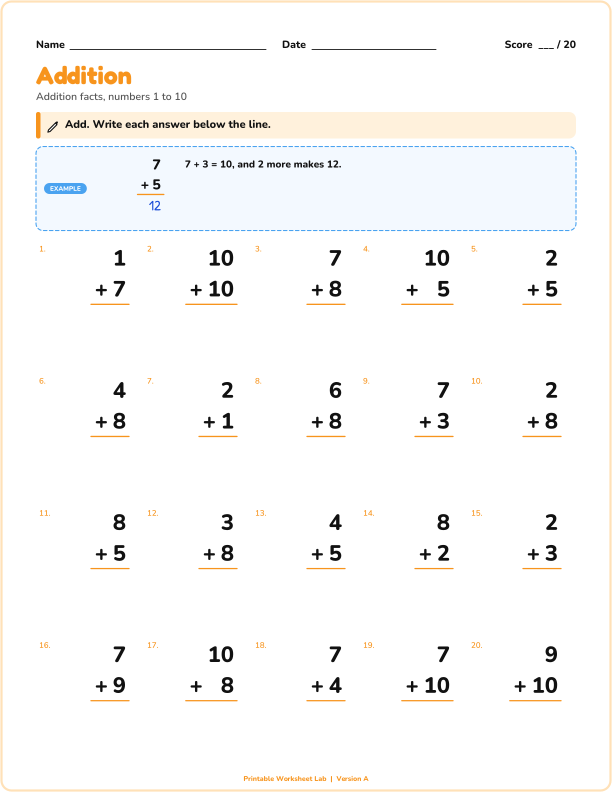
Practice one number at a time (+7, +8), doubles, near doubles, or all the facts, with the sums kept as small as you like.
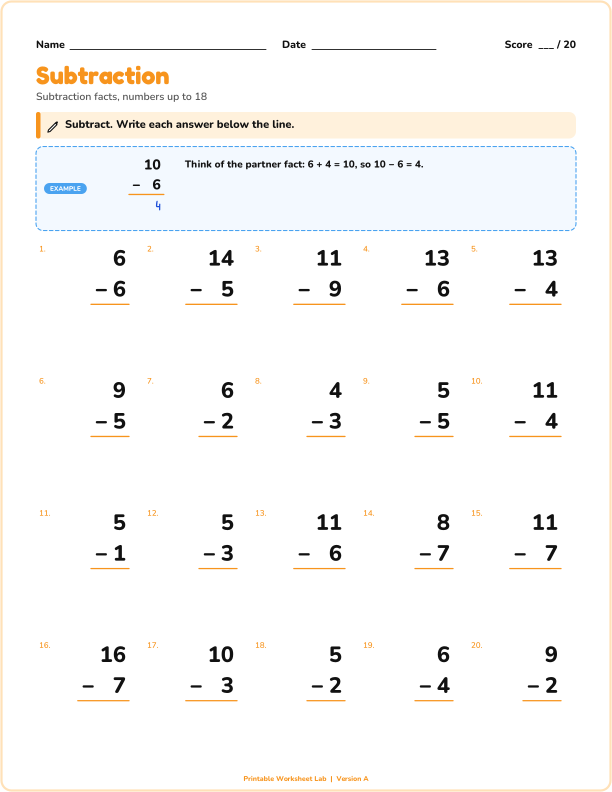
Practice taking away one number at a time, or all the facts, with answers from 0 to 9 so each fact has a partner addition fact.
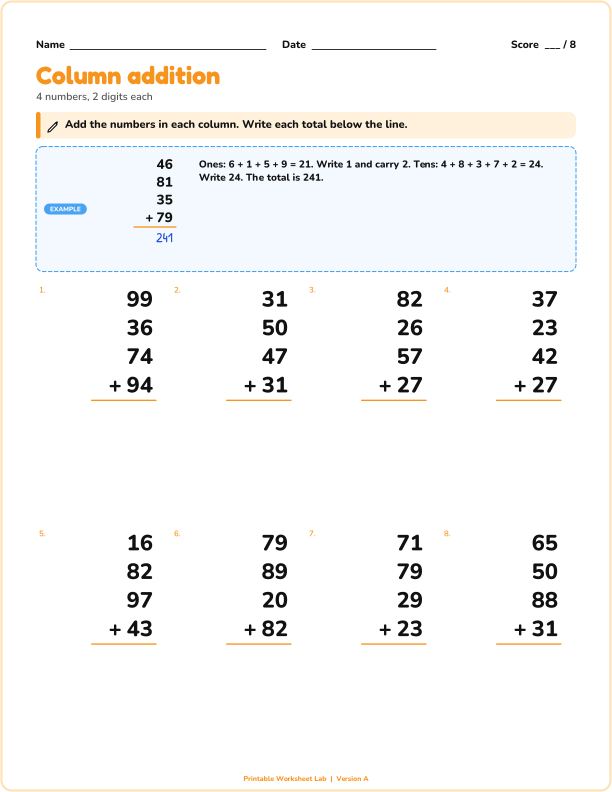
Add three to six numbers stacked in a column, with one to five digits each.
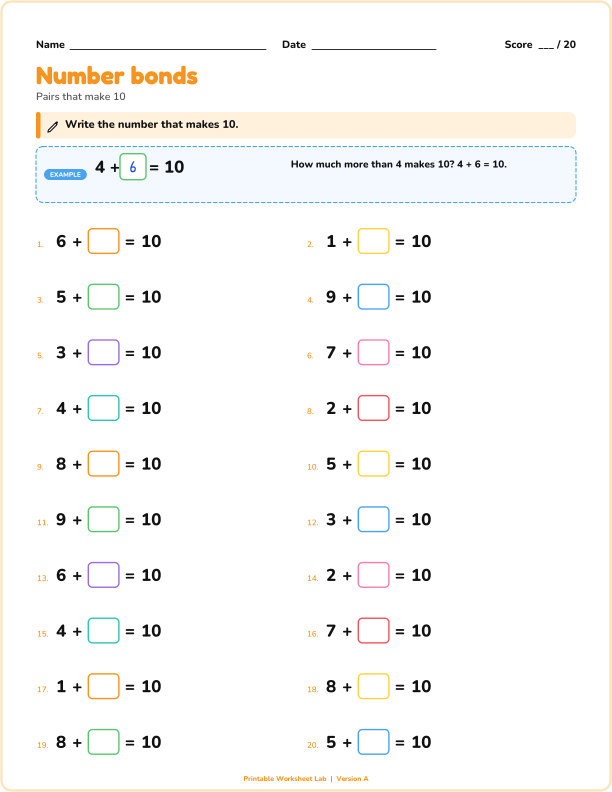
Pairs that make 10, 20, 100 or 1000 (and the 9s, 99s and 999s), as missing-number sums or as subtraction.
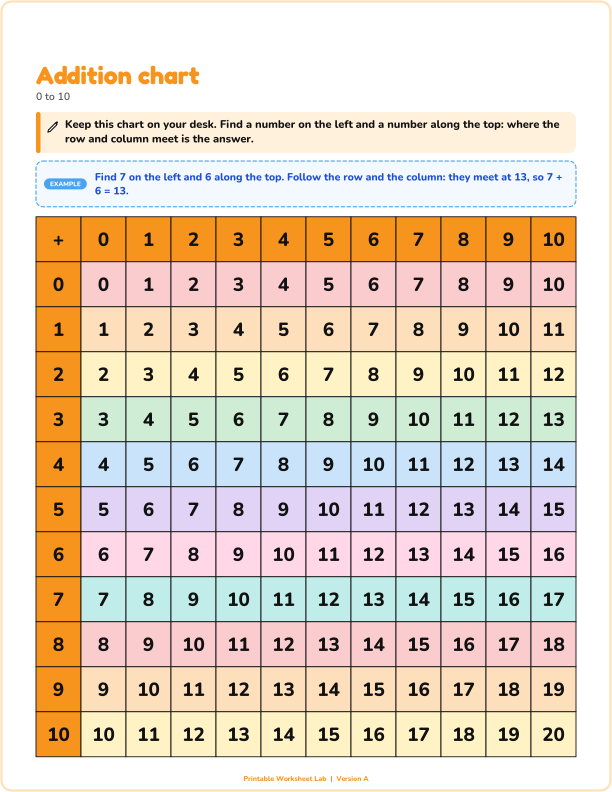
A printable addition chart up to 20 + 20, in color-coded rows or plain.
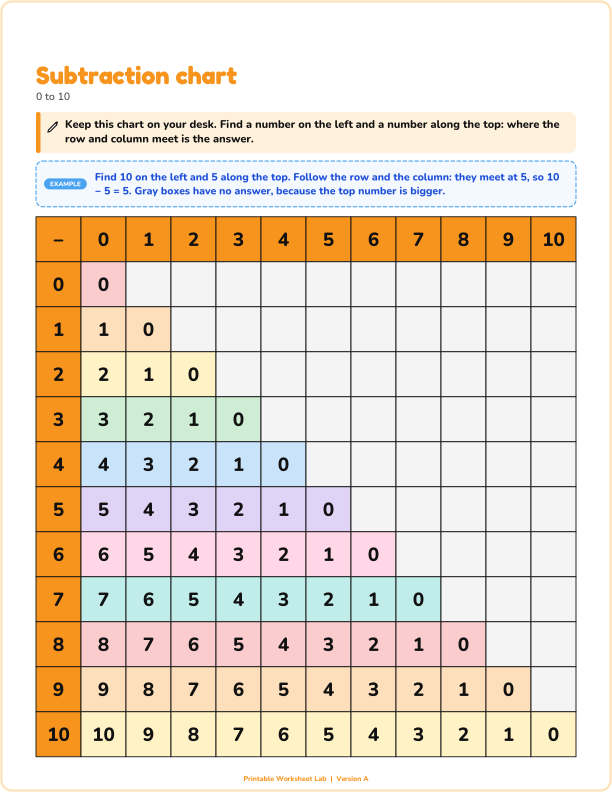
A printable subtraction chart (row minus column) up to 20, with the impossible boxes grayed out.
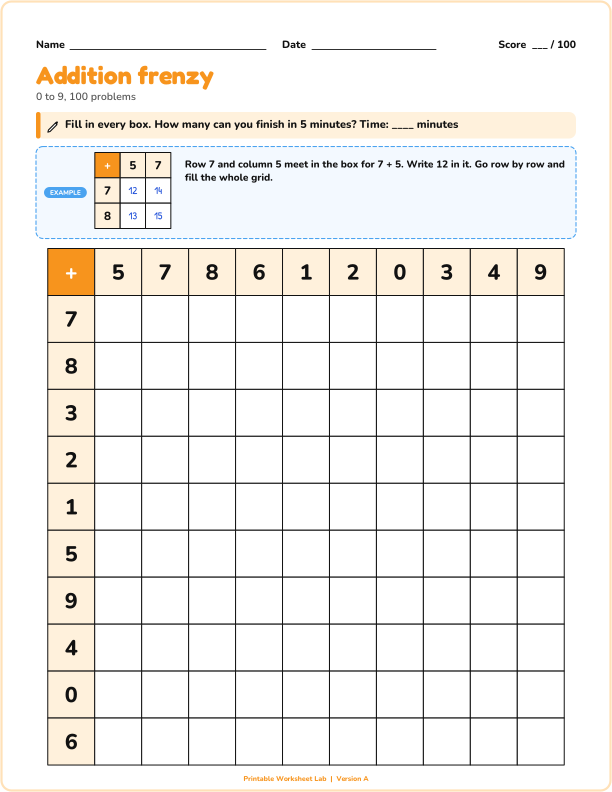
A timed addition grid: fill in all 100 sums. Headers are shuffled so every version is different.
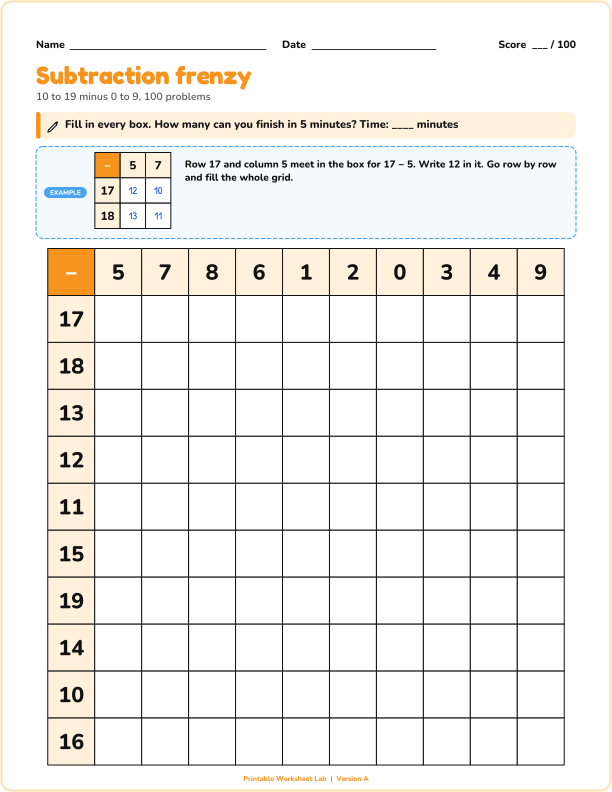
A timed subtraction grid: fill in all 100 differences. Headers are shuffled so every version is different.
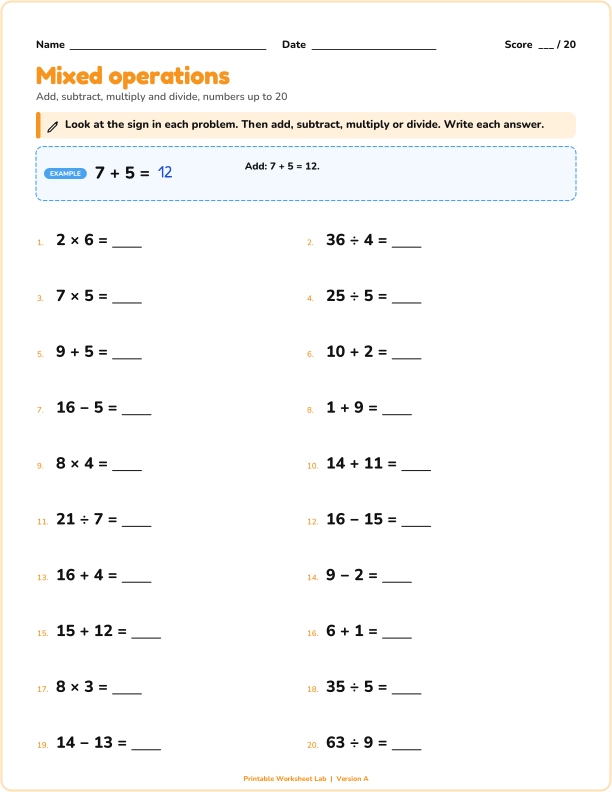
Addition, subtraction, multiplication and division on the same page: read the sign, then work the problem.
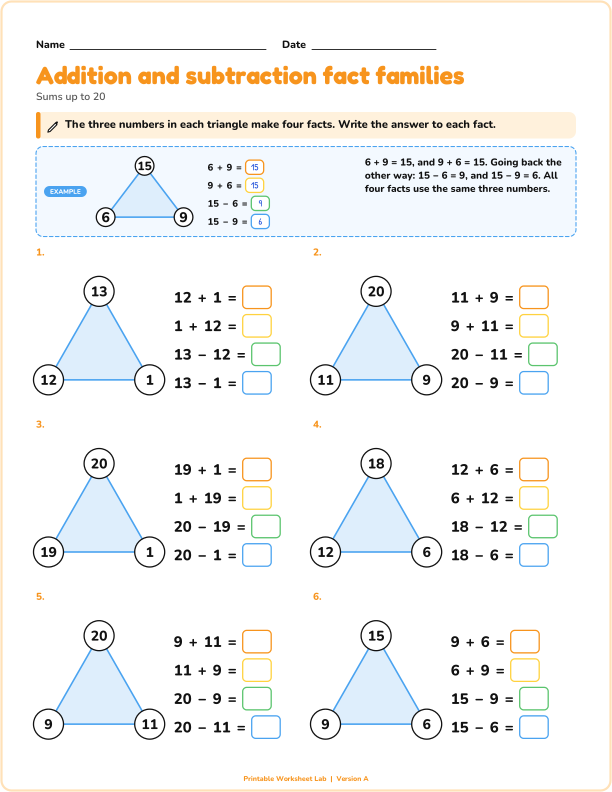
Three numbers in a triangle make four facts: two to add or multiply and two to subtract or divide.
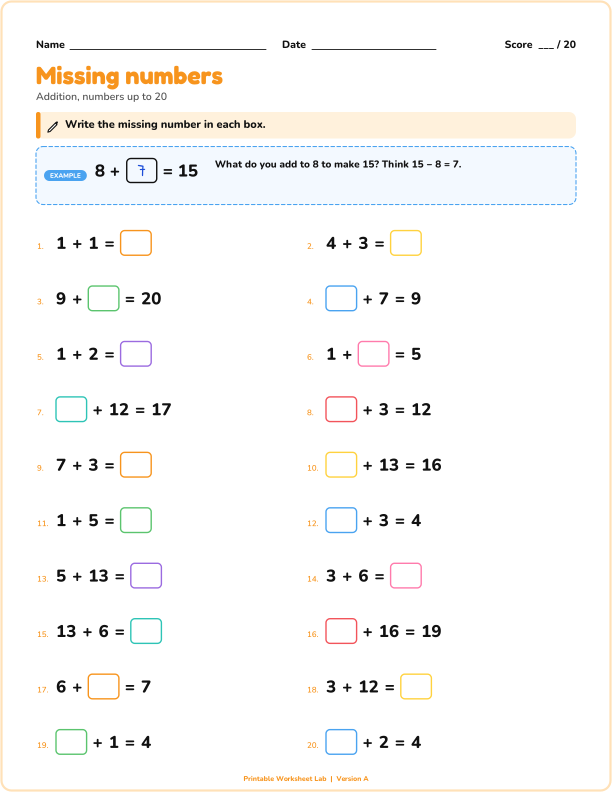
Equations with one empty box, for addition, subtraction, multiplication, division or a mix.
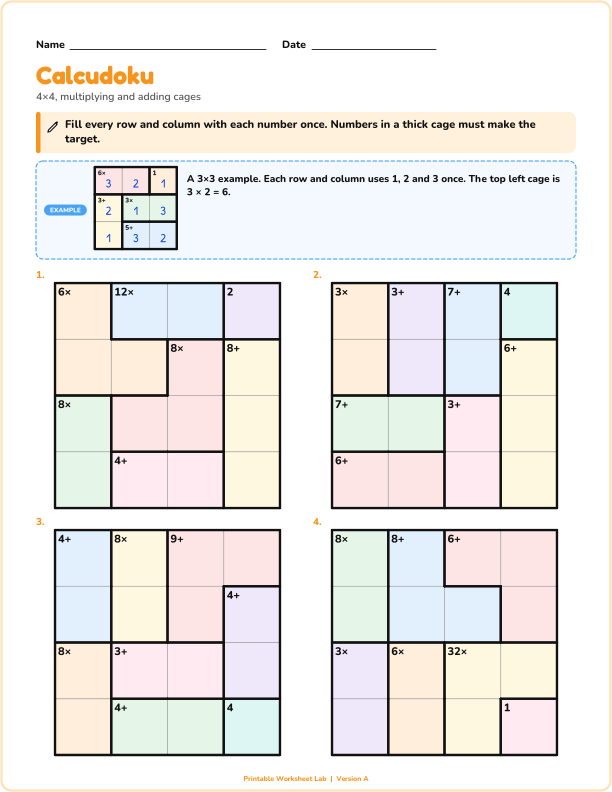
Arithmetic Latin-square puzzles: fill the grid so every cage hits its target. Each puzzle has exactly one solution.
A 14-page print-and-fold booklet for one addition family, such as +3: ten activities, an answer key and a progress tracker.
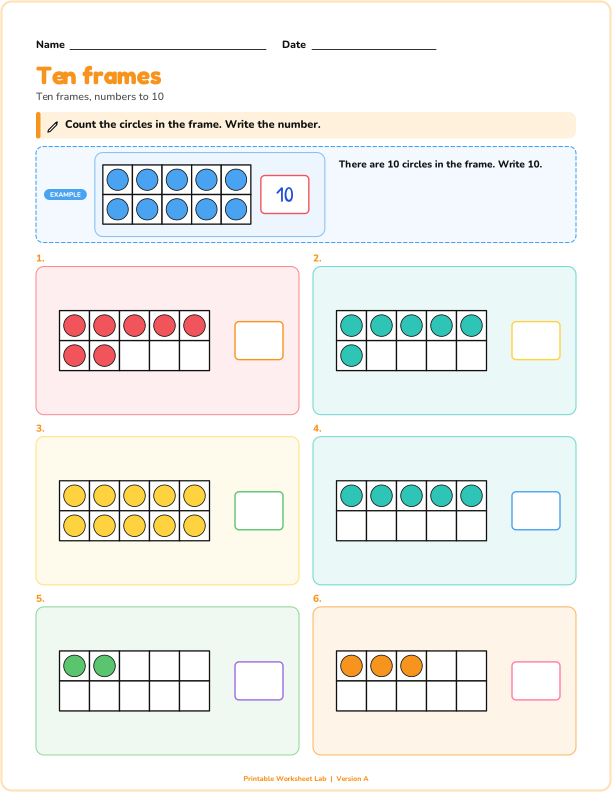
Count the circles in a ten frame, color in a number, or find how many more make ten or twenty.
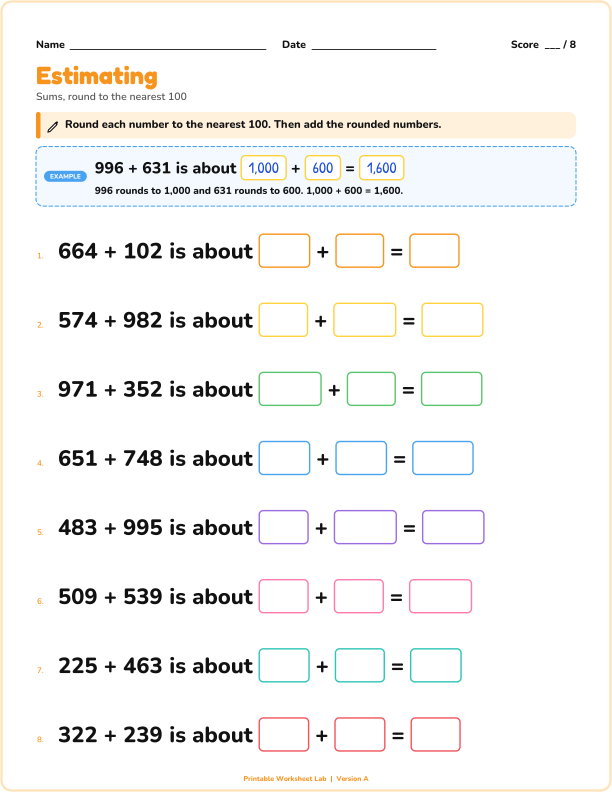
Estimate sums and differences by rounding each number first, to the nearest 10, 100, 1,000 or 10,000.
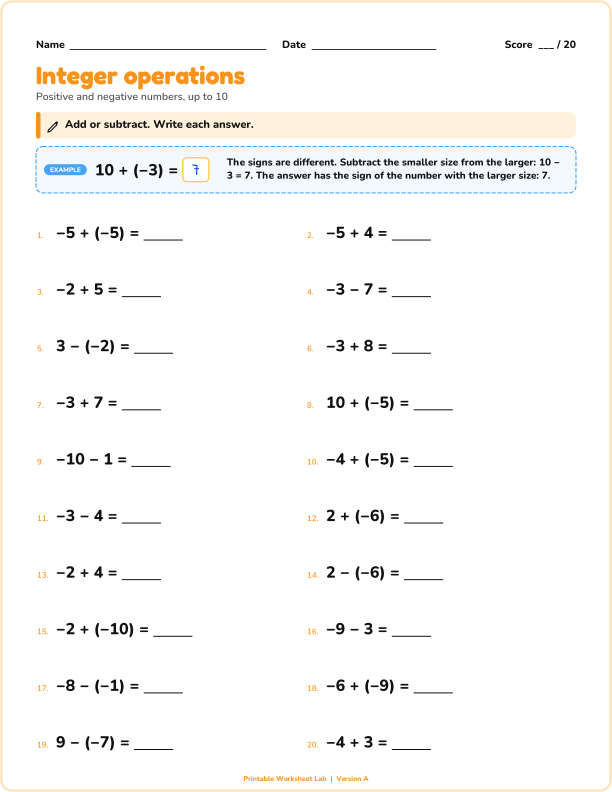
Add, subtract, multiply and divide positive and negative numbers, one operation or all four.
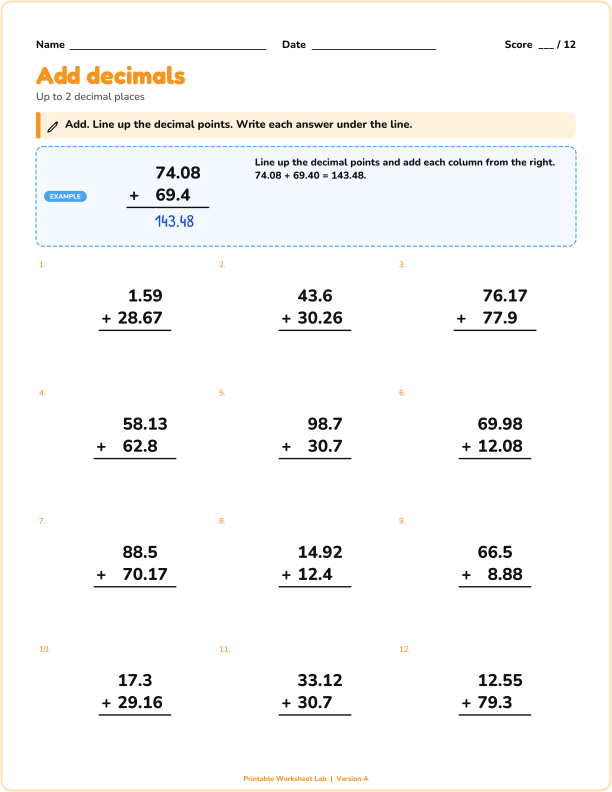
Stacked decimal addition and subtraction with the points lined up, plus multiplying and dividing decimals with exact answers.
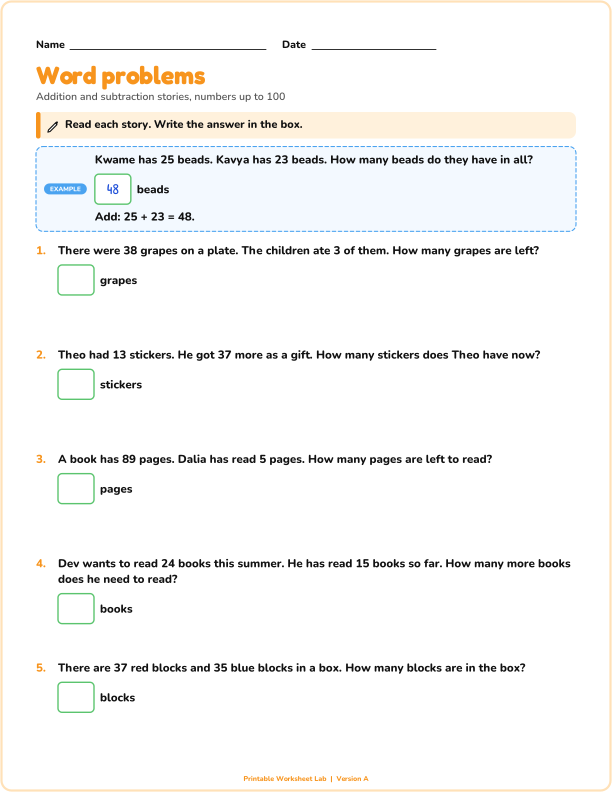
Short one-step stories with different names, objects and settings, each with one numeric answer.
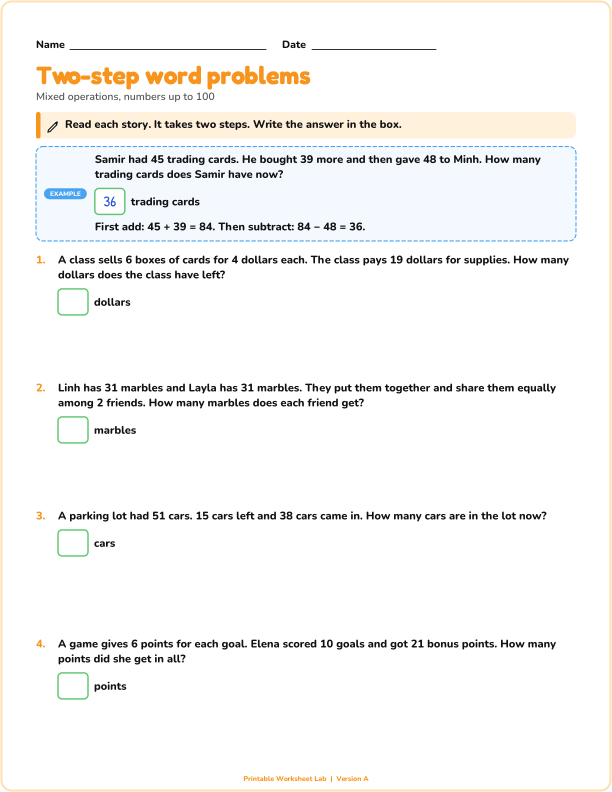
Stories that take two steps: add and subtract, multiply then add or subtract, or divide.
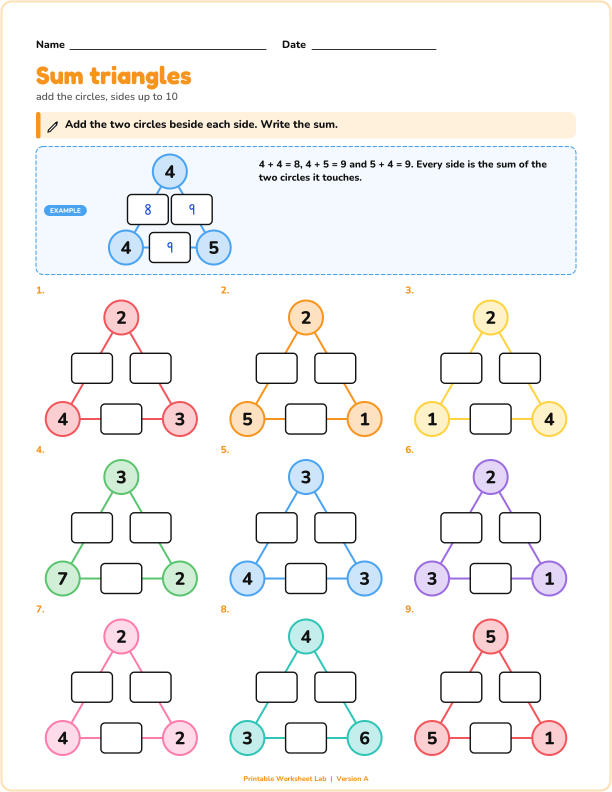
Triangles where each side is the sum of the two circles it joins, to fill in by adding or by working back.
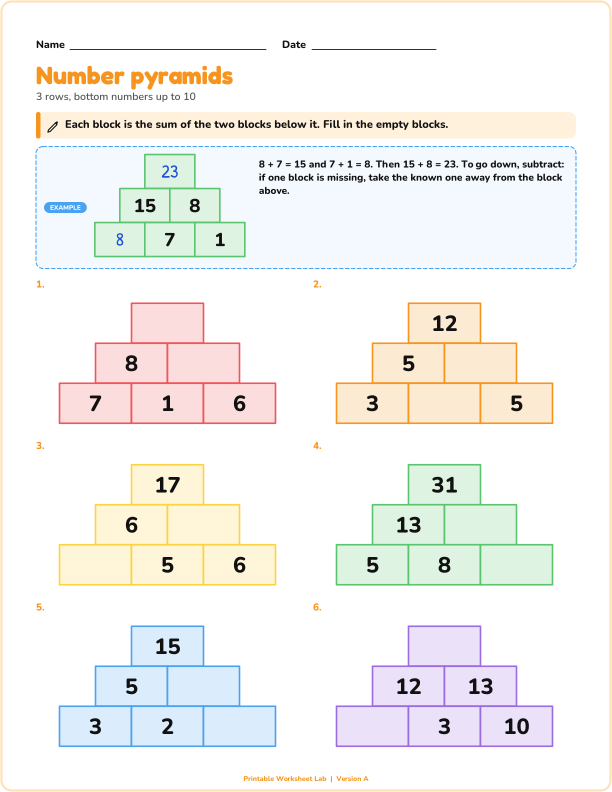
Pyramids where each block is the sum of the two blocks below it, with some blocks given and the rest to work out.
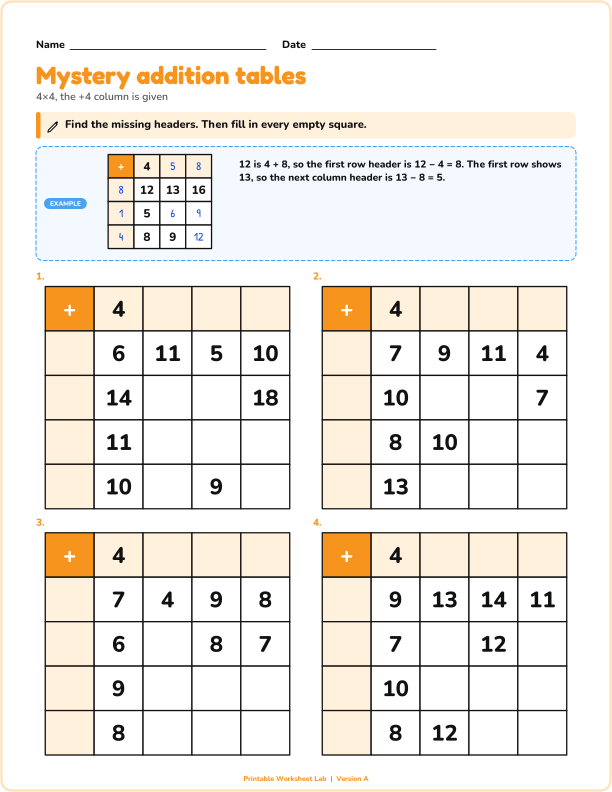
Addition tables with the headers hidden: work out the headers, then fill in the table.
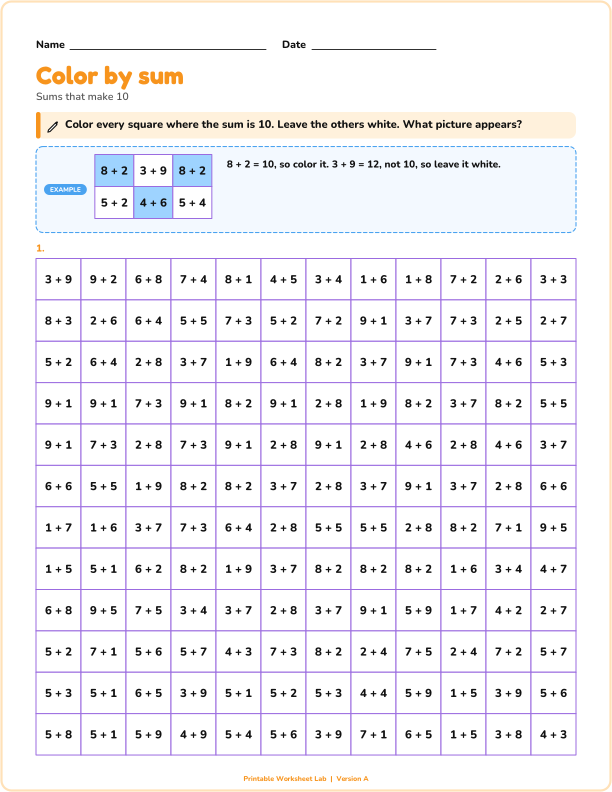
Color every square whose sum makes the target number, for example 10, to reveal a hidden picture.
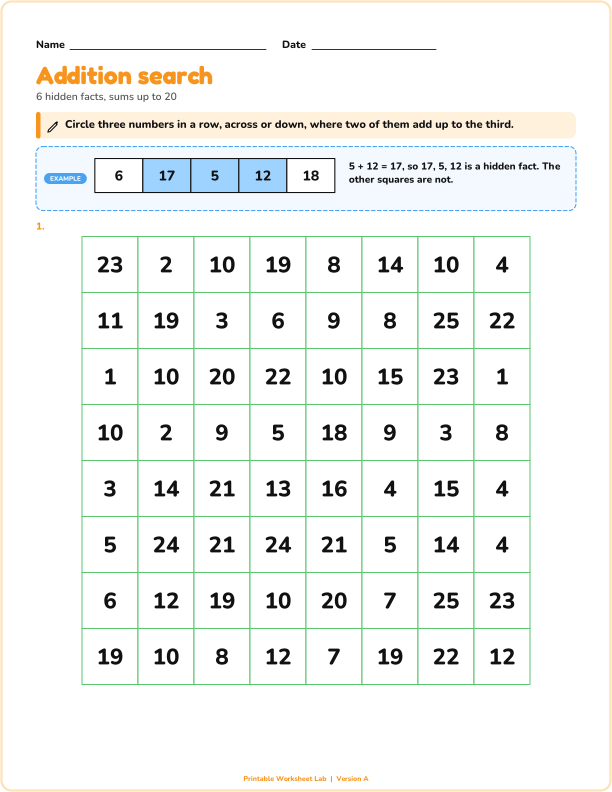
Find hidden addition facts in a grid of numbers: three in a row where two of the numbers add up to the third.
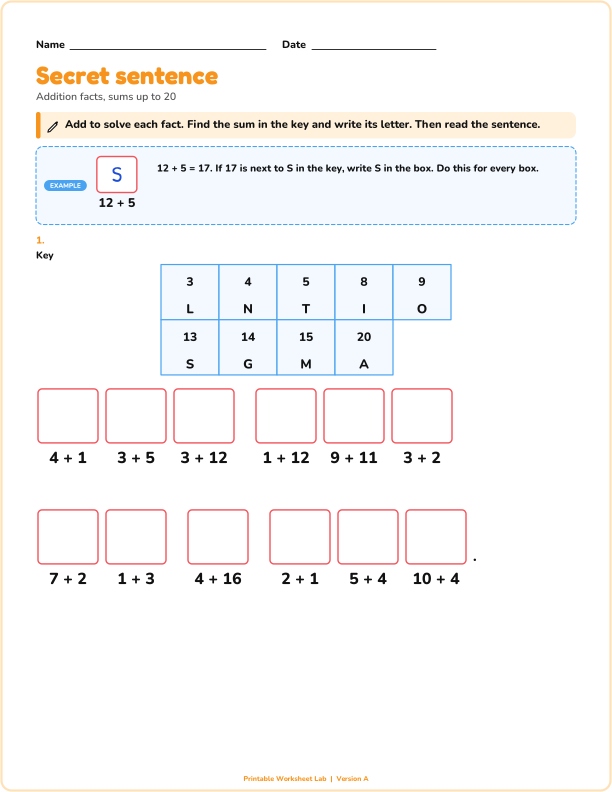
Solve addition facts to decode a short, readable sentence.
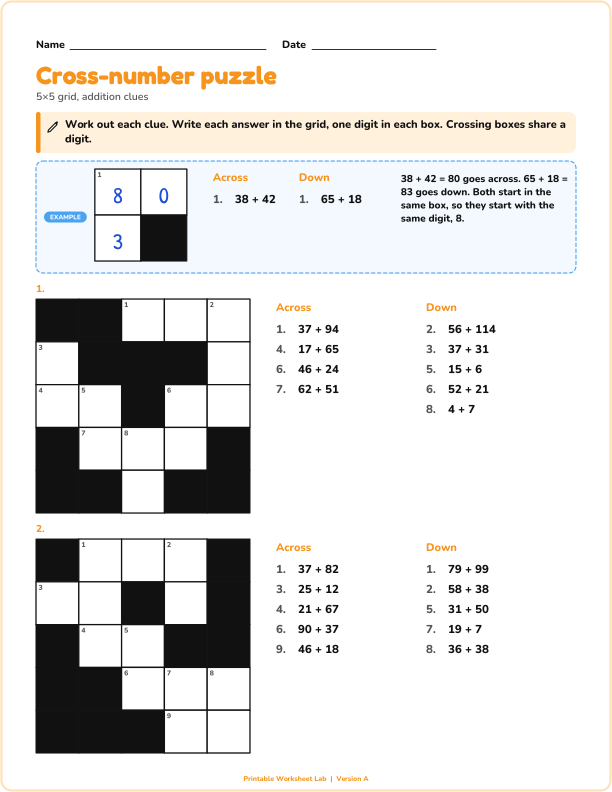
A crossword where every clue is a calculation and every answer is a number written one digit per box.
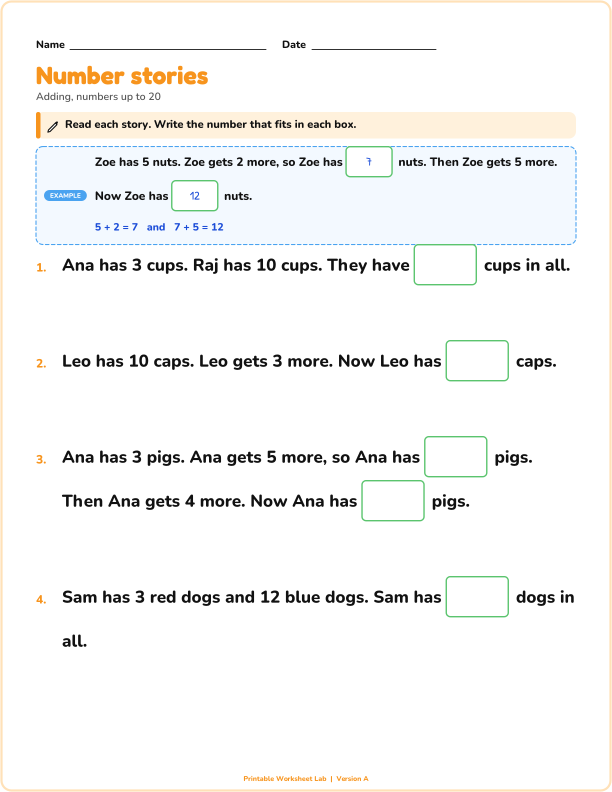
Short stories with boxes to fill: each box is the result of an addition, subtraction, multiplication or division fact.
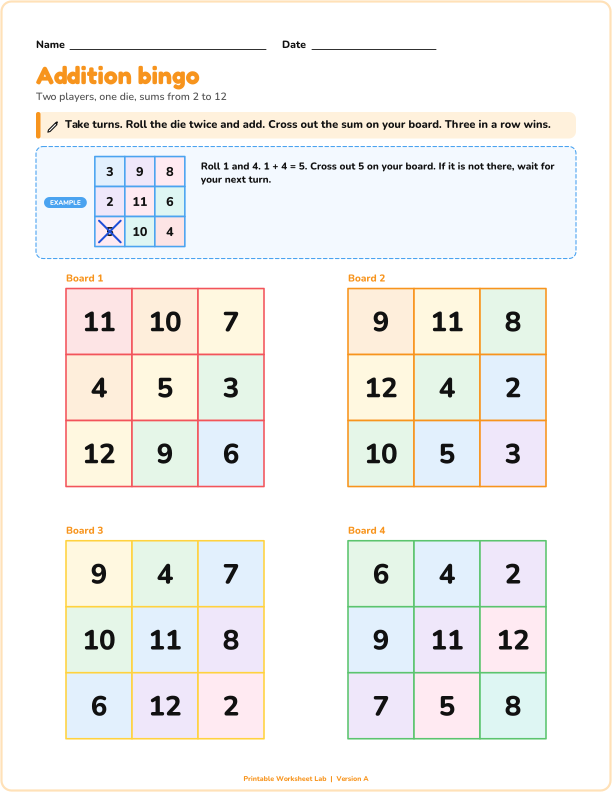
Bingo boards of sums from 2 to 12, played by rolling one die twice, adding and crossing out the sum.
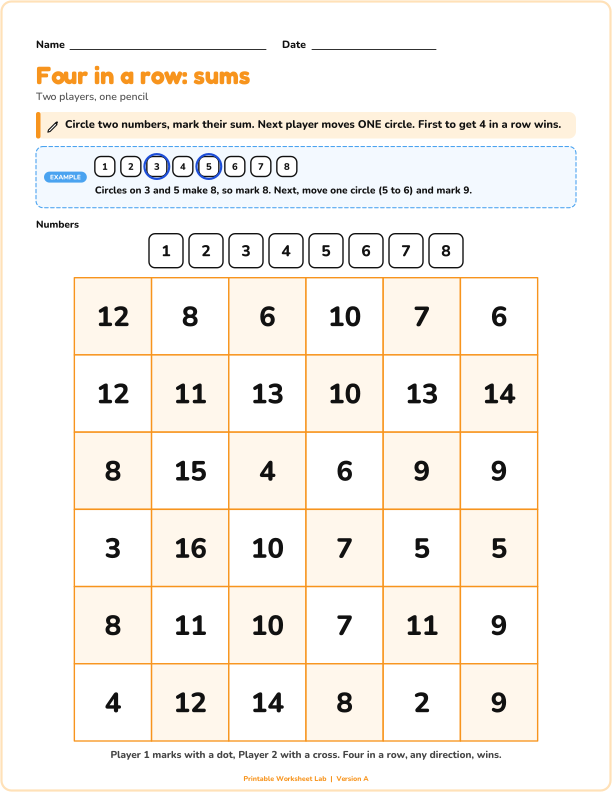
A two-player strategy game: circle two numbers, mark their sum or product, and get four in a row.
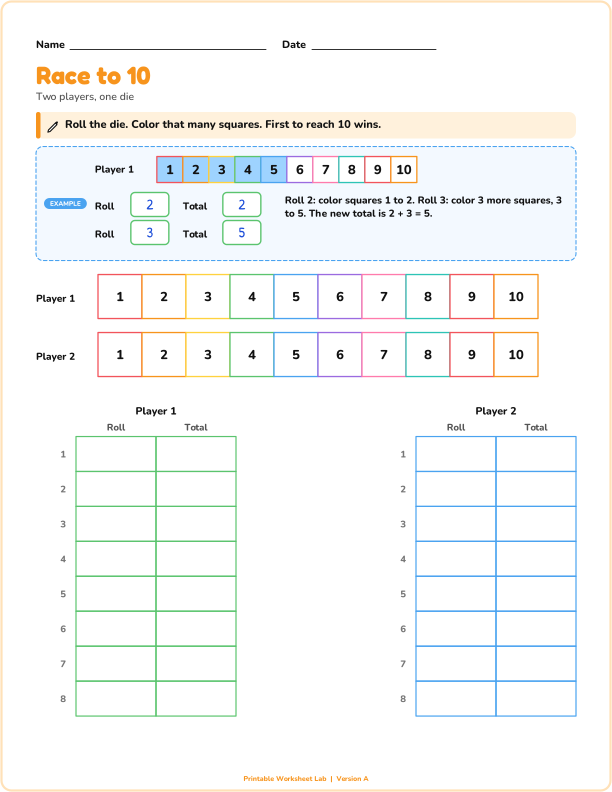
A two-player counting race with one die: roll, color that many squares and write the new total.