DrillPre-K to KGrades 1 to 2
Addition facts worksheets
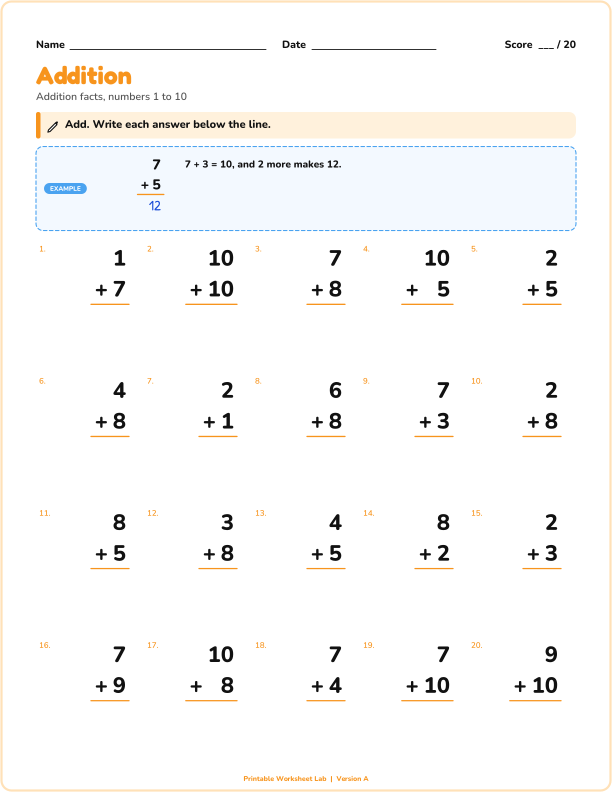
Practice one number at a time (+7, +8), doubles, near doubles, or all the facts, with the sums kept as small as you like.
Printable worksheets for pre-k to kindergarten. Every worksheet has an answer key and comes in color and black and white.
Practice one number at a time (+7, +8), doubles, near doubles, or all the facts, with the sums kept as small as you like.
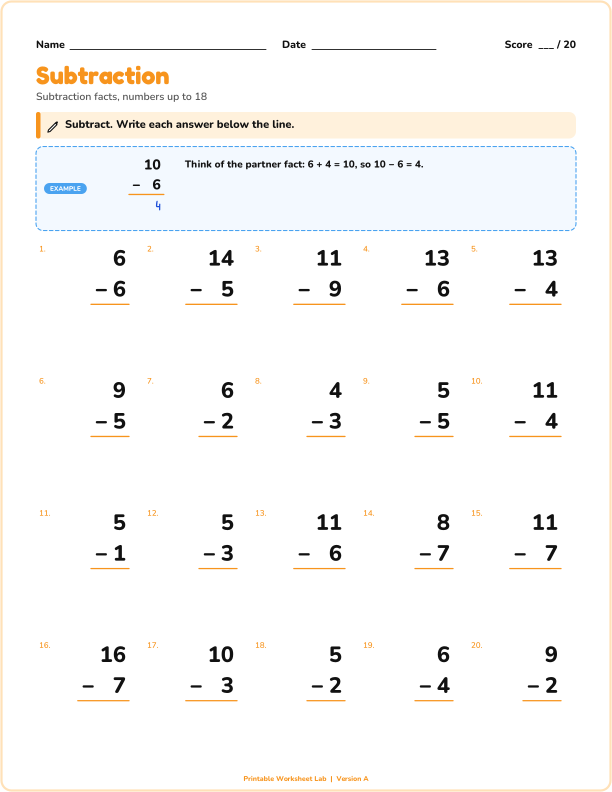
Practice taking away one number at a time, or all the facts, with answers from 0 to 9 so each fact has a partner addition fact.
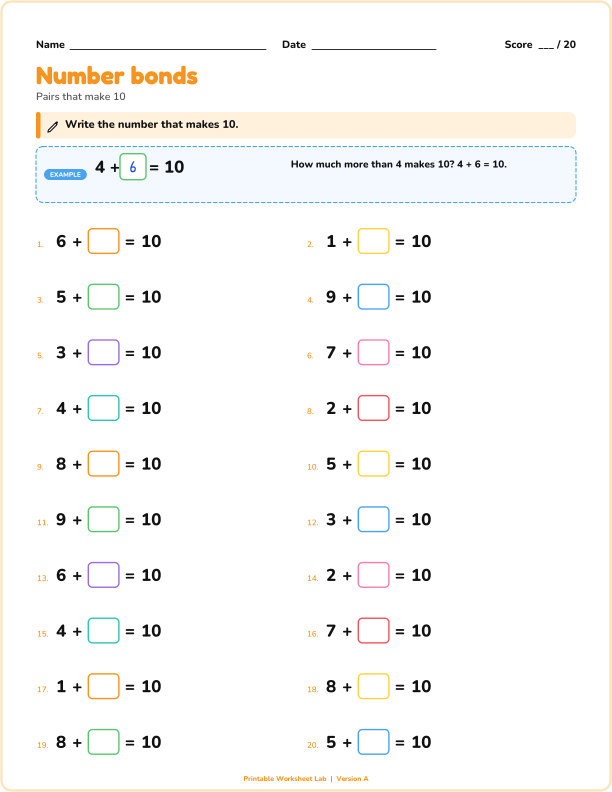
Pairs that make 10, 20, 100 or 1000 (and the 9s, 99s and 999s), as missing-number sums or as subtraction.
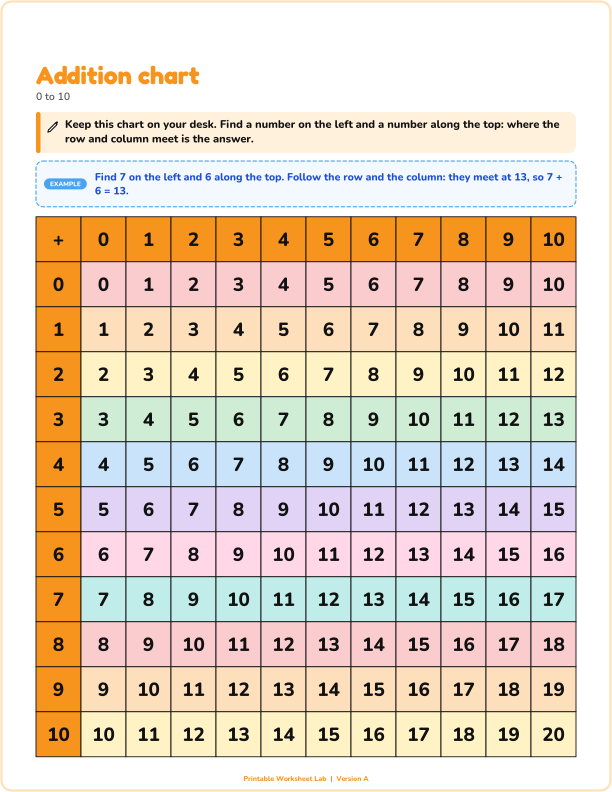
A printable addition chart up to 20 + 20, in color-coded rows or plain.
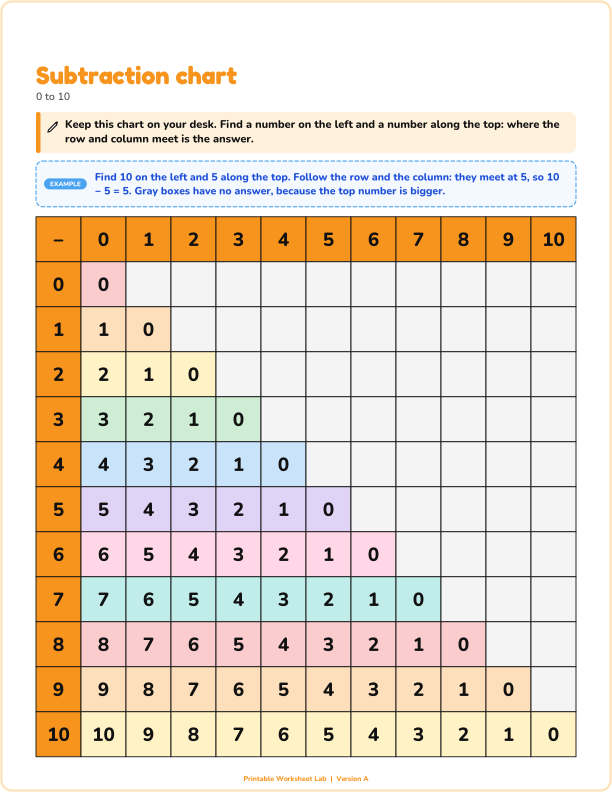
A printable subtraction chart (row minus column) up to 20, with the impossible boxes grayed out.
A 14-page print-and-fold booklet about one number from 1 to 20: tracing, counting, ten frames, connect-the-dots and more.
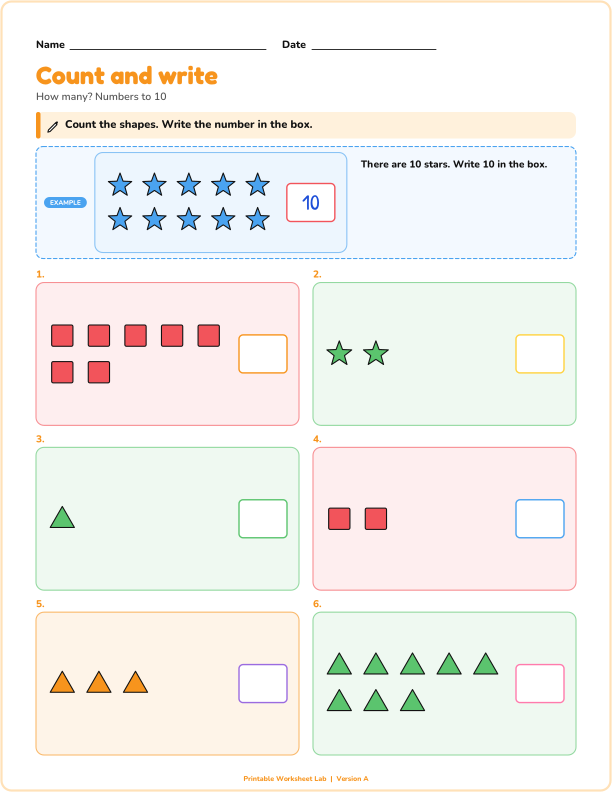
Count a group of shapes and write the number, or circle the right number, for any total from 3 to 20.
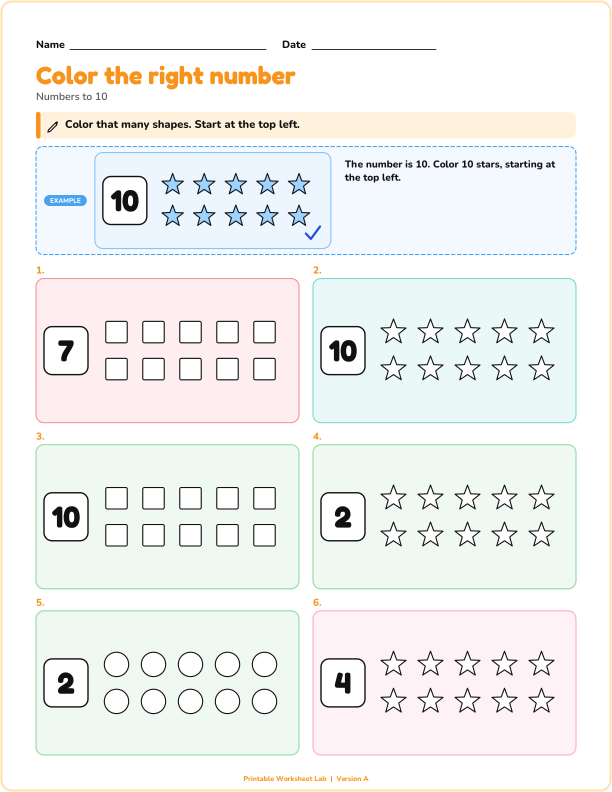
Read a numeral and color that many shapes in a row of up to 20.
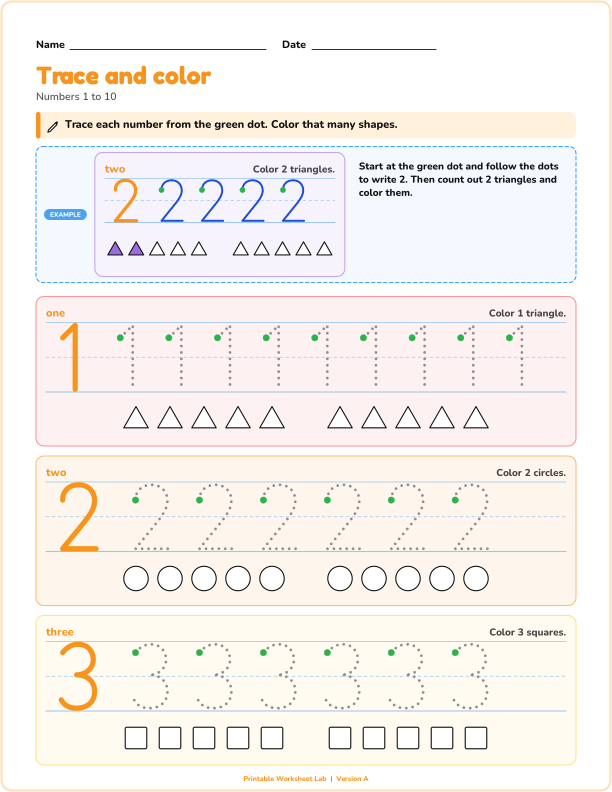
Trace dotted numerals from a green start dot, then count and color that many shapes.
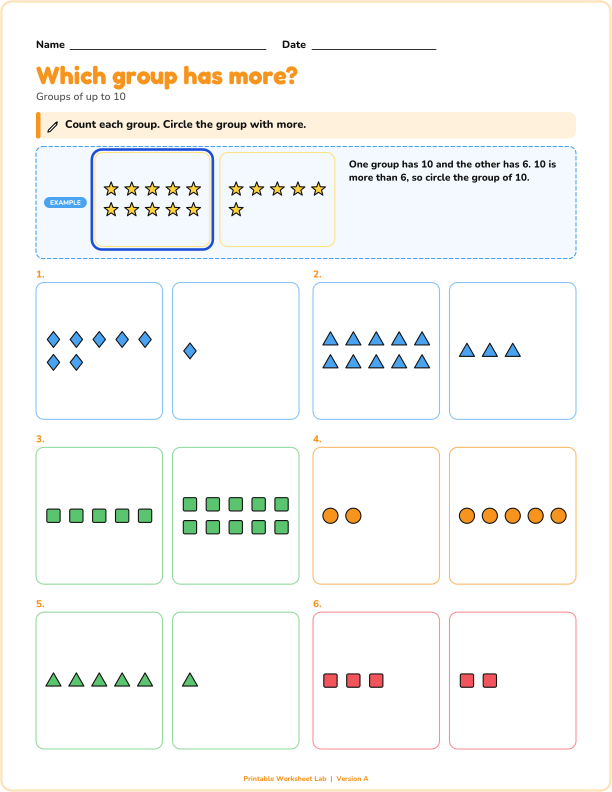
Count two groups of shapes and circle the group with more, or the group with fewer.
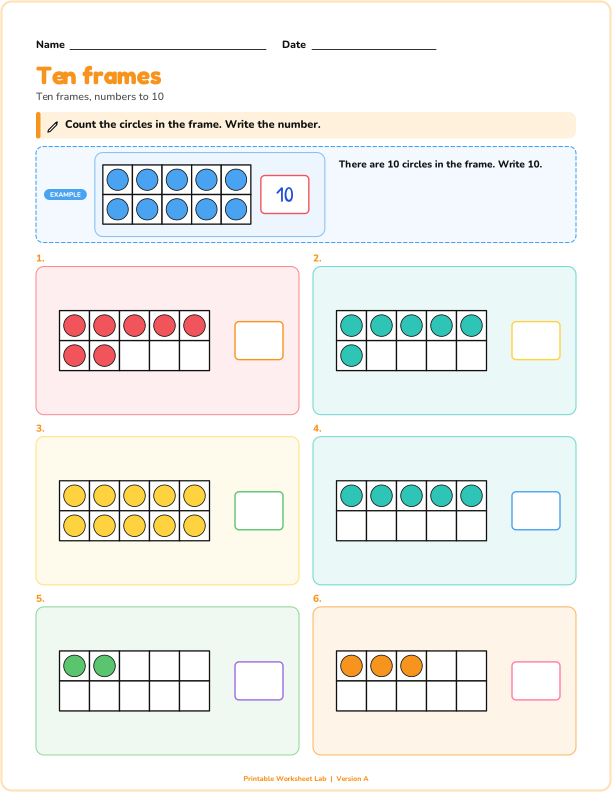
Count the circles in a ten frame, color in a number, or find how many more make ten or twenty.
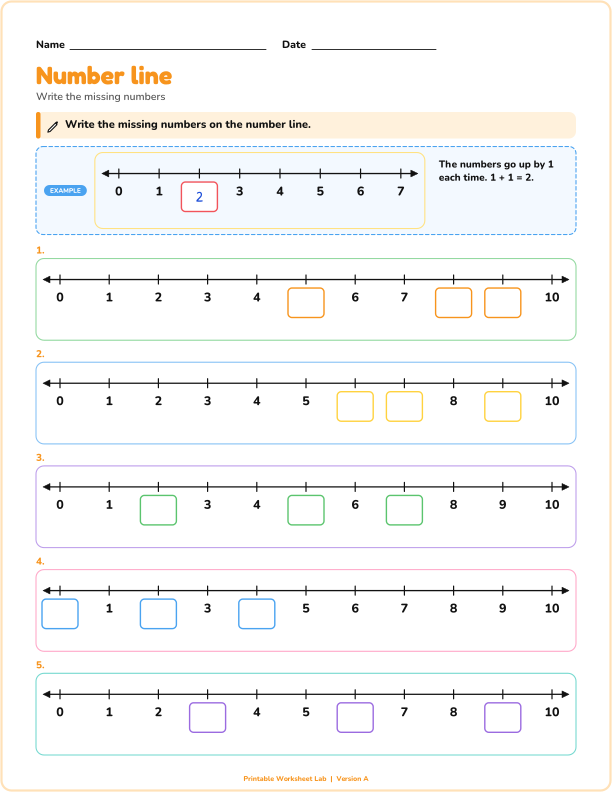
Write the missing numbers on a number line that counts by 1, 2, 3, 4, 5 or 10.
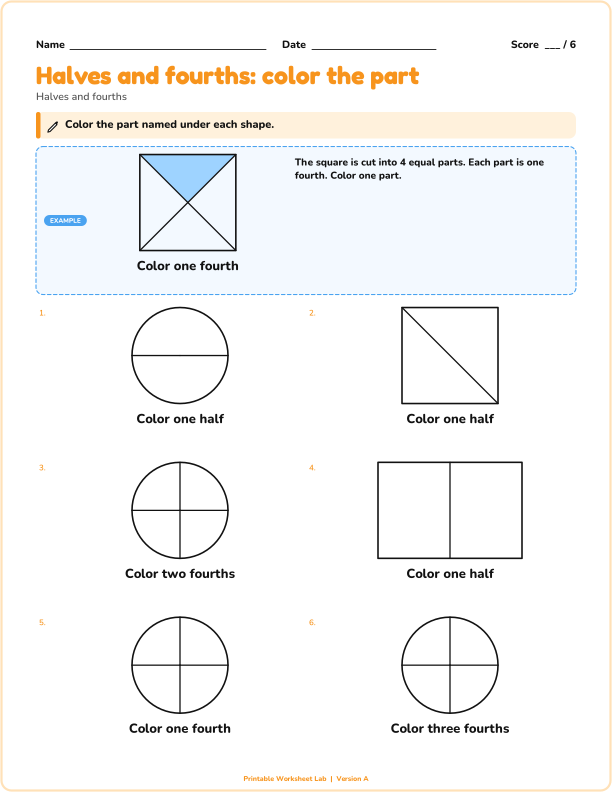
Color the part named, spot the shape cut into equal parts, count the equal shares, or name the colored part, on circles, rectangles and squares.
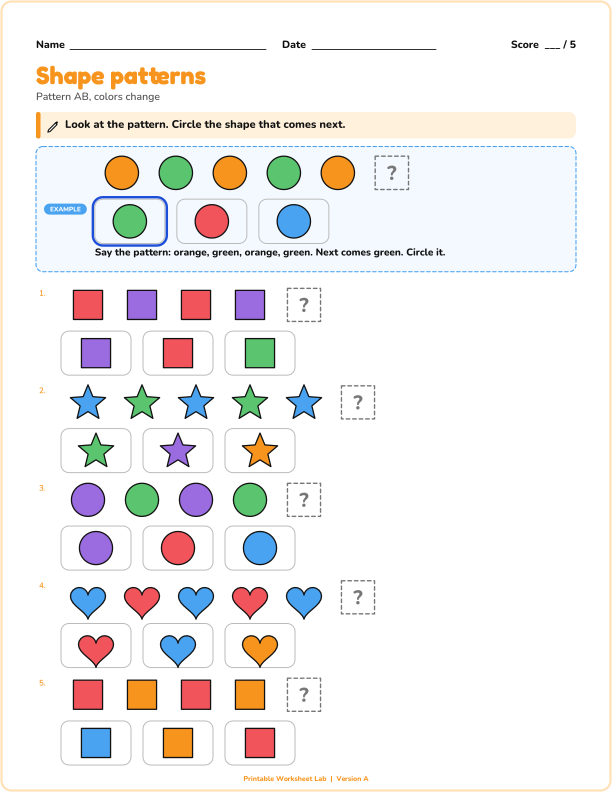
Continue AB, AAB, ABB, ABC and AABB patterns of colored shapes by coloring or circling what comes next.
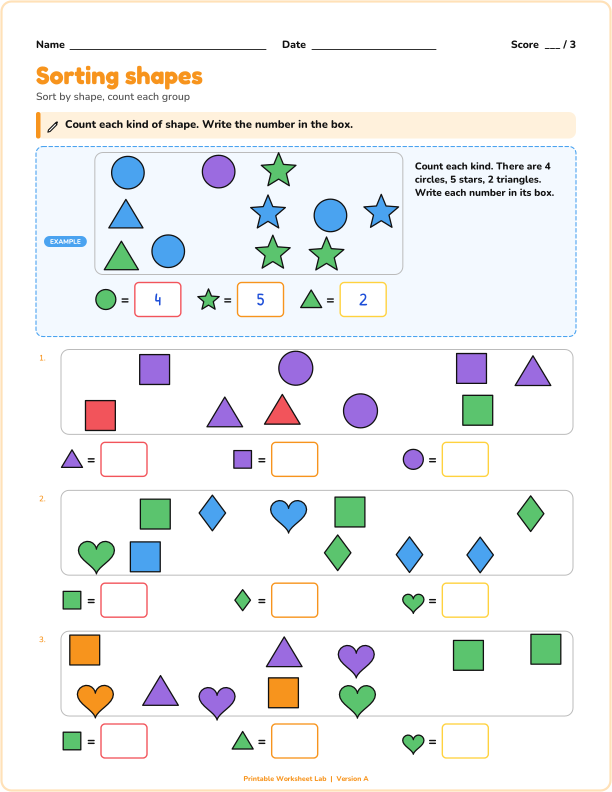
Sort a group of shapes by one attribute: count each kind, or circle every shape that matches.
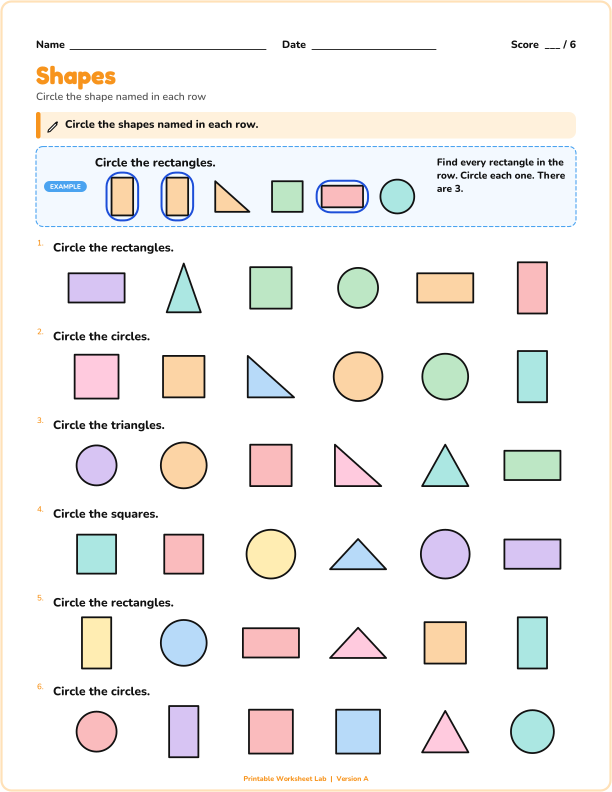
Circle or color the circles, squares, triangles and rectangles hidden in each row.
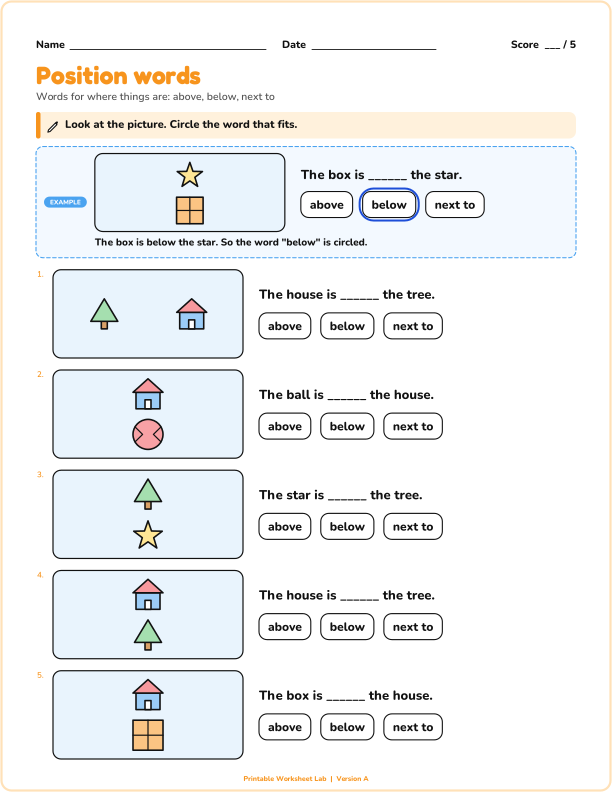
Above, below, next to, left of and right of: read a picture and circle the word that fits.
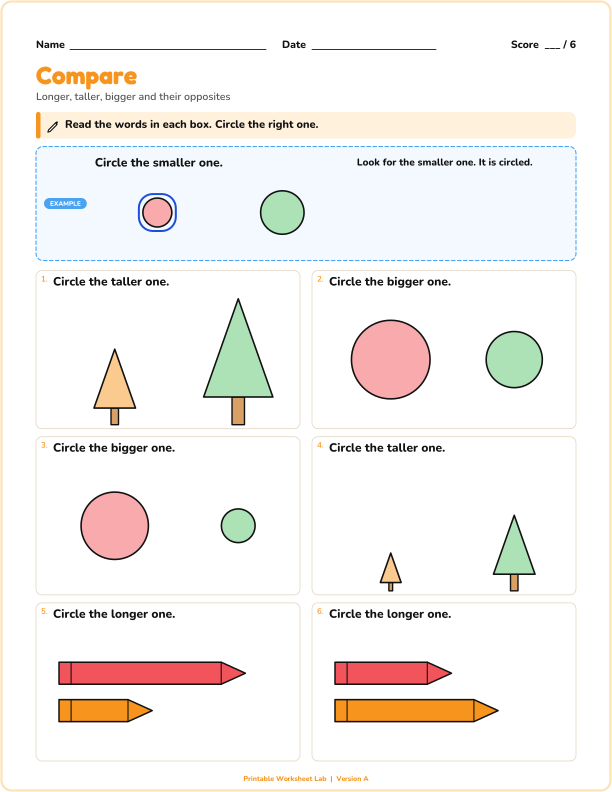
Longer, shorter, taller, bigger: circle the pencil, tree or circle that fits the word.
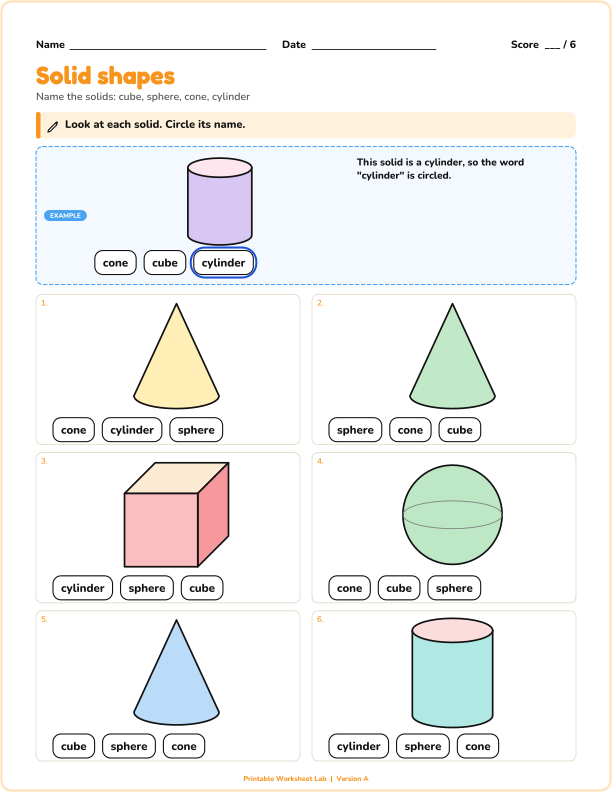
Name cubes, spheres, cones and cylinders, and optionally rectangular prisms and pyramids.
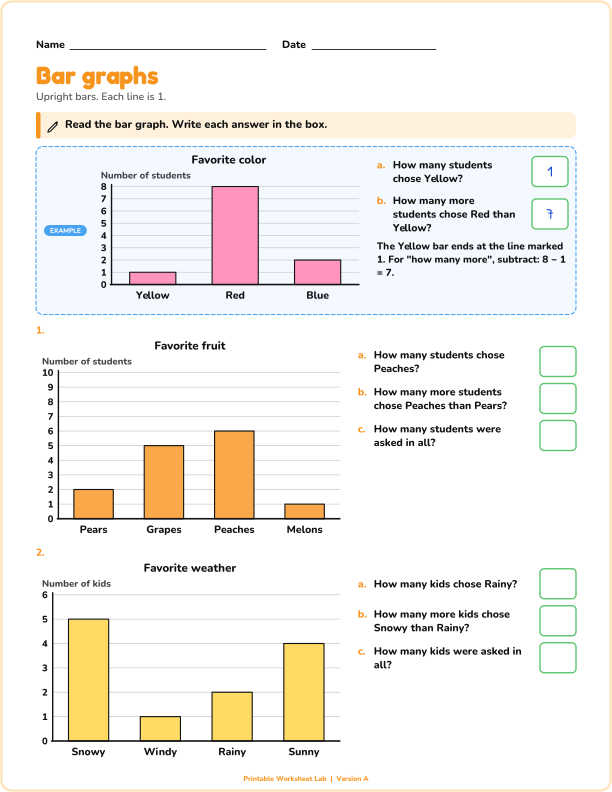
Read a bar graph and answer questions, or shade the bars to match a table.
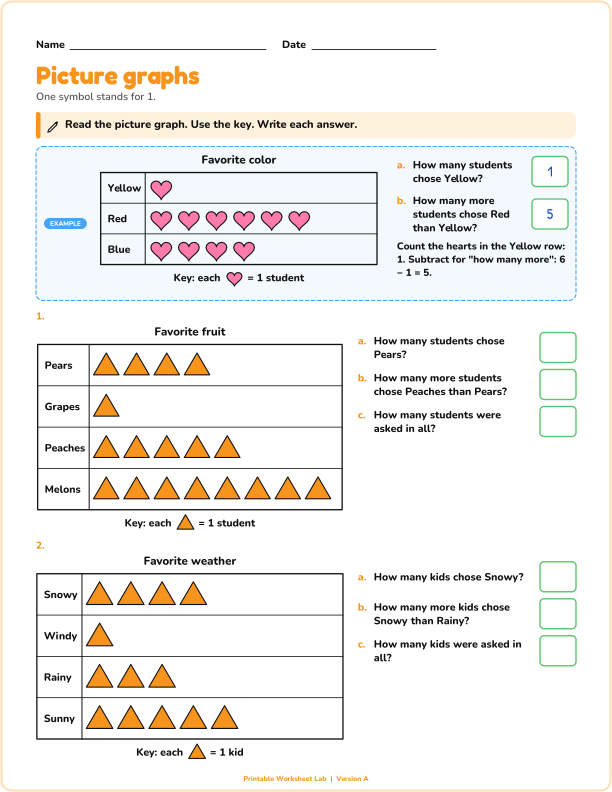
Read a picture graph where one symbol stands for 1, 2, 5 or 10 and answer questions.
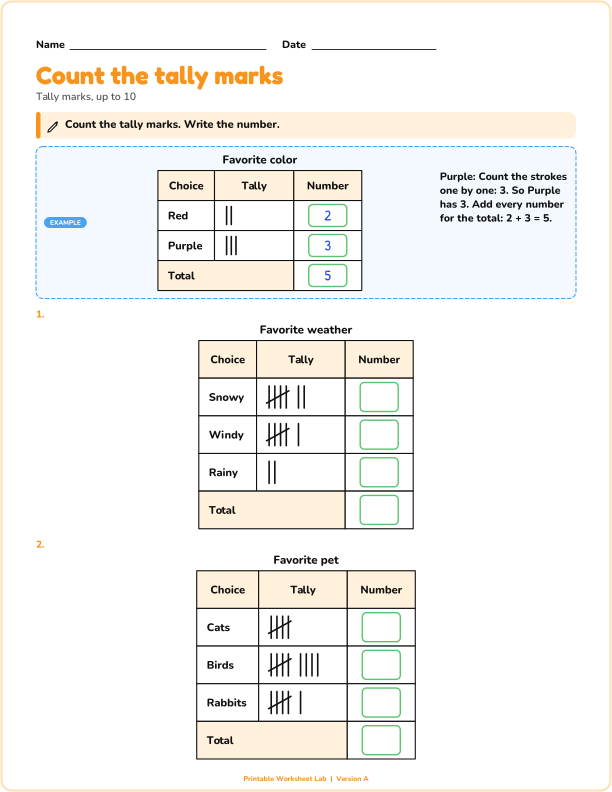
Count tally marks, draw tally marks for a number, or tally a list into a frequency table.
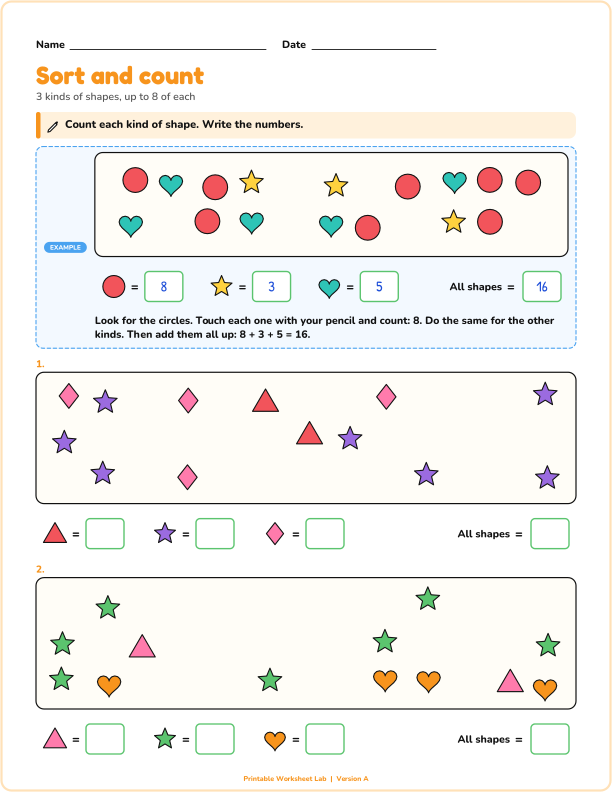
Count each kind of shape in a mixed group and write how many of each, and how many in all.
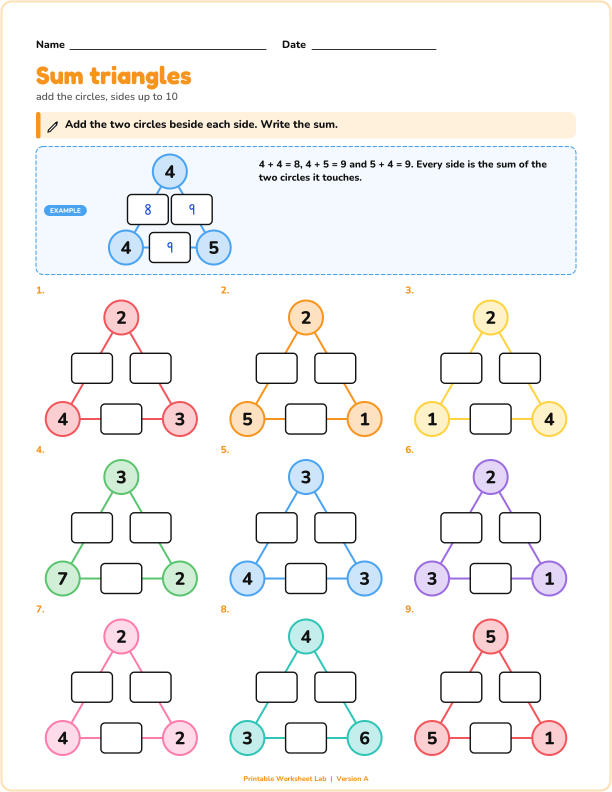
Triangles where each side is the sum of the two circles it joins, to fill in by adding or by working back.
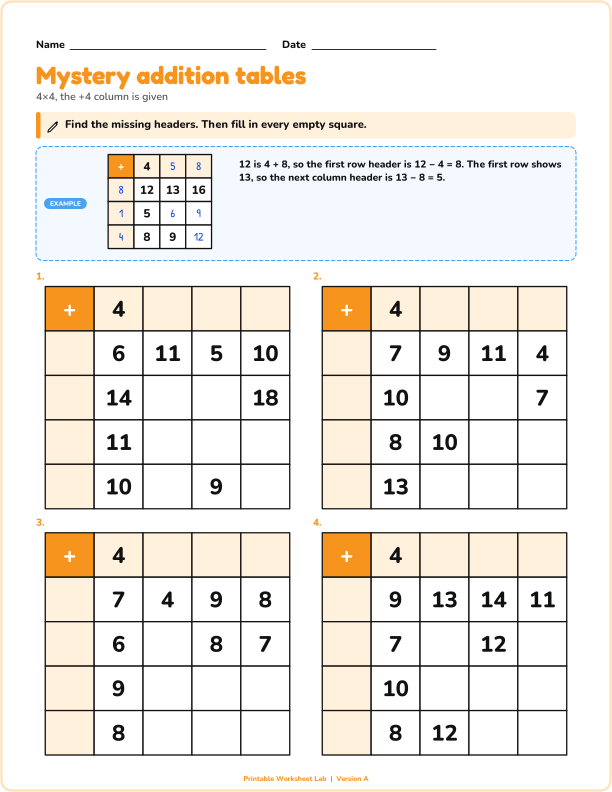
Addition tables with the headers hidden: work out the headers, then fill in the table.
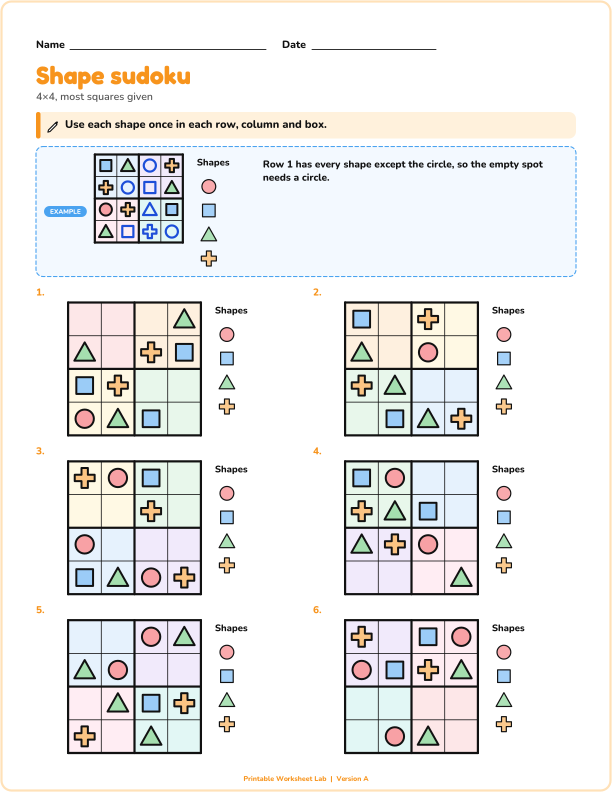
Logic grids with no arithmetic: fill each row, column and box with every shape or number once, with one solution for each puzzle.
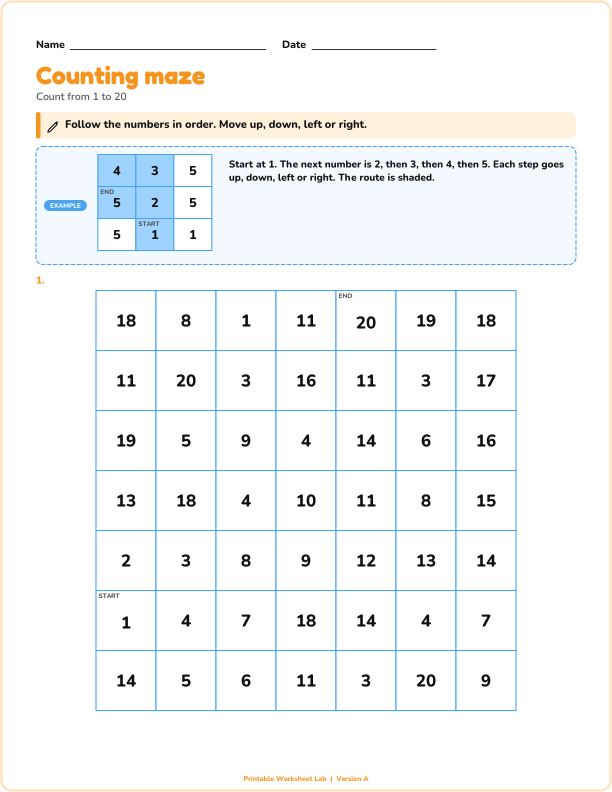
Mazes that follow the counting order: 1 to 20, or skip counting by 2s, 3s, 5s and 10s.
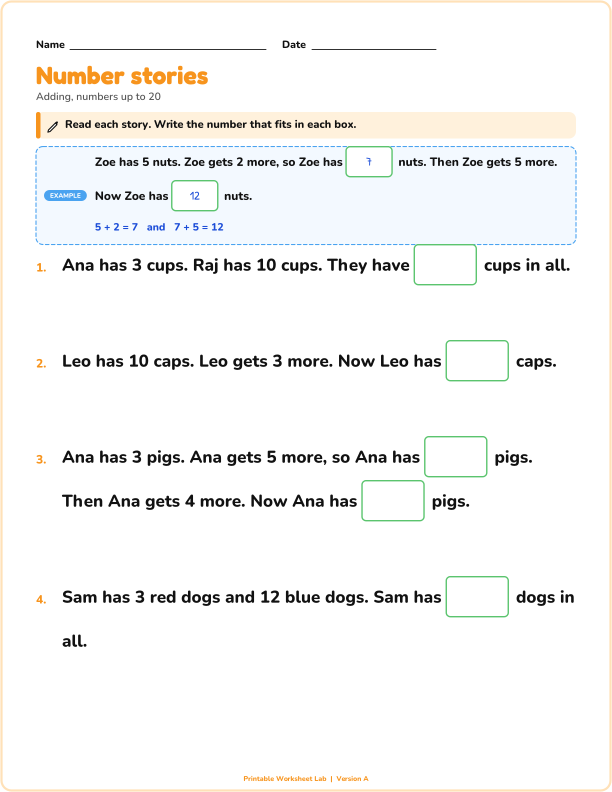
Short stories with boxes to fill: each box is the result of an addition, subtraction, multiplication or division fact.
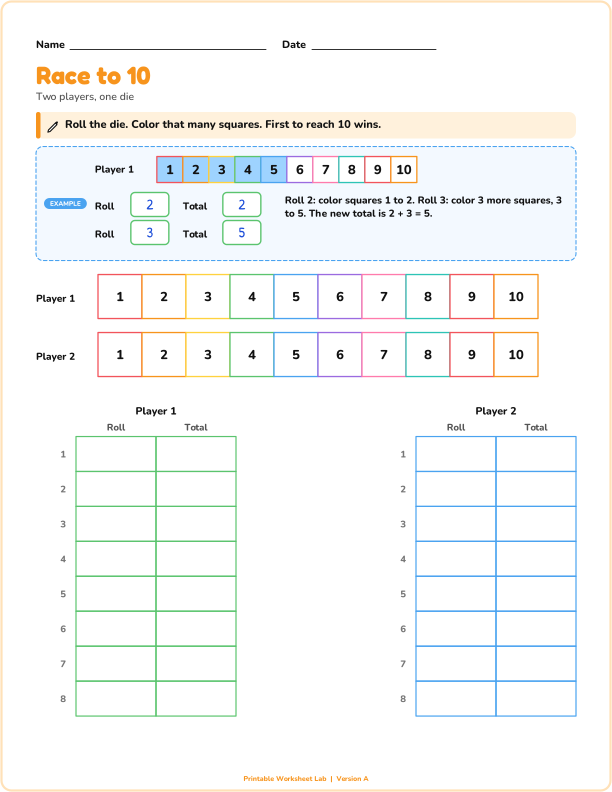
A two-player counting race with one die: roll, color that many squares and write the new total.
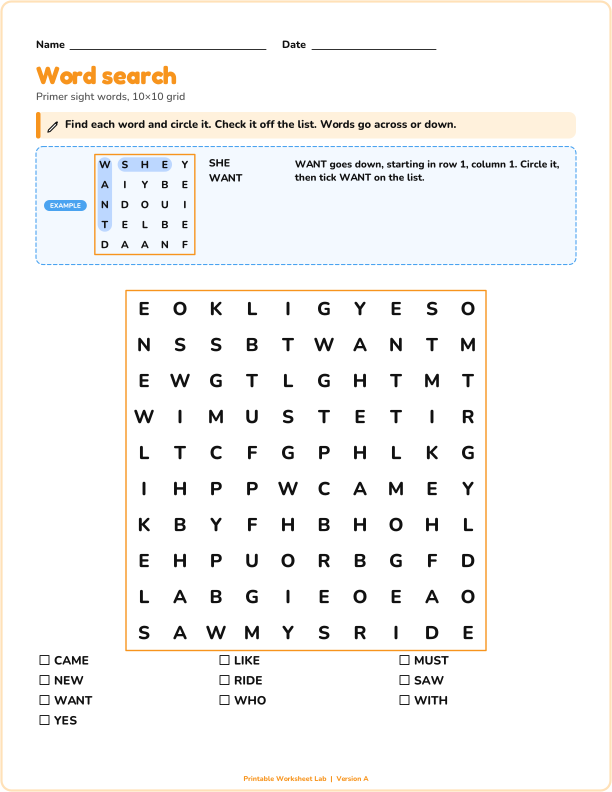
Word searches for sight words, phonics patterns and ten topics, with every word hidden exactly once.
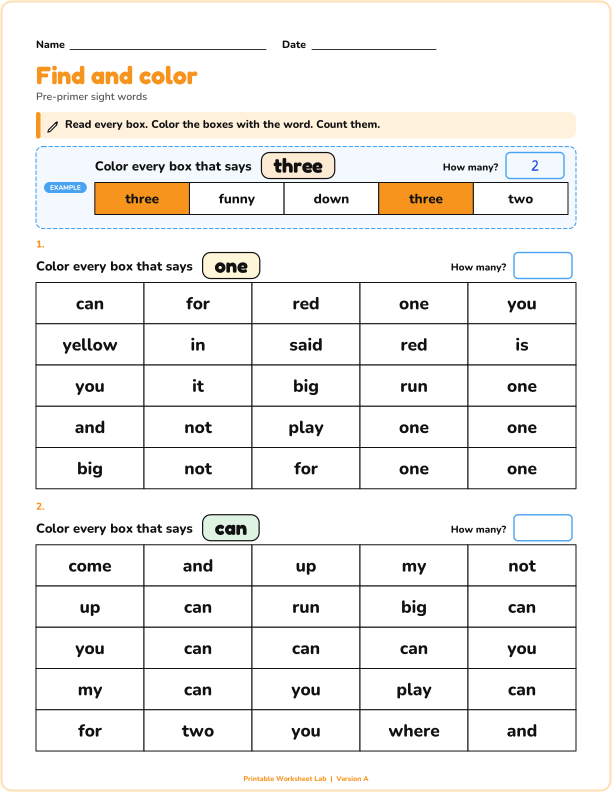
A grid of look-alike words: color every box with the sight word and count them.
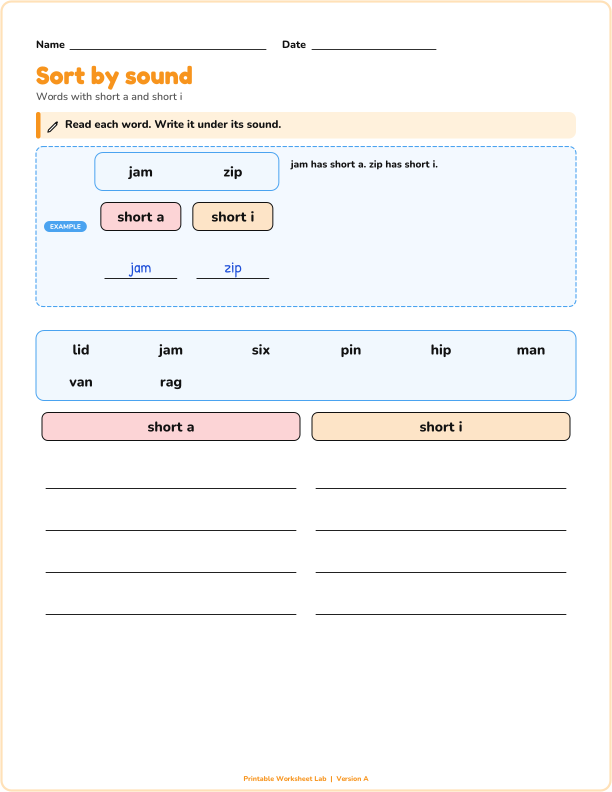
Read each word and write it under its sound: short vowels, long vowels with silent e, vowel teams or digraphs.
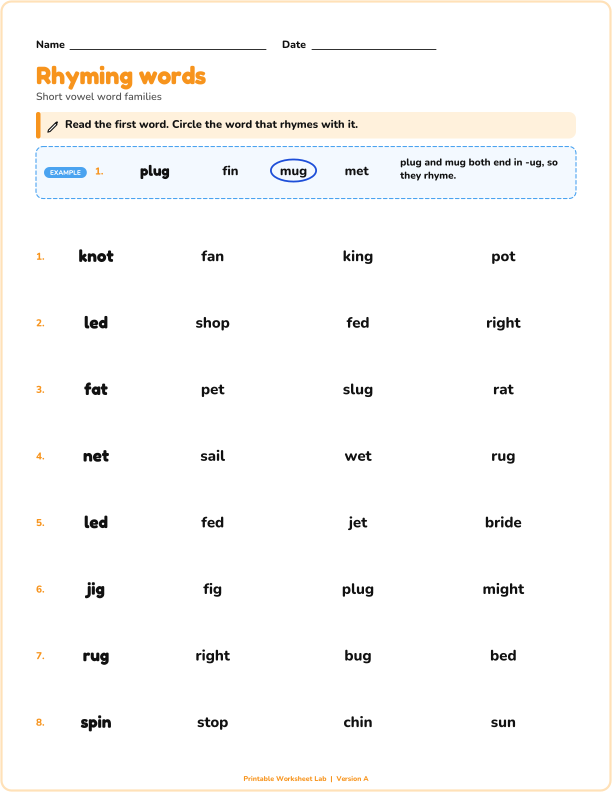
Read a word and circle the one of three words that rhymes with it.
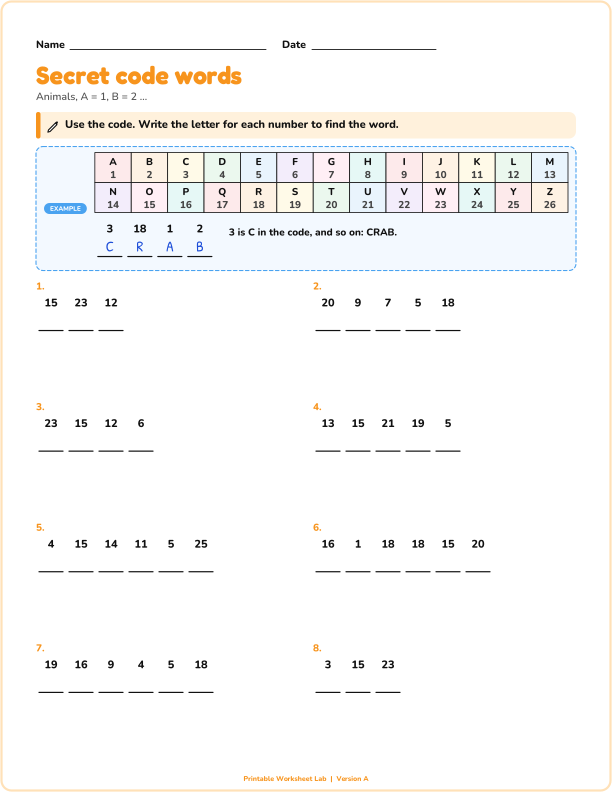
Use a number code to find hidden words from a topic, a phonics pattern or a sight word list.
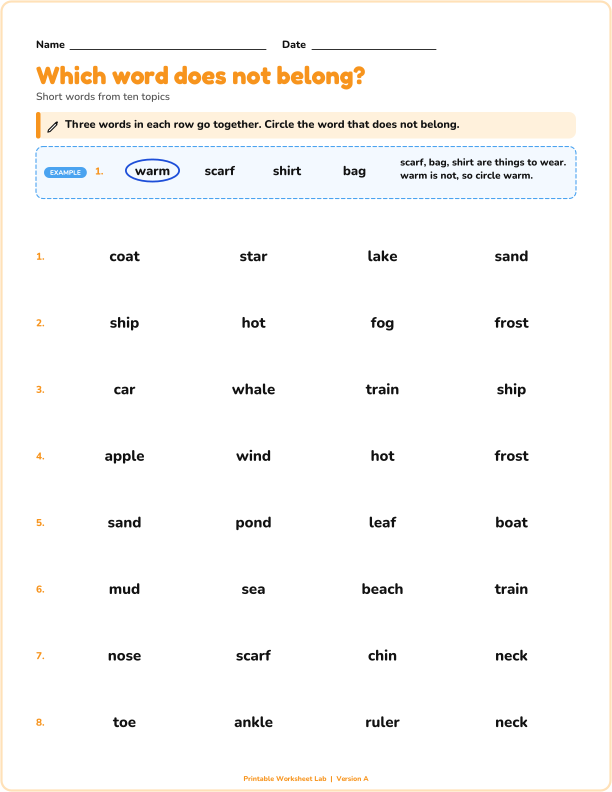
Rows of four words where three go together, and children circle the one that does not belong.