PuzzleGrades 3 to 4Grades 5 to 6Grades 7 to 8
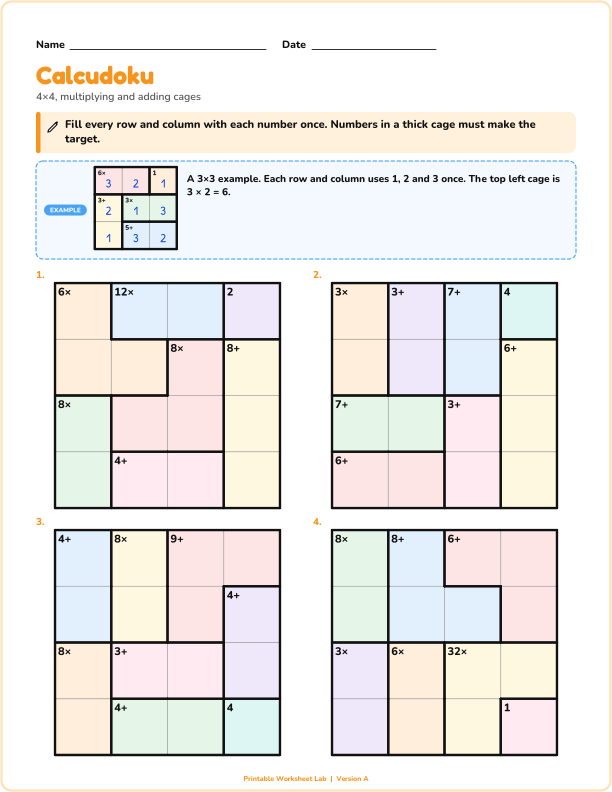
Calcudoku puzzles
Arithmetic Latin-square puzzles: fill the grid so every cage hits its target. Each puzzle has exactly one solution.
Printable worksheets for grades 7 and 8. Every worksheet has an answer key and comes in color and black and white.
Arithmetic Latin-square puzzles: fill the grid so every cage hits its target. Each puzzle has exactly one solution.
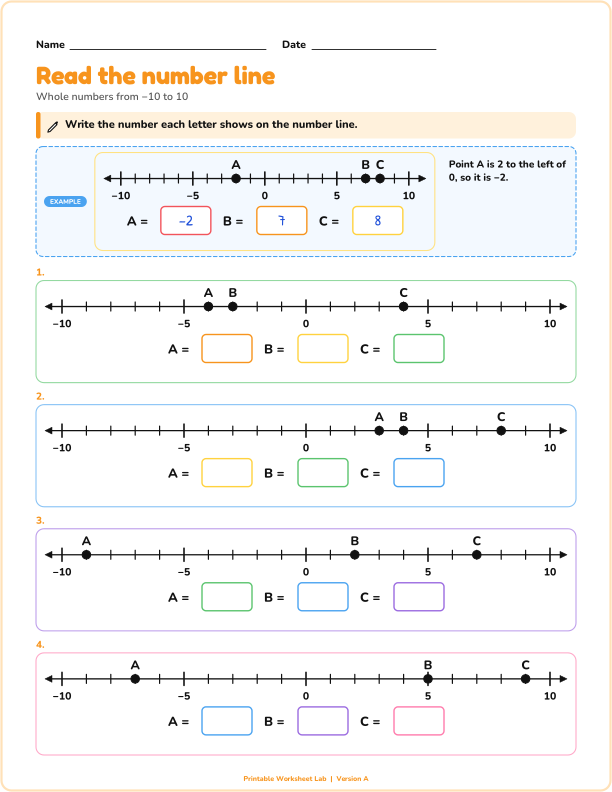
Read whole numbers on both sides of zero from a number line, or plot them, on lines from −5 to 5 up to −50 to 50.
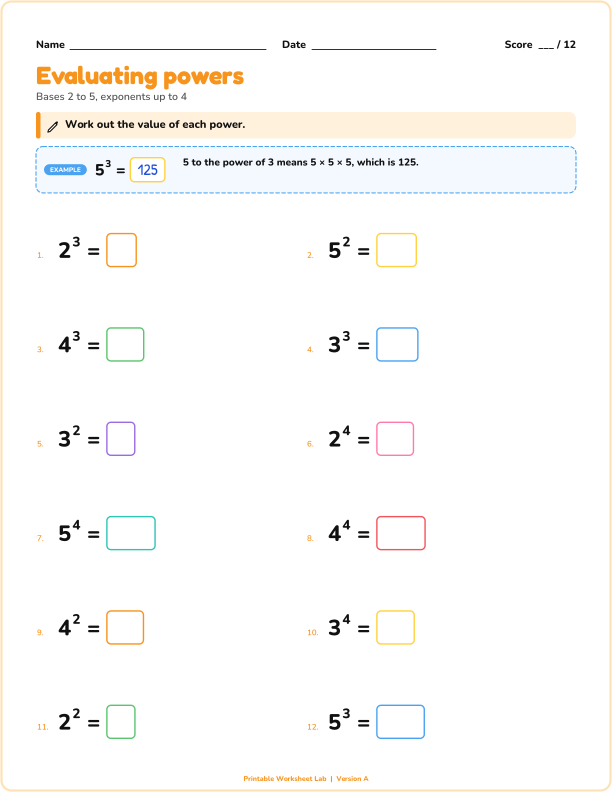
Evaluate powers, or use the exponent rules for products, quotients and powers of powers.
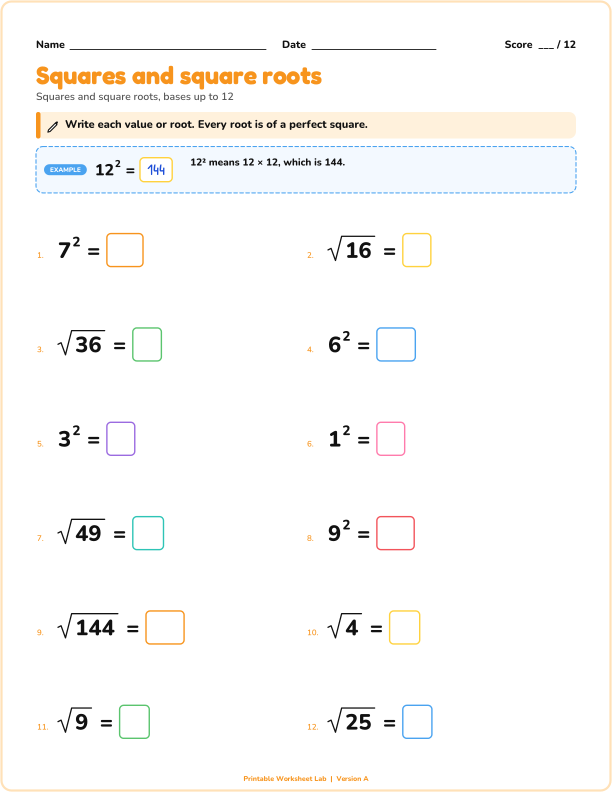
Perfect squares and square roots, cubes and cube roots, and which two whole numbers a root lies between.
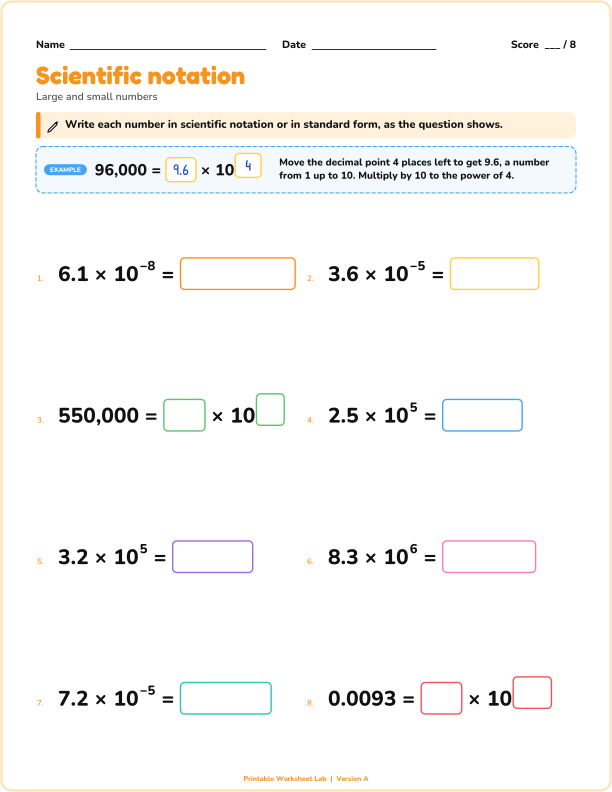
Write large and small numbers in scientific notation, and convert them back to standard form.
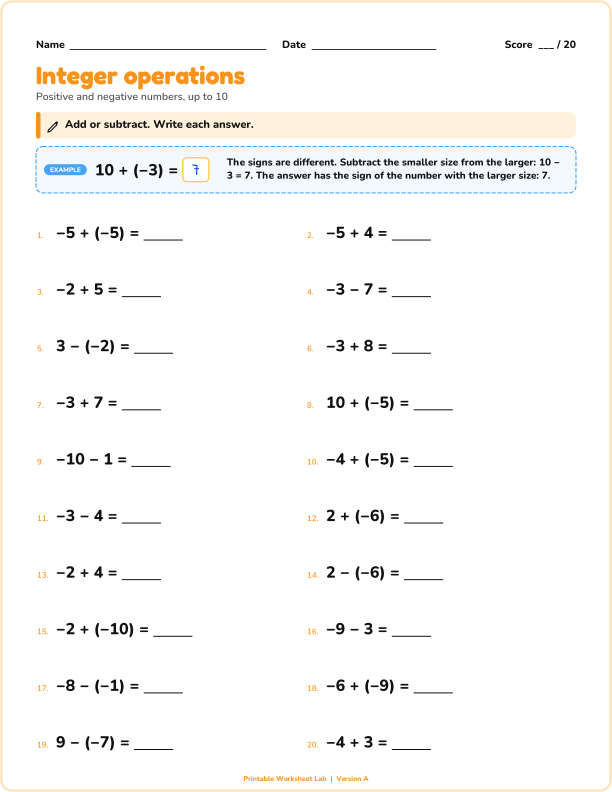
Add, subtract, multiply and divide positive and negative numbers, one operation or all four.
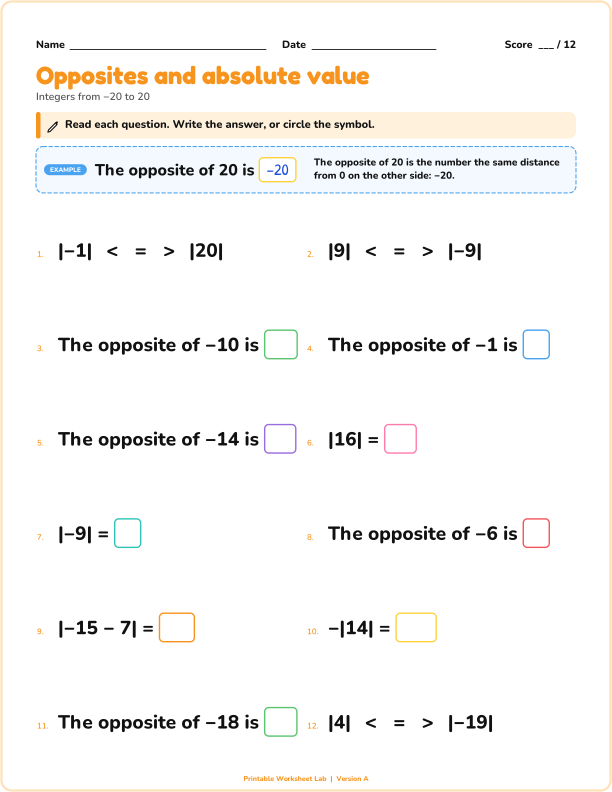
Write the opposite of a number, find an absolute value, compare absolute values and work out expressions with absolute value.
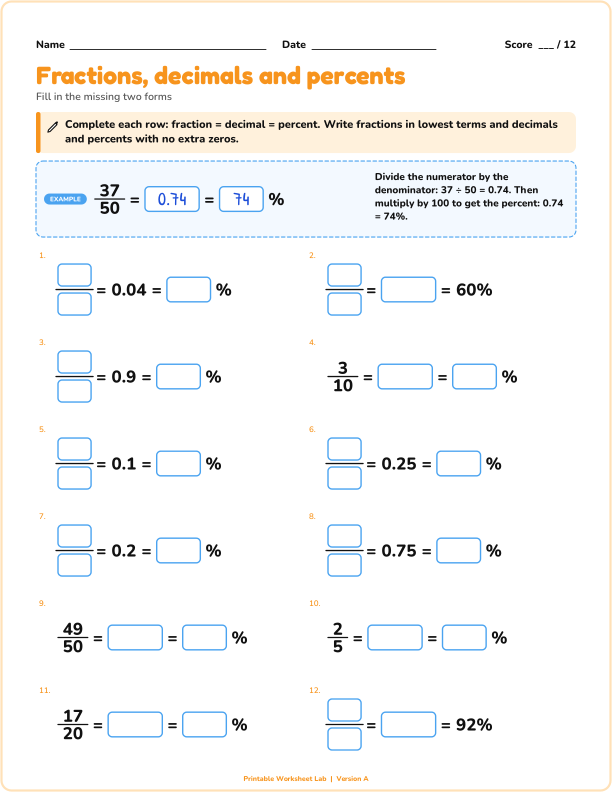
Complete each row of equal fractions, decimals and percents, starting from the fraction, the decimal or the percent.
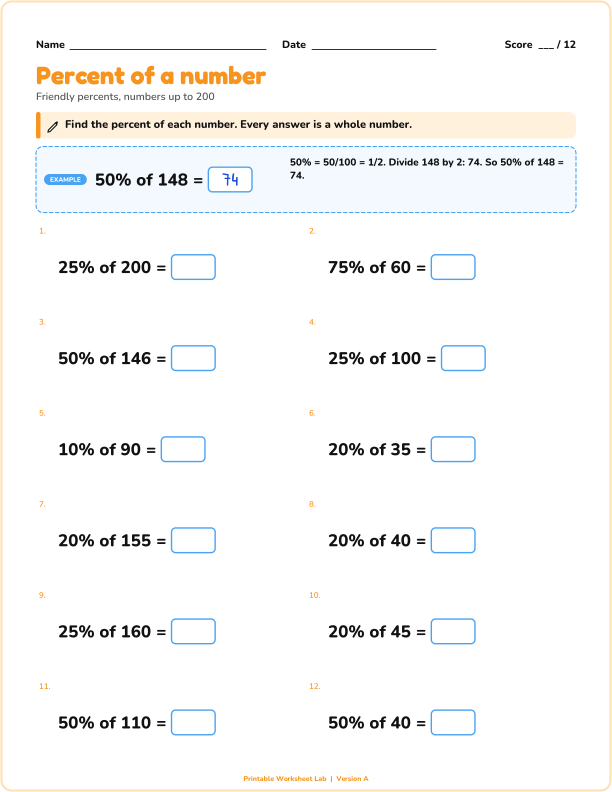
Find a percent of a number, find what percent one number is of another, or find the whole from a percent.
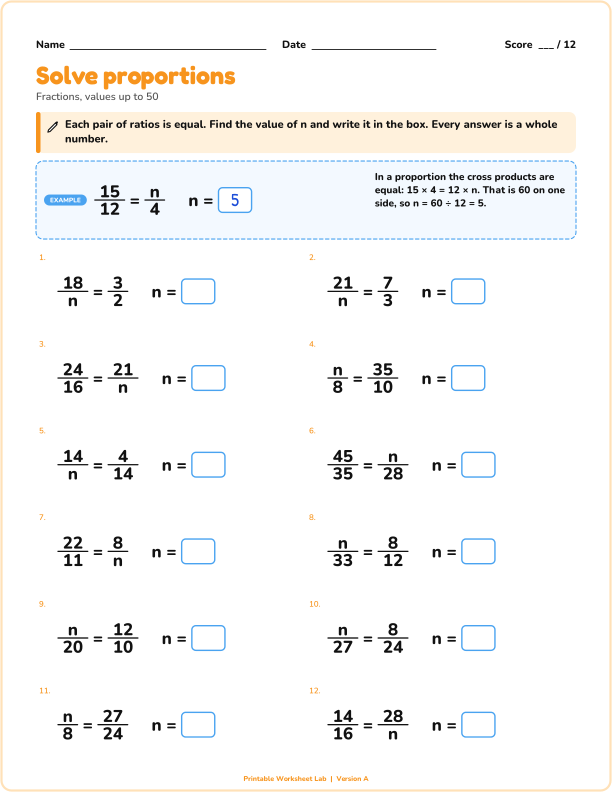
Find the missing value n in a proportion written with fractions or with colons.
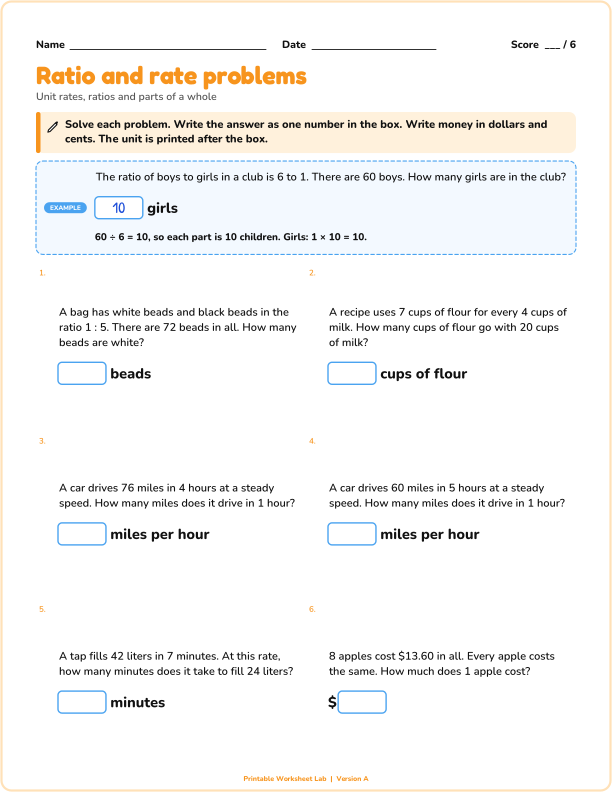
Short word problems on unit rates, equal rates, equivalent ratios and parts of a whole, each with one numeric answer.
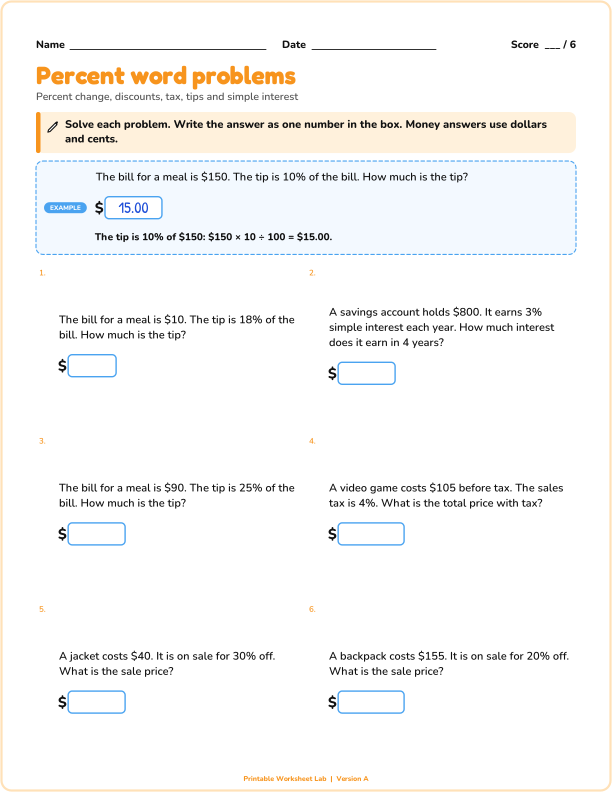
Word problems on percent increase and decrease, sale prices, sales tax, tips and simple interest, each with one answer.
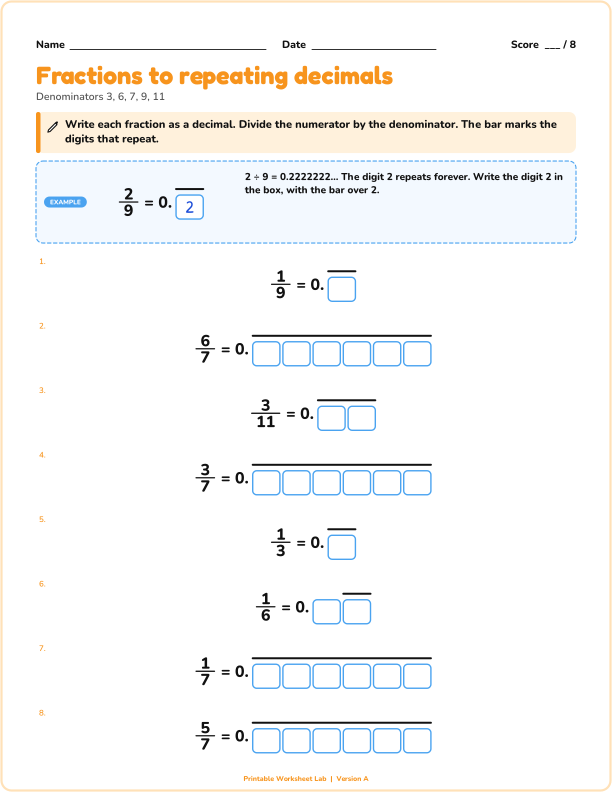
Write fractions with denominators 3, 6, 7, 9 and 11 as repeating decimals, or write repeating decimals as fractions.
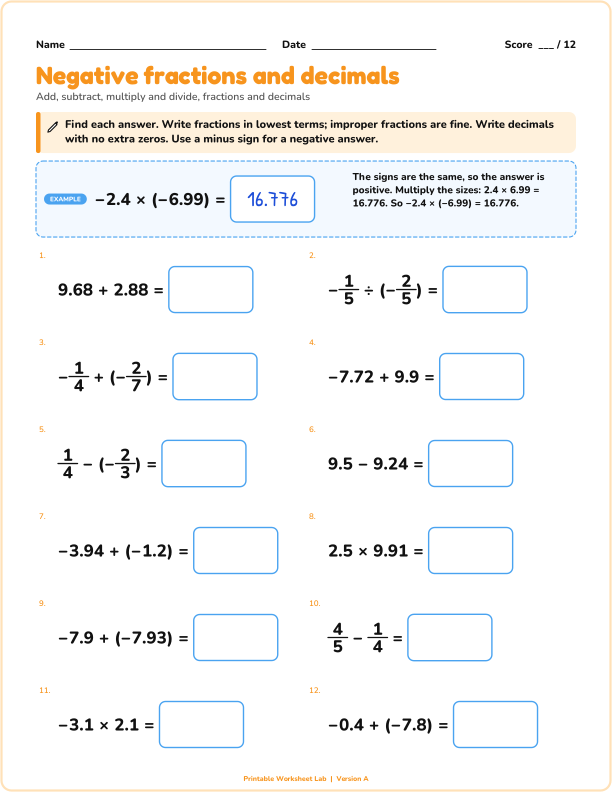
Add, subtract, multiply and divide positive and negative fractions and decimals, with answers in lowest terms.
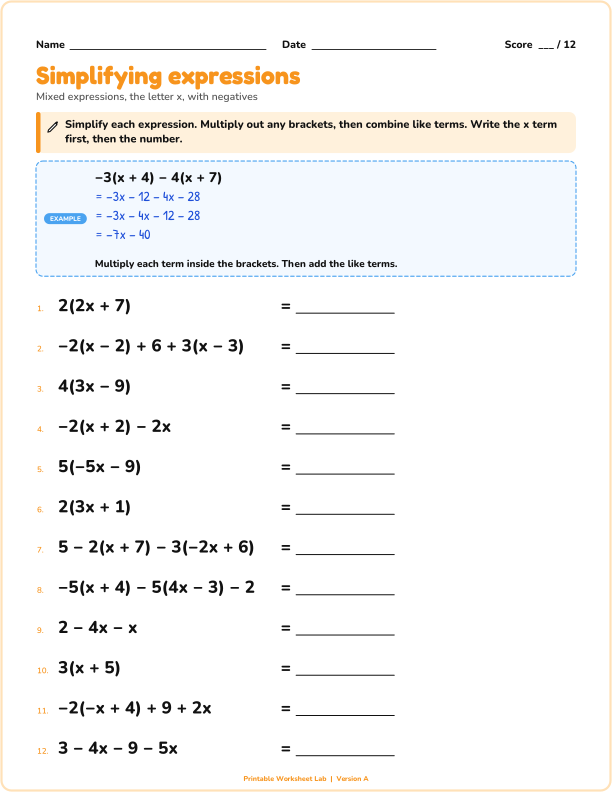
Combine like terms and use the distributive property to write each expression in its simplest form.
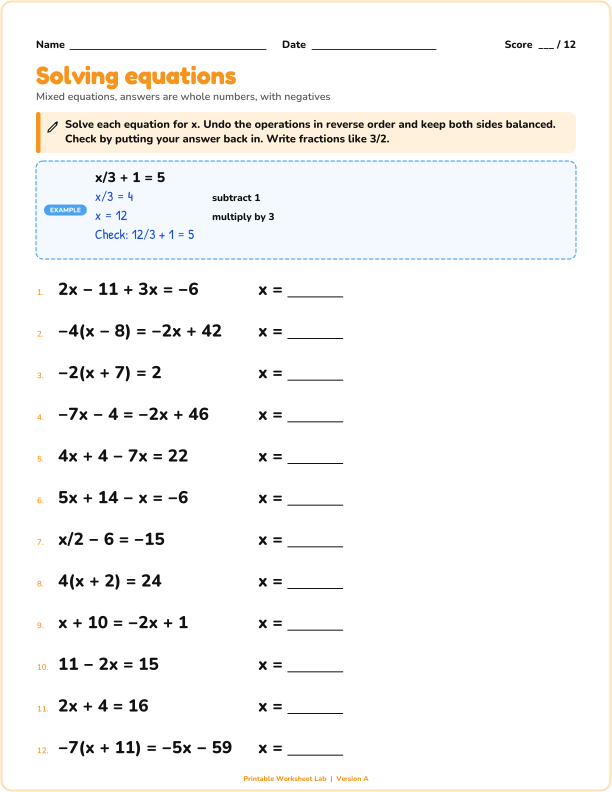
Solve two-step equations, equations with brackets, and equations with the letter on both sides.
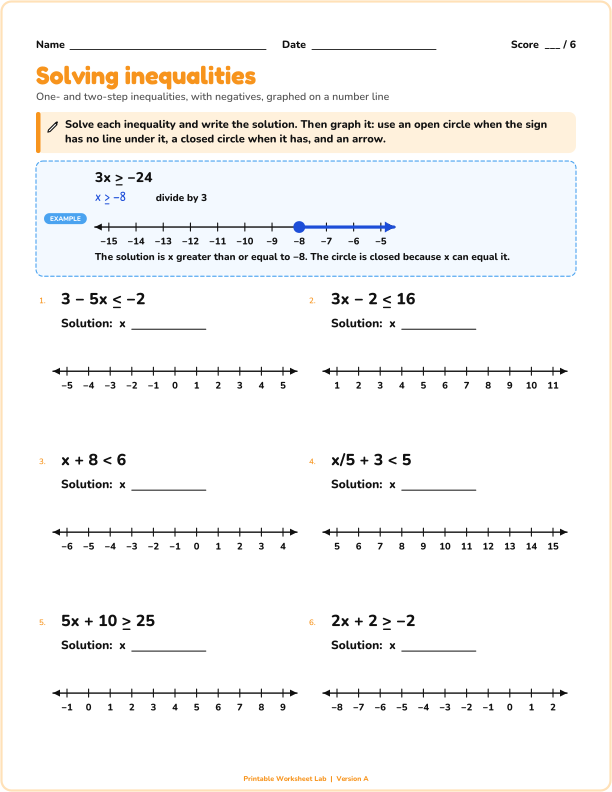
Solve one-step and two-step inequalities and graph the solution on a number line.
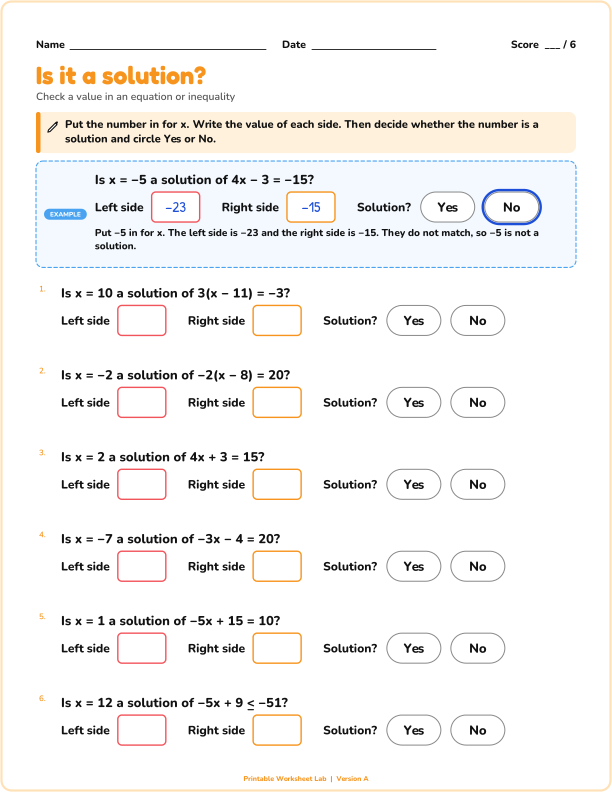
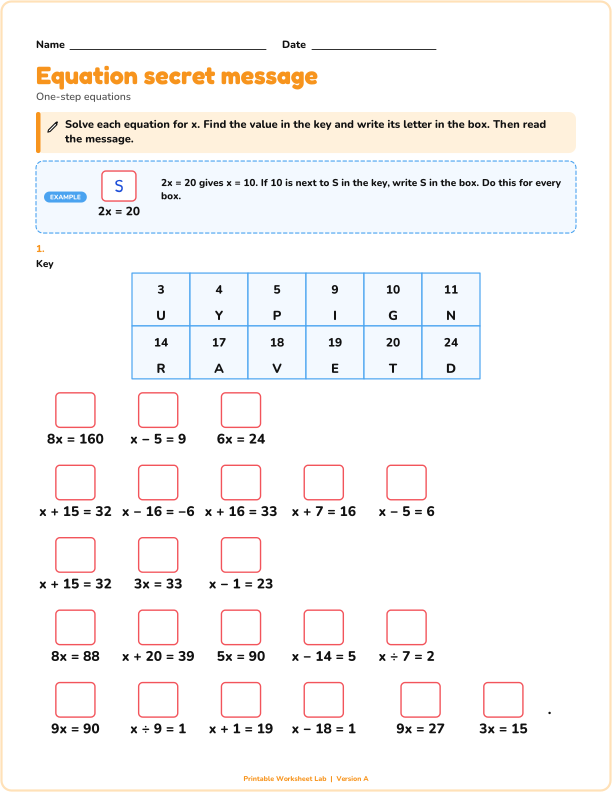
Substitute a number into an equation or inequality, find each side, and decide whether it is a solution.
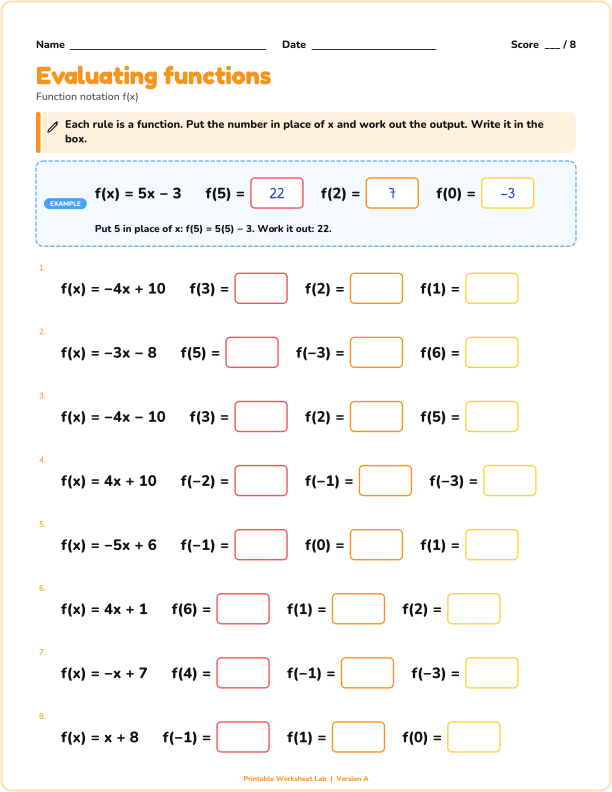
Find outputs of linear functions using f(x) notation, or complete a table from a rule.
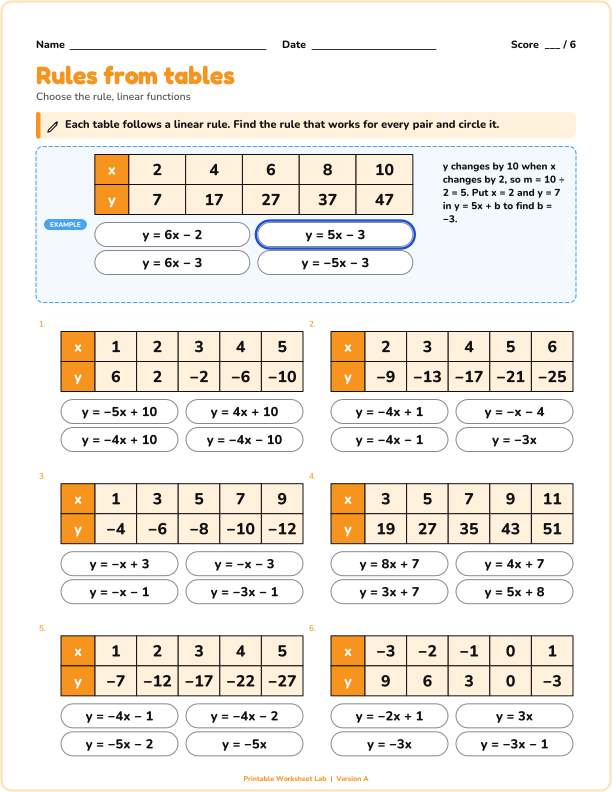
Find the rule y = mx + b from a table: choose it from four, write m and b, or use the pattern to fill in missing values.
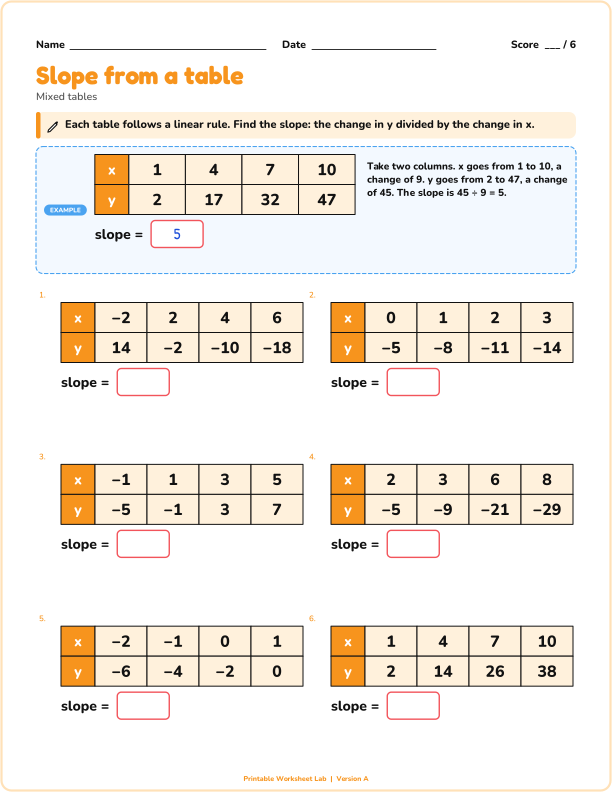
Find the slope of a linear function from a table of values, and optionally the value of y when x is 0.
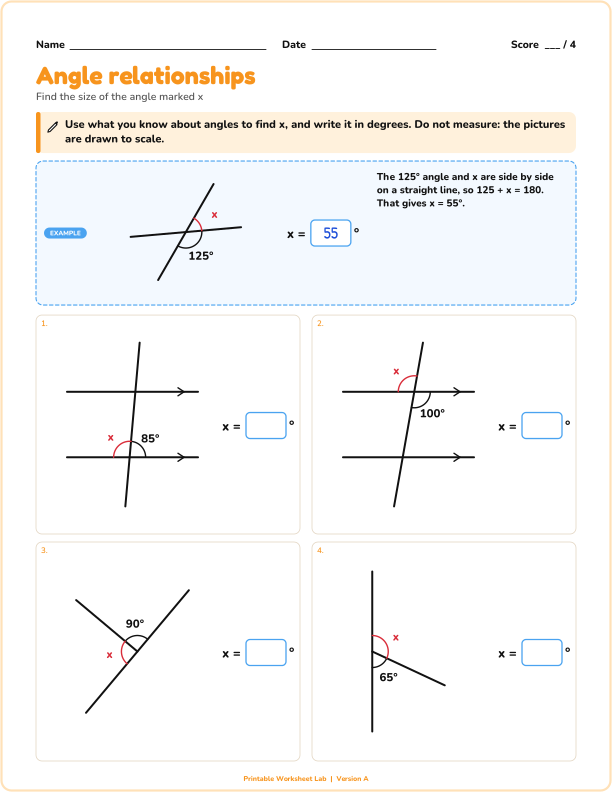
Find an unknown angle: complementary, supplementary, vertical, in a triangle, or between parallel lines.
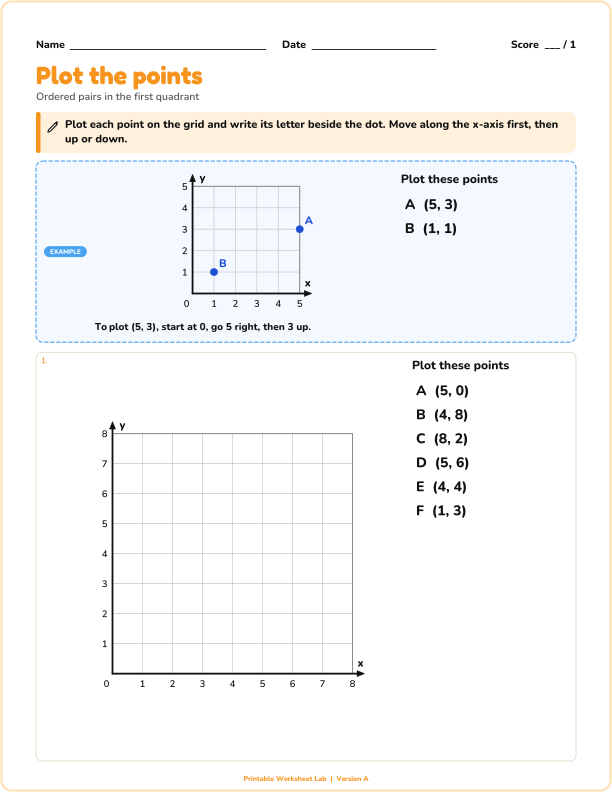
Plot points given as ordered pairs, or read the ordered pairs of marked points, in one quadrant or four.
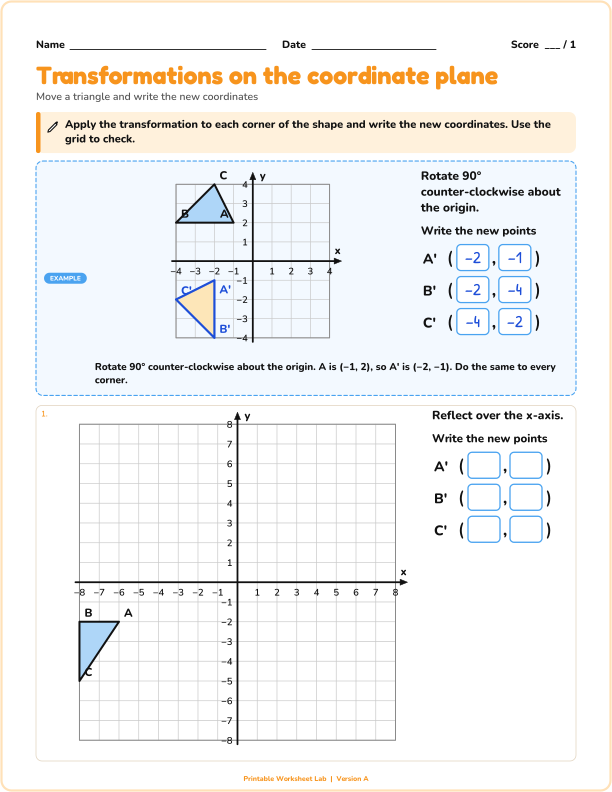
Move a triangle or quadrilateral on the coordinate plane and write the coordinates of its image.
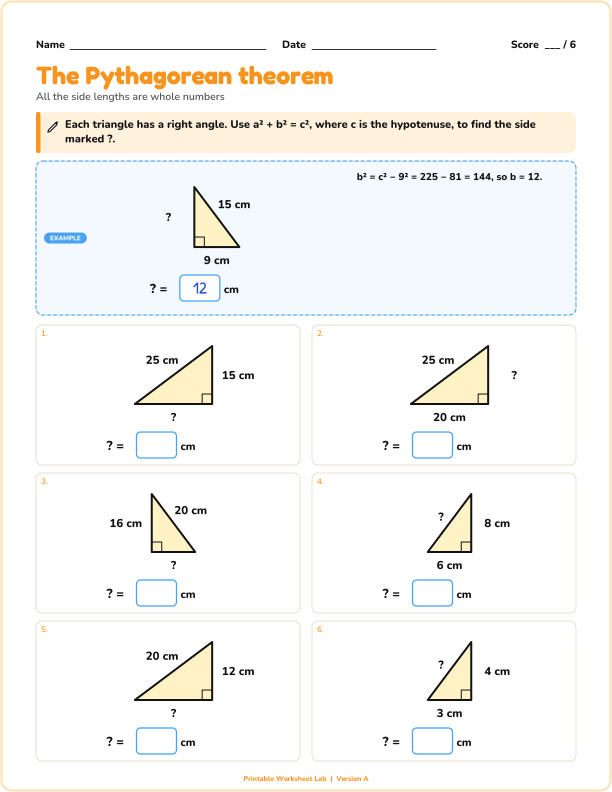
Find the missing side of a right triangle, or test whether three numbers make a Pythagorean triple.
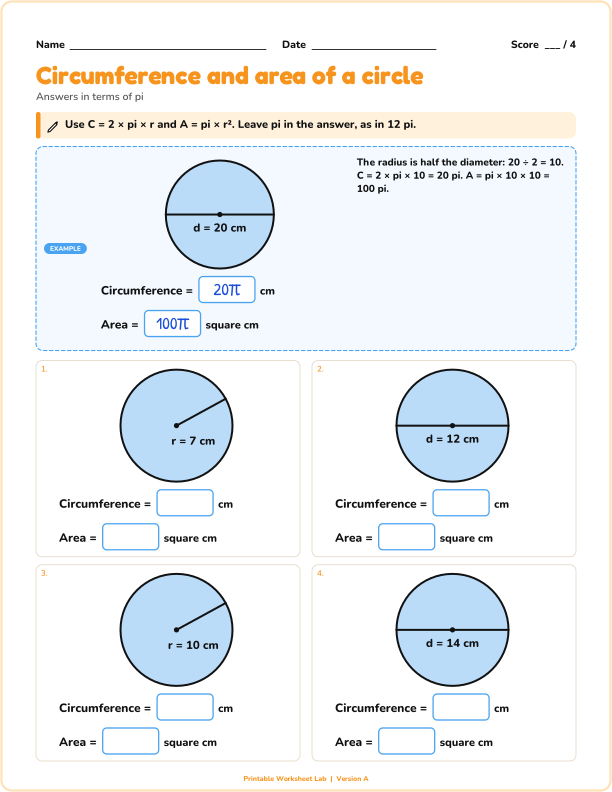
Find the circumference and area of a circle from its radius or diameter, in terms of pi or rounded to the hundredth.
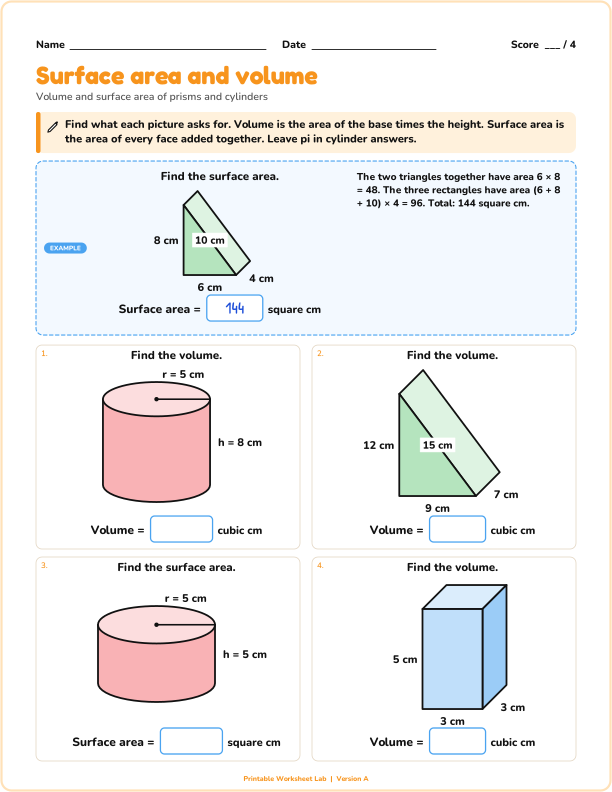
Find the volume or surface area of rectangular prisms, triangular prisms and cylinders.
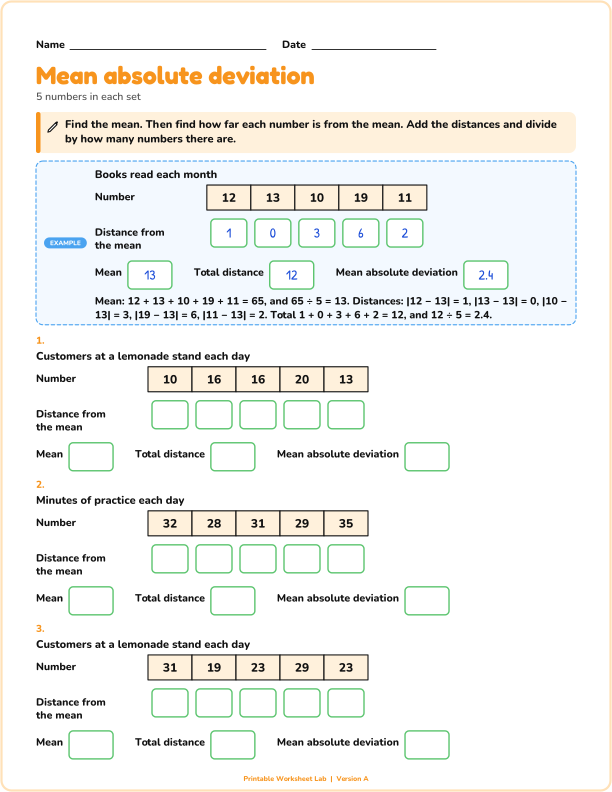
Find the mean, the distance of each number from the mean, and the mean absolute deviation.
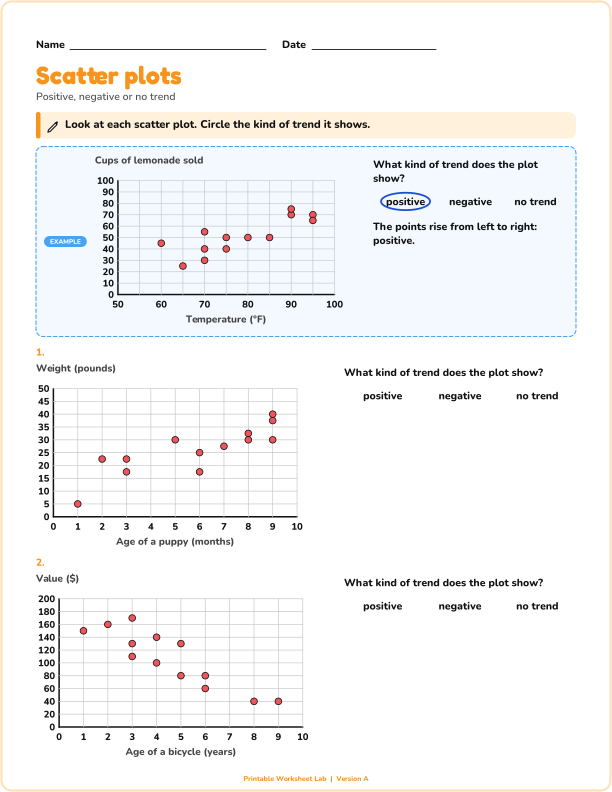
Read the trend of a scatter plot (positive, negative or none) and use a line through the points to estimate a value.
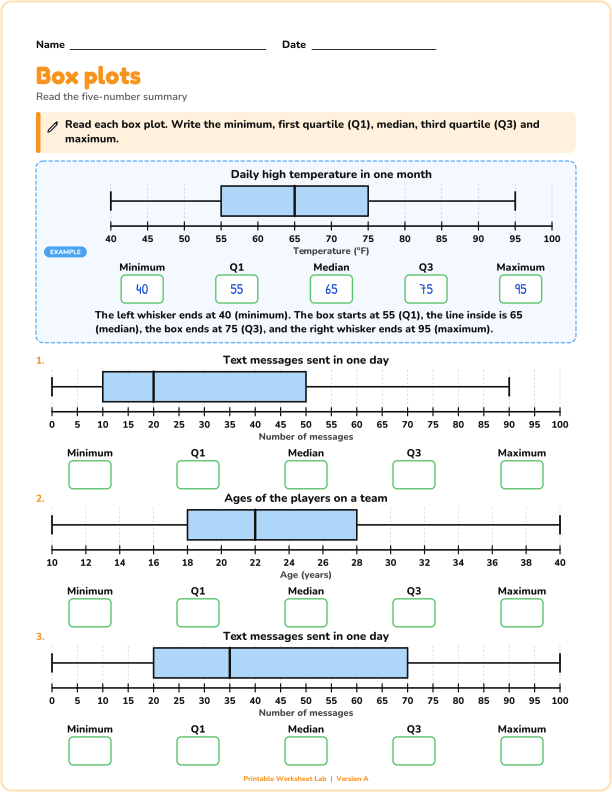
Read a box plot and write the five-number summary, the range and the interquartile range.
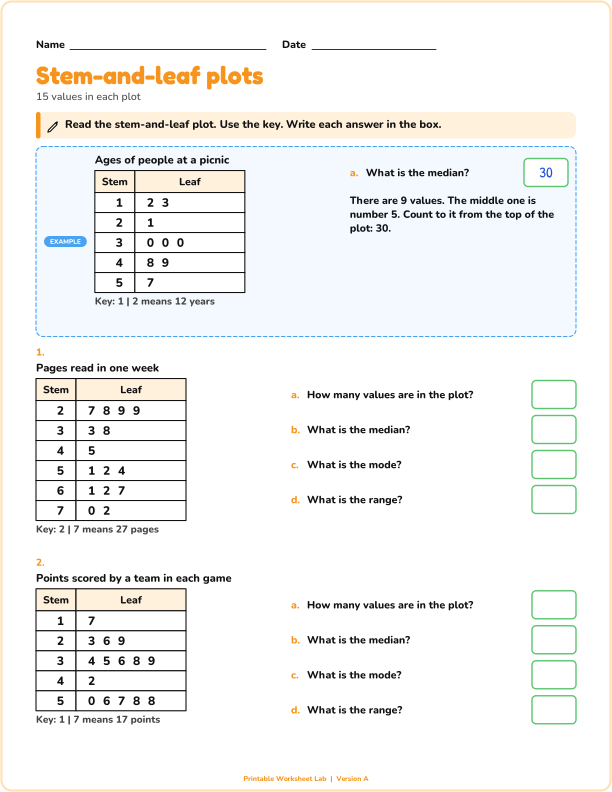
Read a stem-and-leaf plot, or build one from a list of numbers.
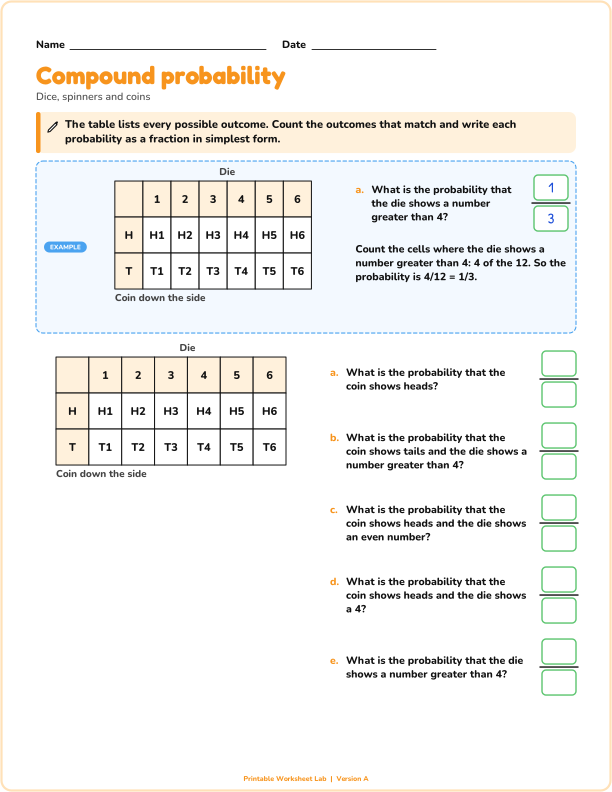
Use a table of every outcome for two dice, two spinners or a coin and a die to find probabilities.
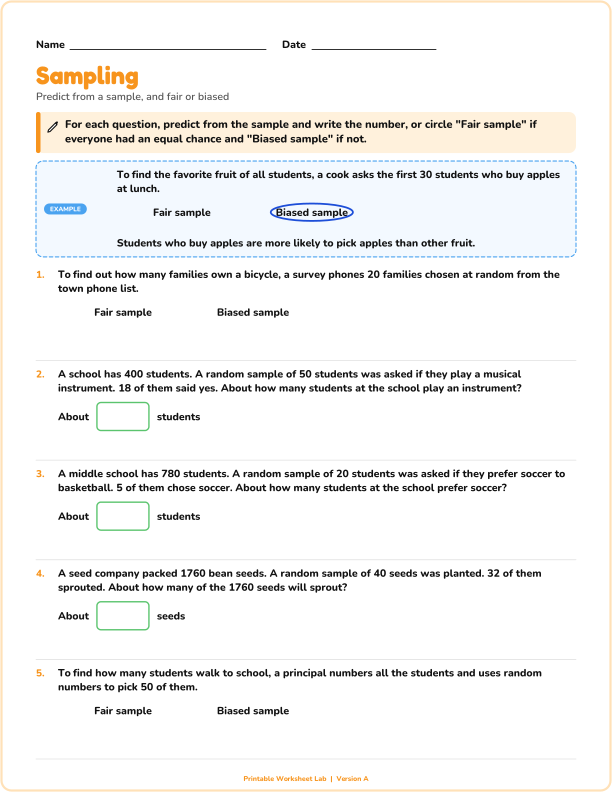
Use a random sample to predict a whole group, and decide whether a sample is fair or biased.
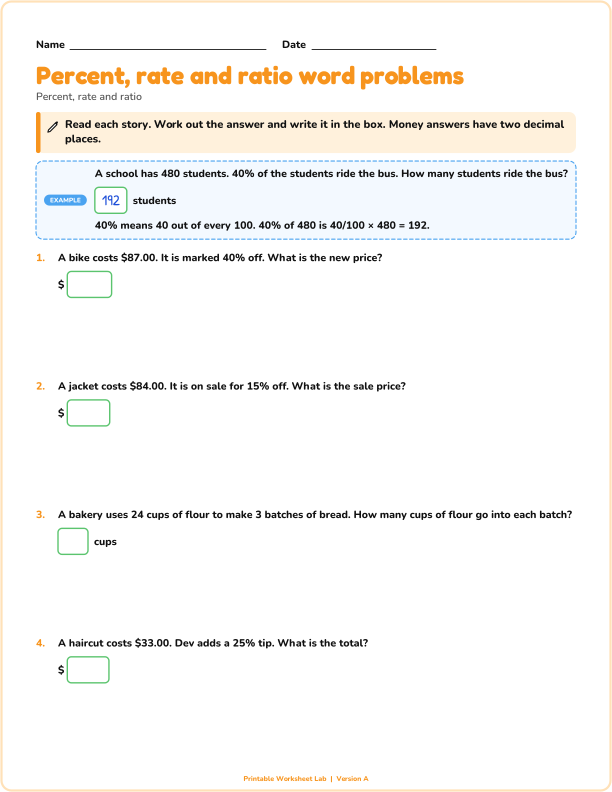
Stories about percent of an amount, discounts and tips, rates and unit rates, and ratios.
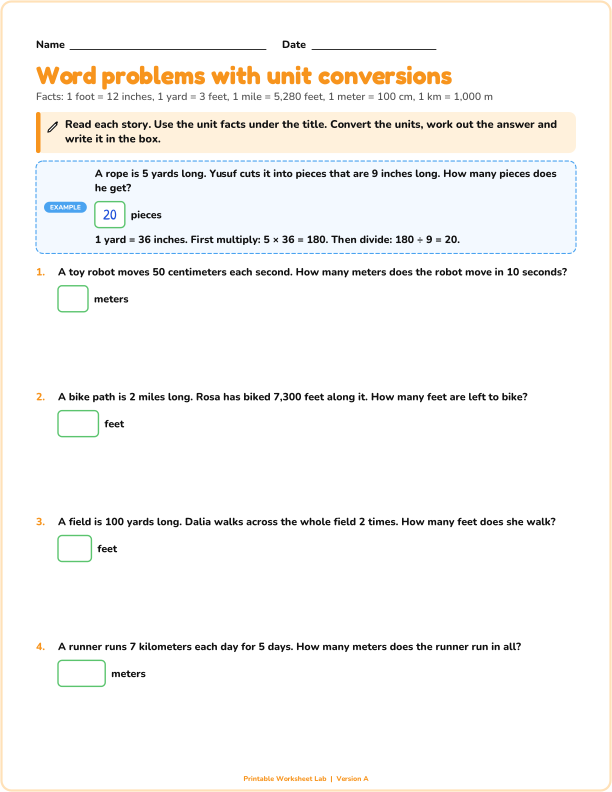
Stories that mix a calculation with a change of units: length, weight and volume, or time.
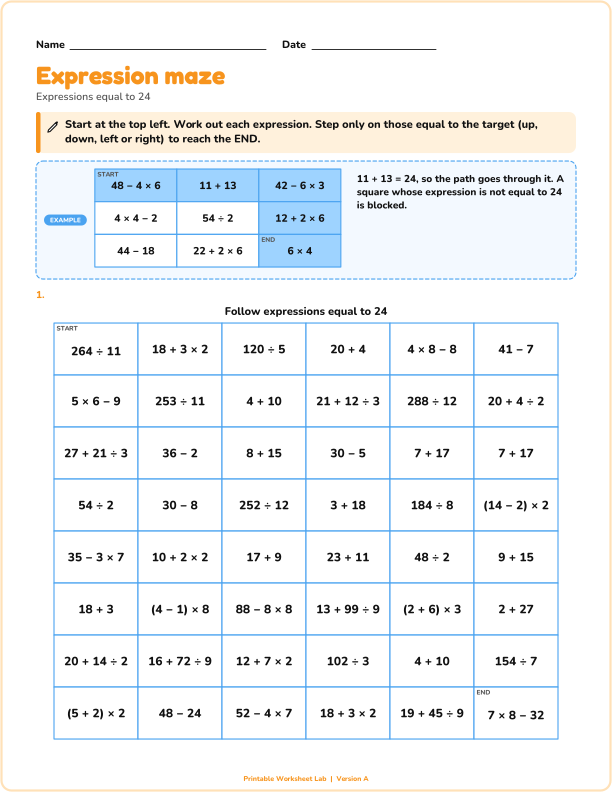
Mazes where every square is an expression and you step only on the ones equal to the target.
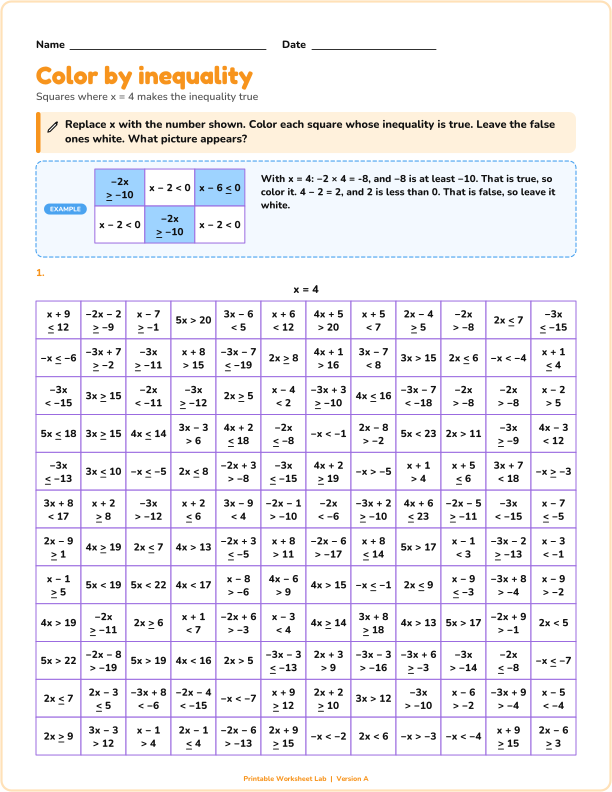
Substitute a value for x and color every square whose inequality is true to reveal a picture.
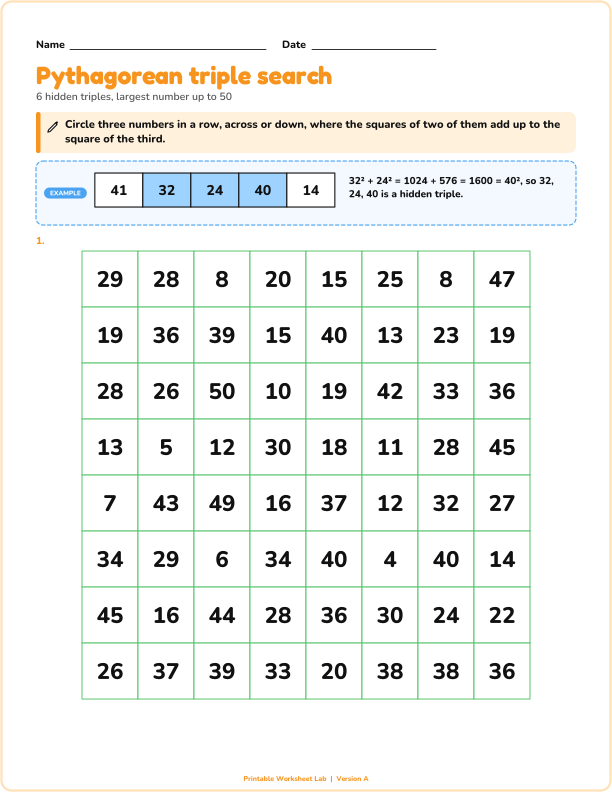
Find hidden Pythagorean triples in a grid of numbers: three in a row where the squares of two add up to the square of the third.
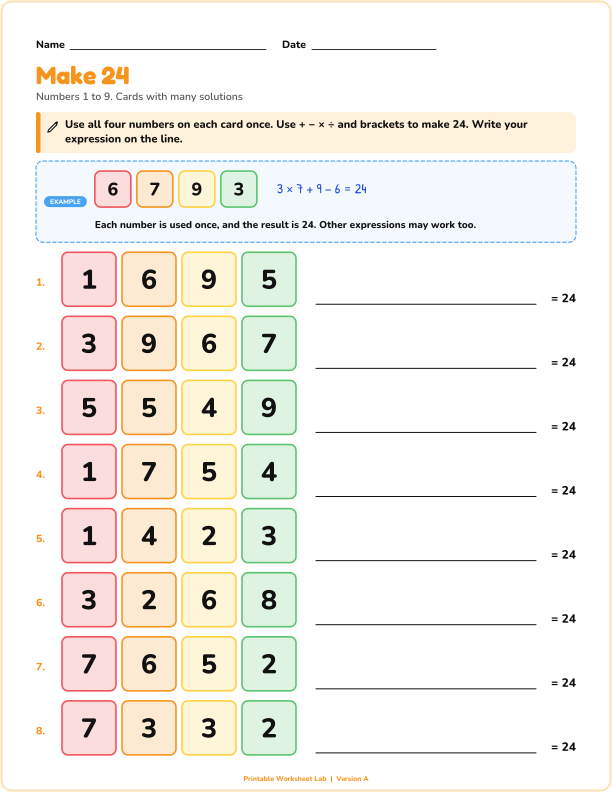
Use four numbers once each, with plus, minus, times, divide and brackets, to make 24 on cards that all have a solution.