DrillPre-K to K
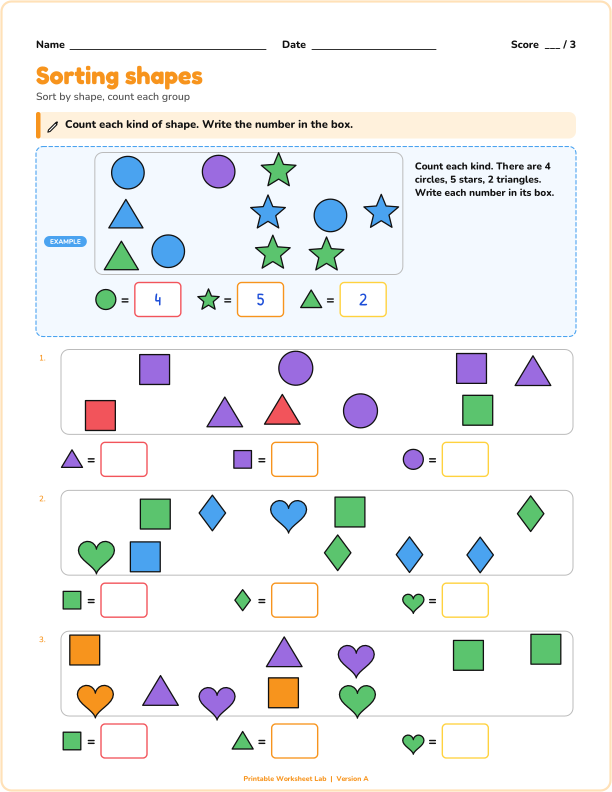
Sorting and classifying shapes
Sort a group of shapes by one attribute: count each kind, or circle every shape that matches.
Use a random sample to predict a whole group, and decide whether a sample is fair or biased.
Prediction problems give the size of a whole group, the size of a random sample and how many in the sample answered yes. Students scale up from the sample to predict the whole group. The group size is always a multiple of the sample size, so every answer is a whole number.
Fair or biased problems describe how a sample was chosen. A fair sample gives everyone in the group the same chance to be picked. A biased sample leaves some people out or lets them pick themselves. Each description is clear-cut, so there is exactly one answer.
US Letter or A4, portrait: choose your paper size above. Print at 100 percent (actual size). Use "Black and white" for the copier, or "Color" for display pages and mini books.
Ready-made settings for common topics.
Sort a group of shapes by one attribute: count each kind, or circle every shape that matches.
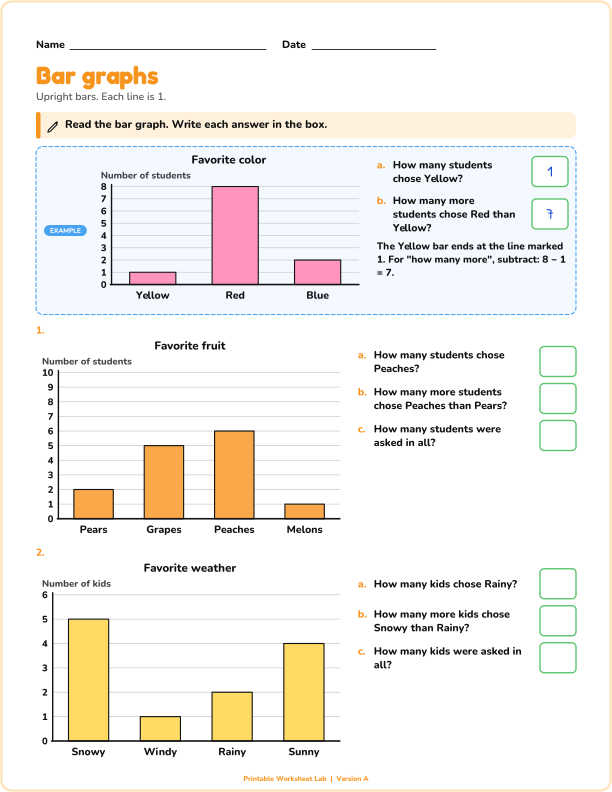
Read a bar graph and answer questions, or shade the bars to match a table.
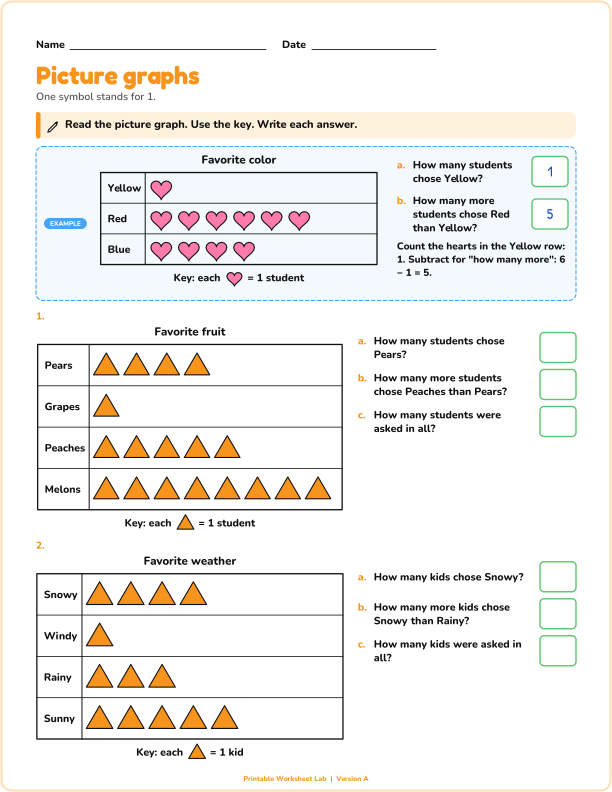
Read a picture graph where one symbol stands for 1, 2, 5 or 10 and answer questions.