DrillPre-K to KGrades 1 to 2Grades 3 to 4
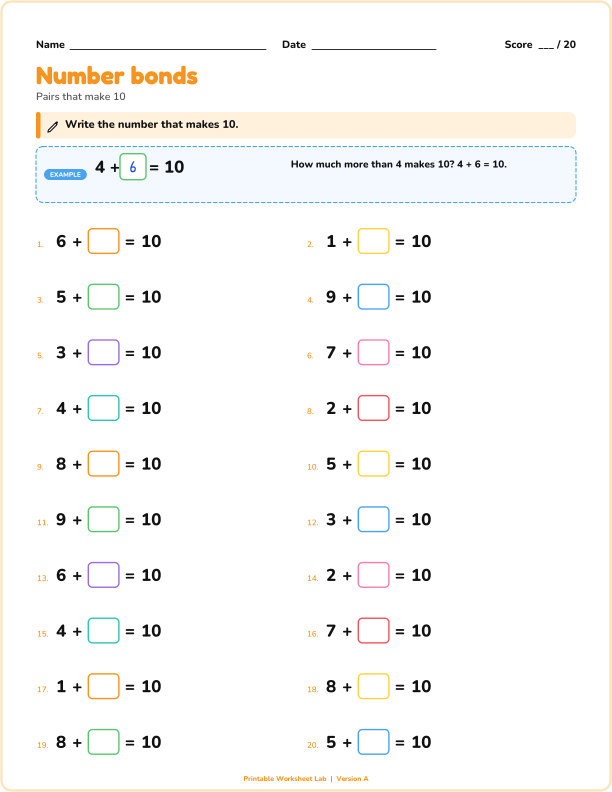
Number bonds and complements
Pairs that make 10, 20, 100 or 1000 (and the 9s, 99s and 999s), as missing-number sums or as subtraction.
Counting, place value, rounding and number sense. Printable worksheets, puzzles, games and mini books with answer keys.
Pairs that make 10, 20, 100 or 1000 (and the 9s, 99s and 999s), as missing-number sums or as subtraction.
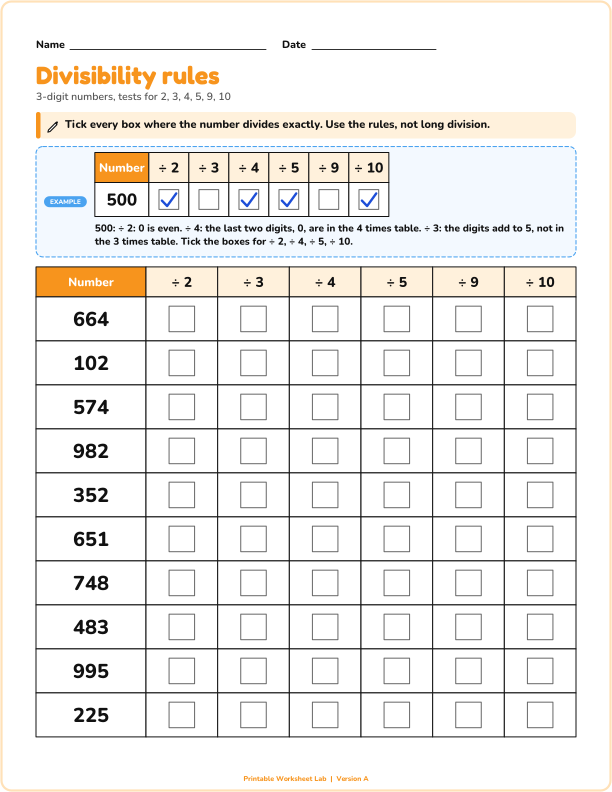
Tick the boxes for every number a given number divides by, using the rules for 2, 3, 4, 5, 6, 8, 9 and 10.
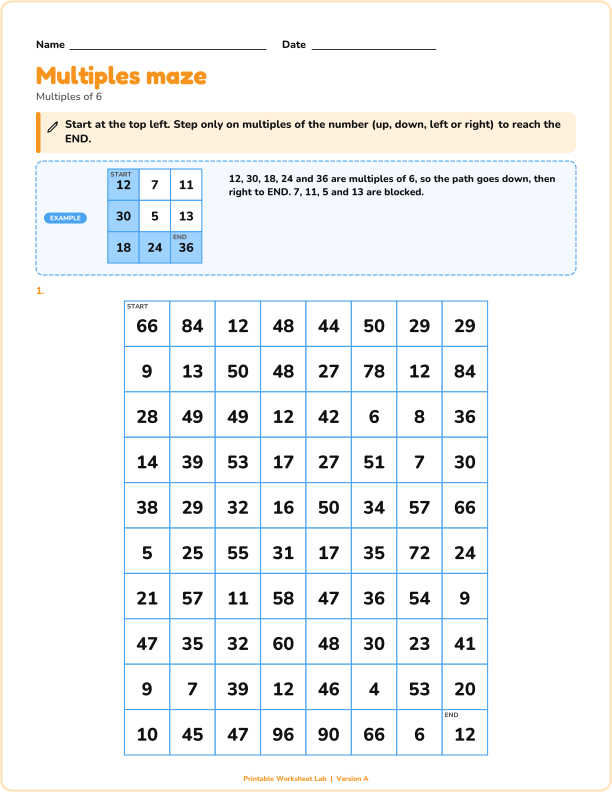
Mazes where you may only step on multiples of a chosen number. One route, no guessing.
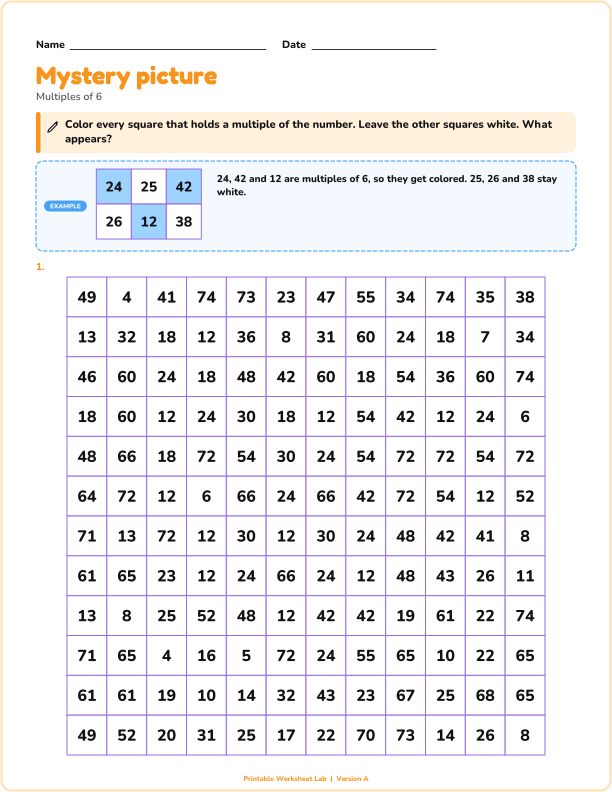
Color every multiple of a number to reveal a hidden picture.
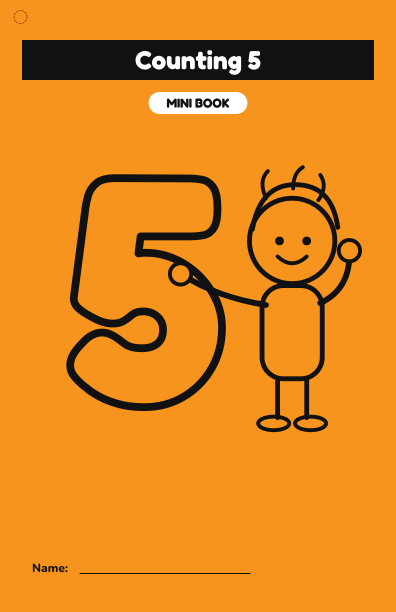
A 14-page print-and-fold booklet about one number from 1 to 20: tracing, counting, ten frames, connect-the-dots and more.
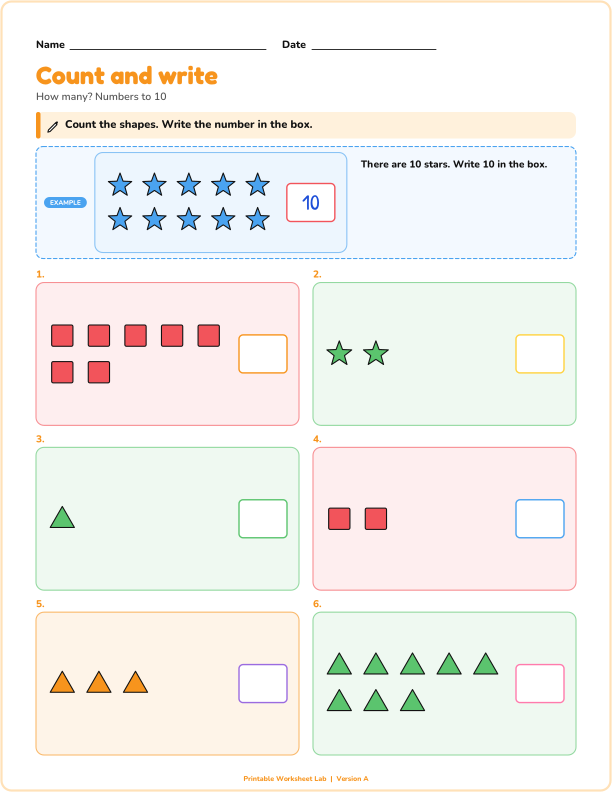
Count a group of shapes and write the number, or circle the right number, for any total from 3 to 20.
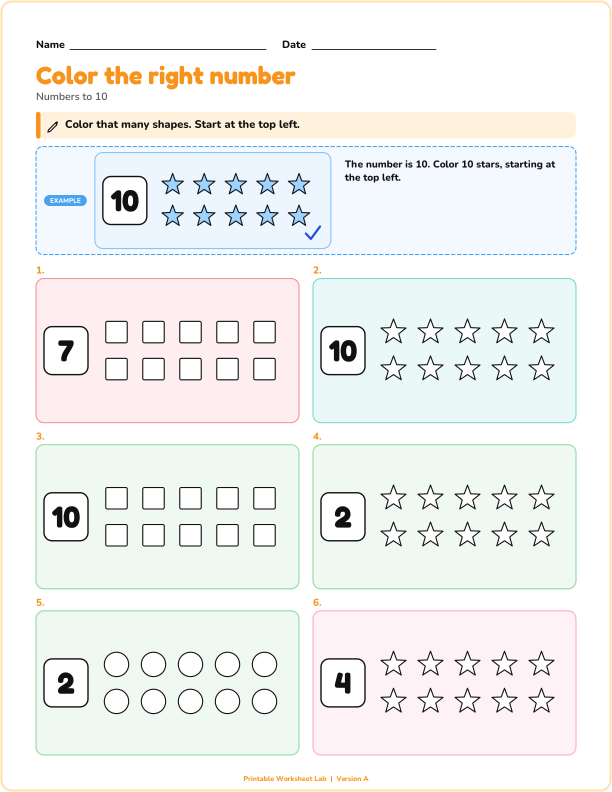
Read a numeral and color that many shapes in a row of up to 20.
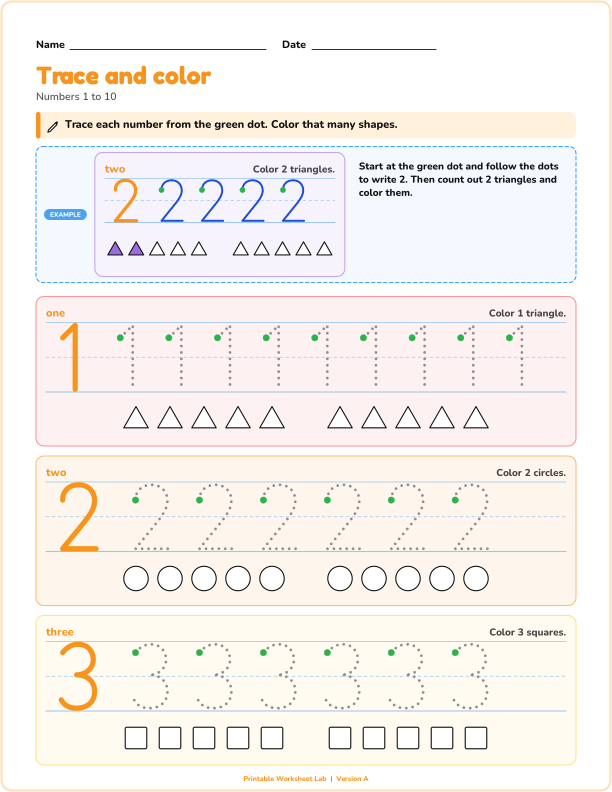
Trace dotted numerals from a green start dot, then count and color that many shapes.
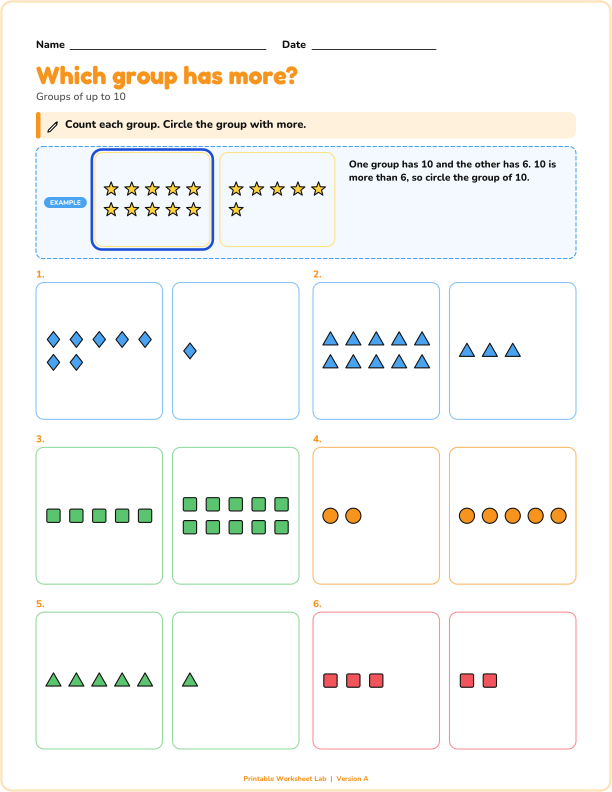
Count two groups of shapes and circle the group with more, or the group with fewer.
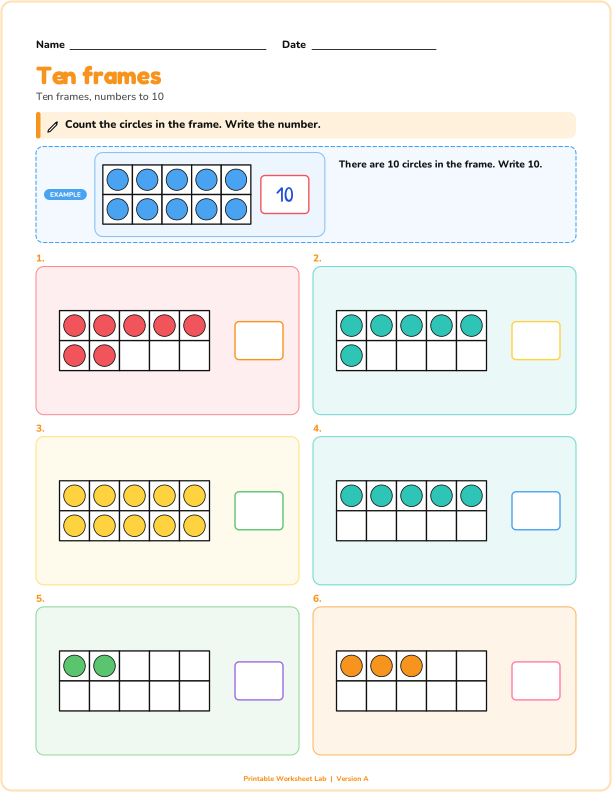
Count the circles in a ten frame, color in a number, or find how many more make ten or twenty.
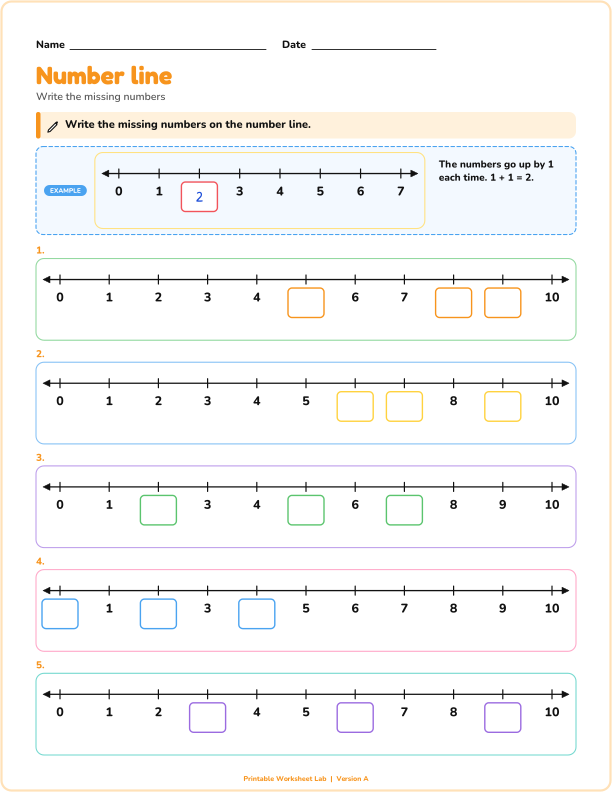
Write the missing numbers on a number line that counts by 1, 2, 3, 4, 5 or 10.
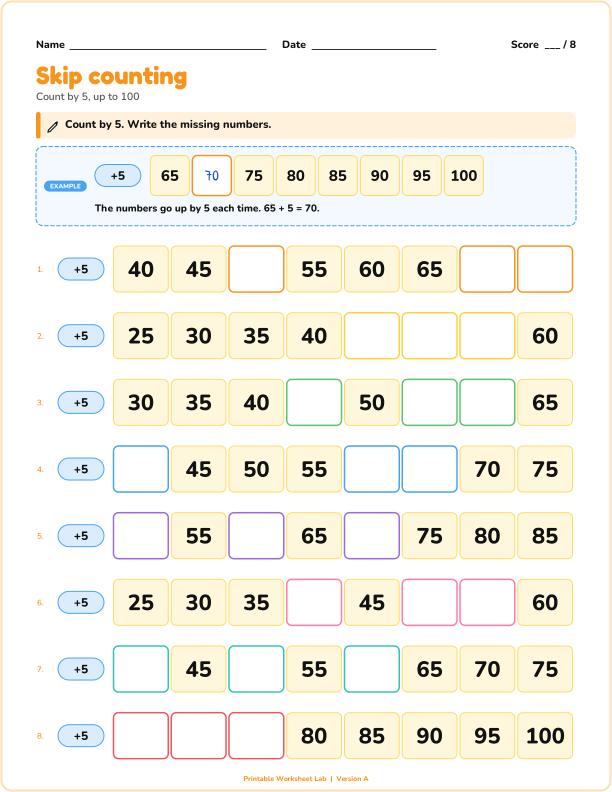
Fill in the missing numbers when counting by 2, 3, 4, 5 or 10, forwards, backwards or both.
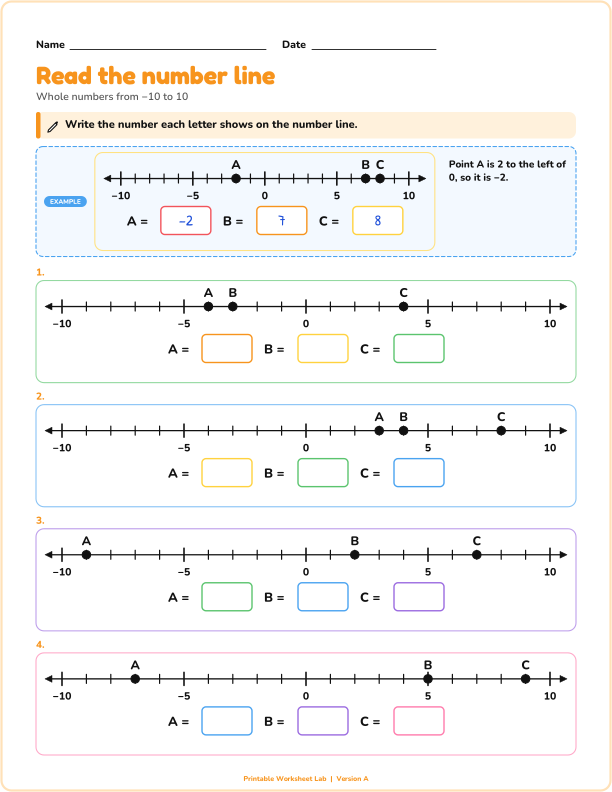
Read whole numbers on both sides of zero from a number line, or plot them, on lines from −5 to 5 up to −50 to 50.
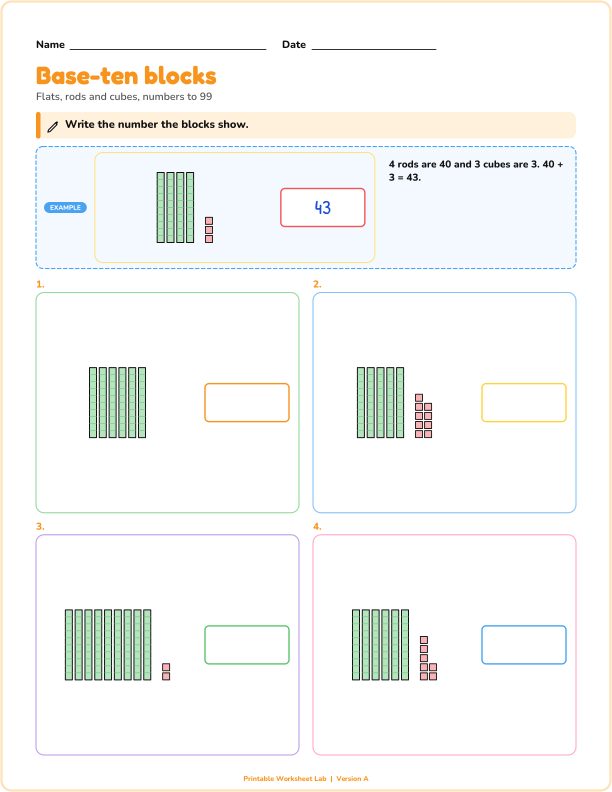
Read the number shown by hundreds flats, tens rods and ones cubes, up to 99 or 999.
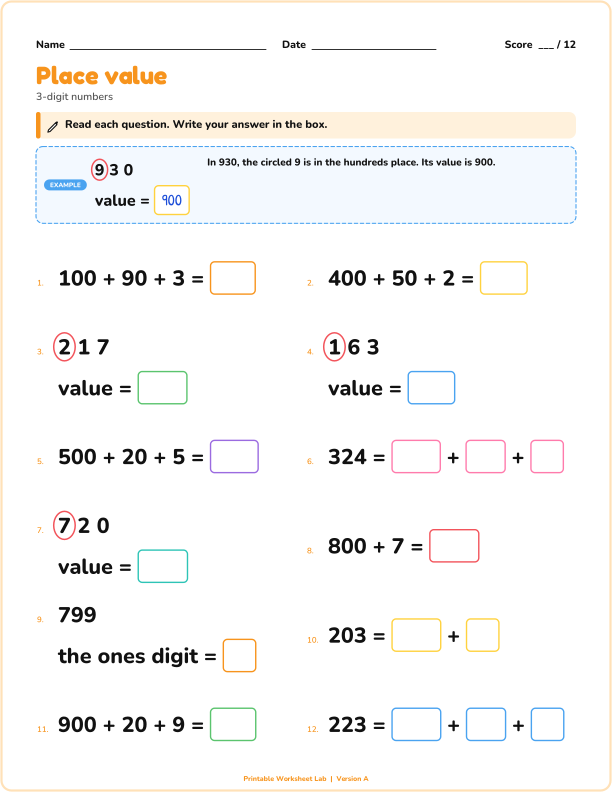
The value of a digit, the digit in a place, and expanded form both ways, for numbers from 2 to 6 digits.
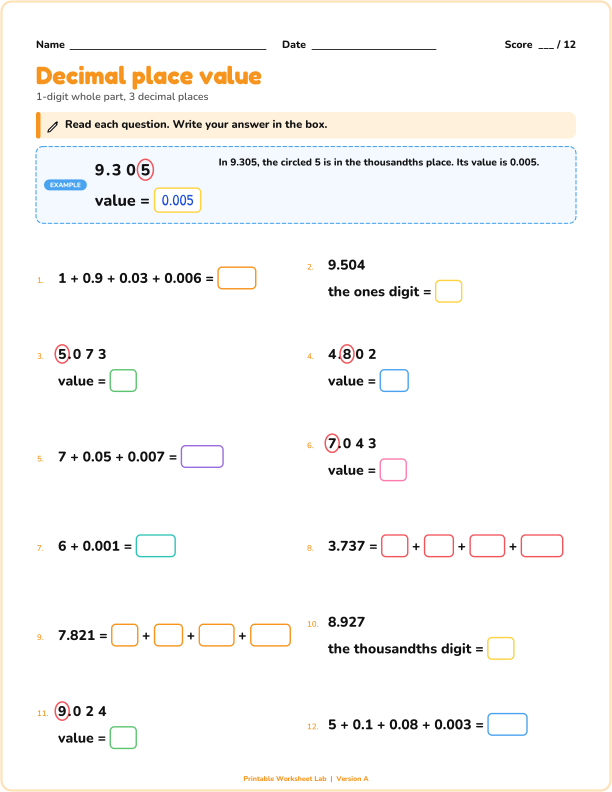
Tenths, hundredths and thousandths: the value of a digit, the digit in a place, and expanded form both ways.
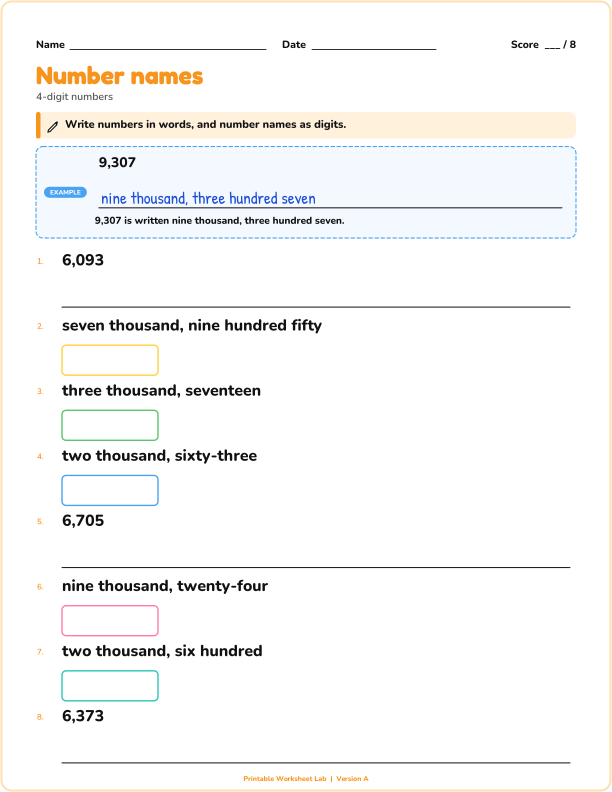
Write numbers in words and number names as digits, from 3 digits up to millions.
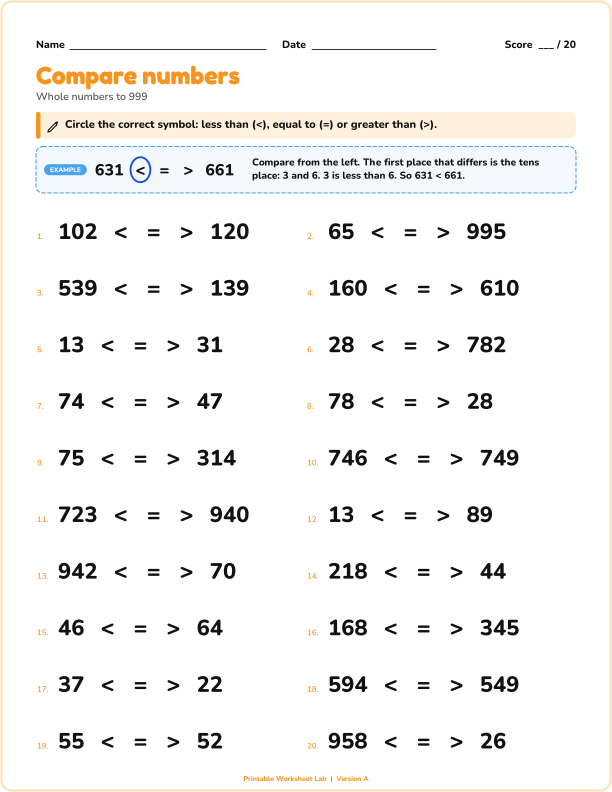
Circle <, = or > to compare whole numbers, decimals or integers, from numbers to 99 up to 999,999.
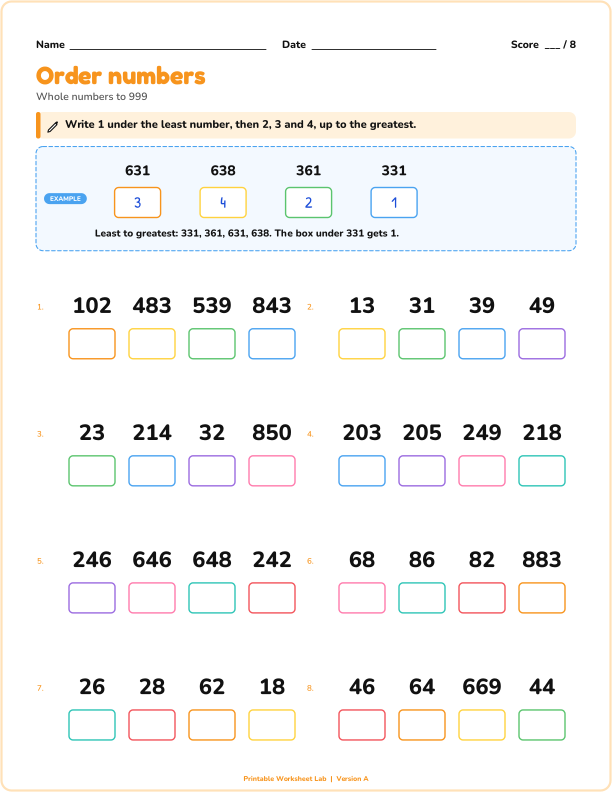
Put three, four or five numbers in order from least to greatest, or greatest to least, by numbering the boxes.
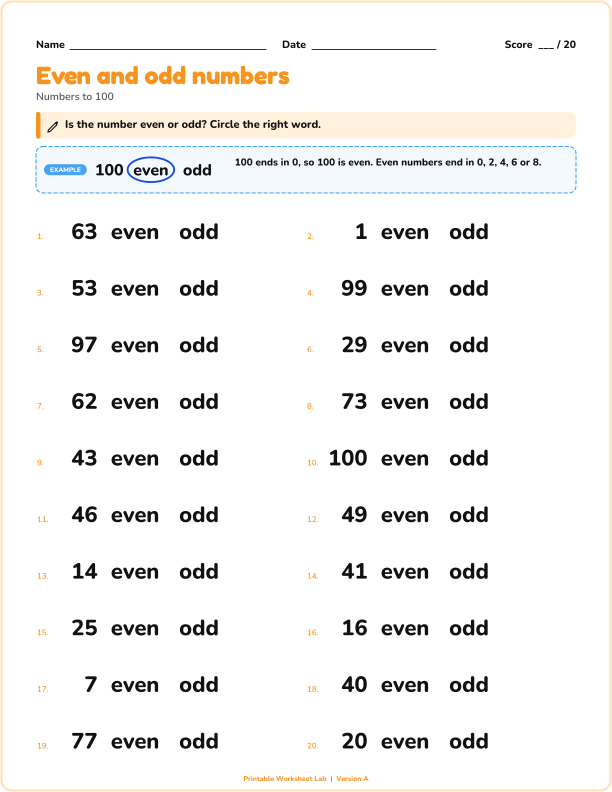
Circle even or odd for each number, or find and circle every even (or odd) number in a grid.
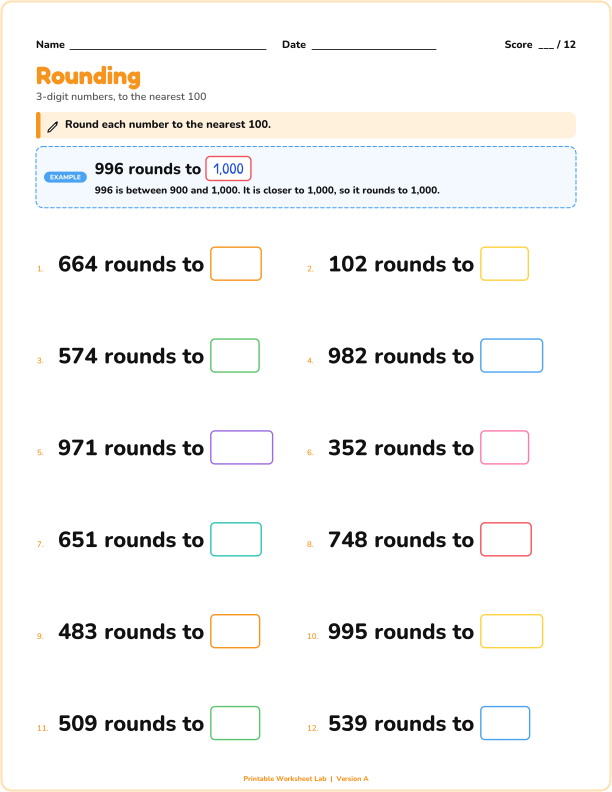
Round whole numbers to the nearest 10, 100, 1,000 or 10,000, or decimals to the nearest whole number, tenth or hundredth, with an optional number line.
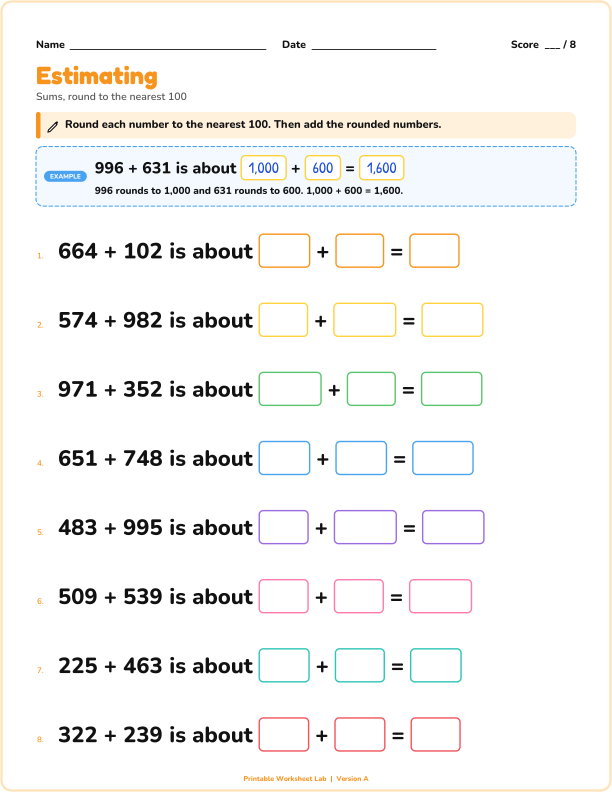
Estimate sums and differences by rounding each number first, to the nearest 10, 100, 1,000 or 10,000.
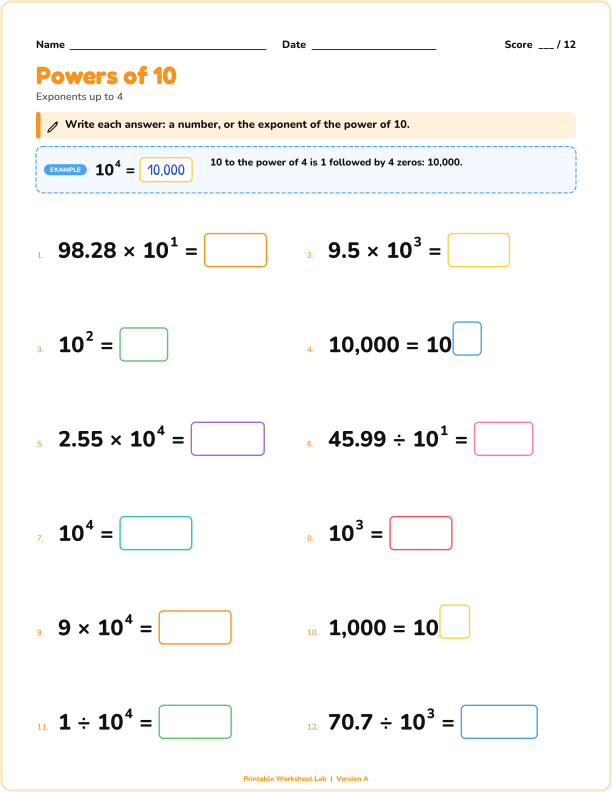
Write powers of 10 as numbers and numbers as powers of 10, and multiply or divide by powers of 10 by moving the decimal point.
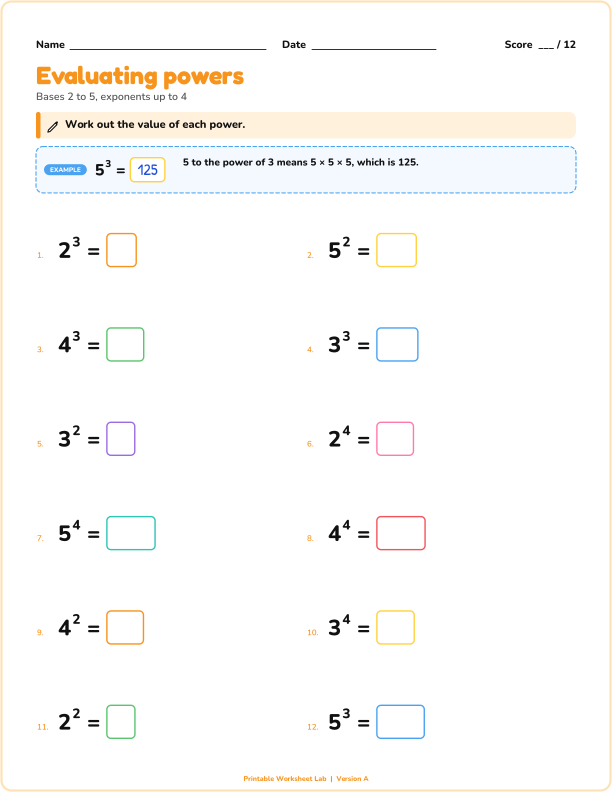
Evaluate powers, or use the exponent rules for products, quotients and powers of powers.
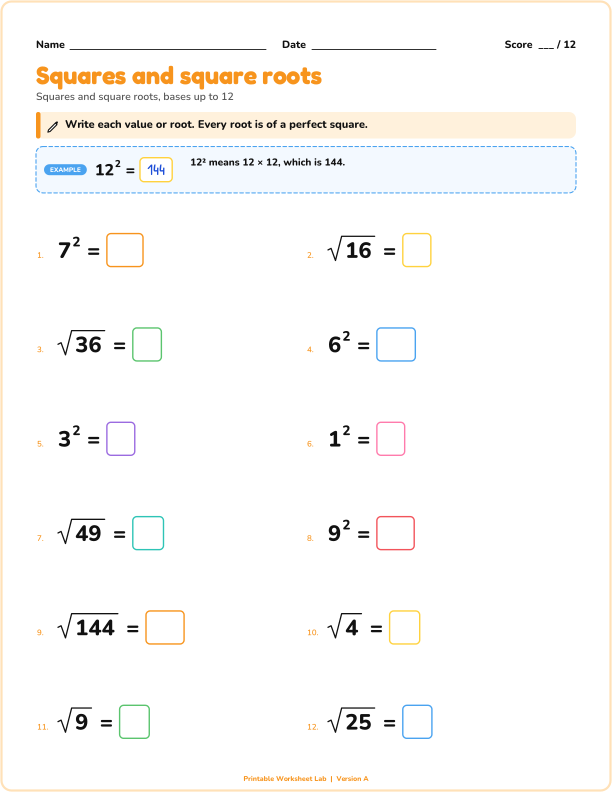
Perfect squares and square roots, cubes and cube roots, and which two whole numbers a root lies between.
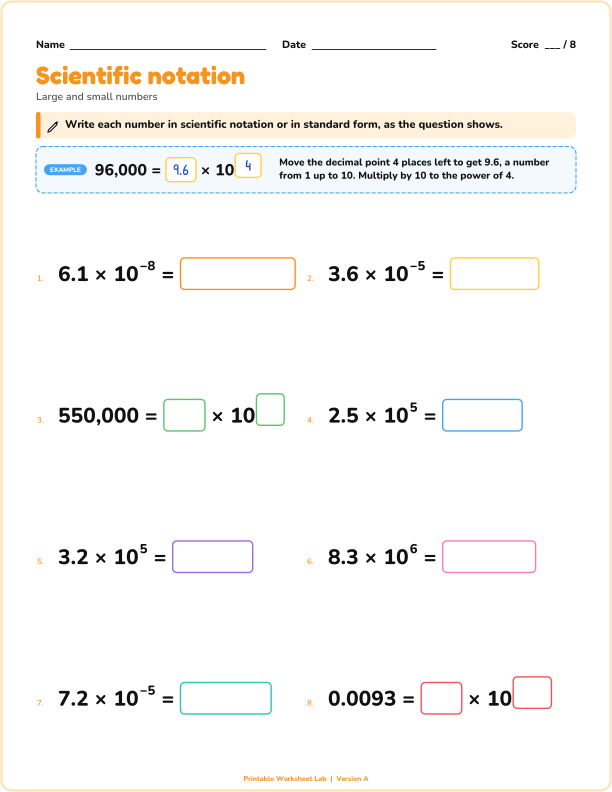
Write large and small numbers in scientific notation, and convert them back to standard form.
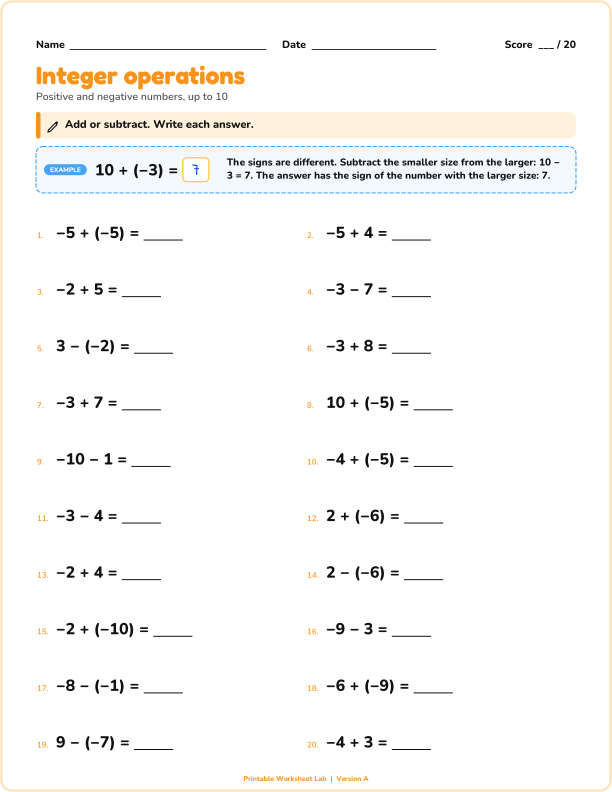
Add, subtract, multiply and divide positive and negative numbers, one operation or all four.
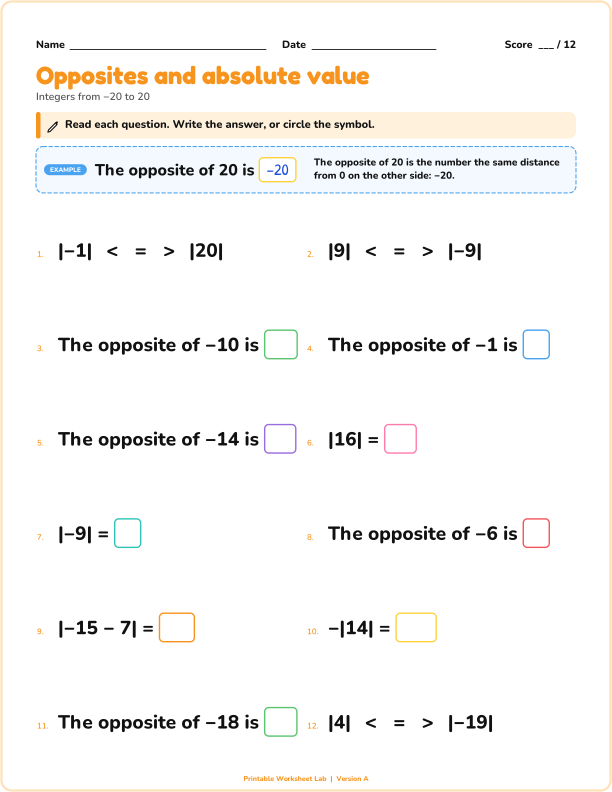
Write the opposite of a number, find an absolute value, compare absolute values and work out expressions with absolute value.
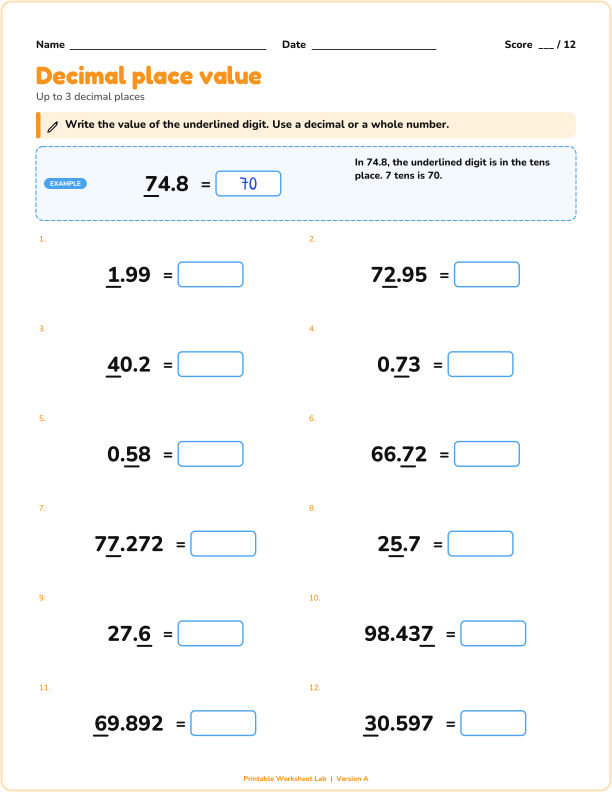
Name the value of a digit, write numbers in standard form, compare, round, and multiply or divide by 10, 100 and 1000.
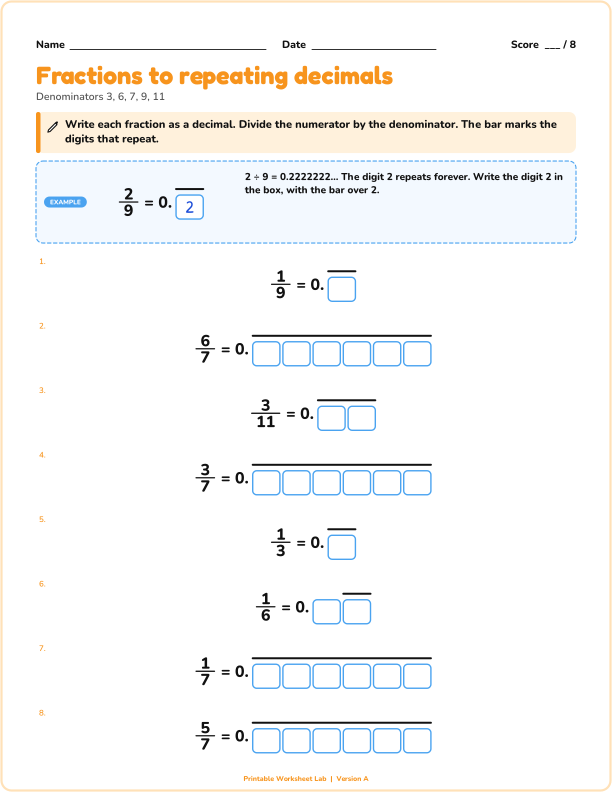
Write fractions with denominators 3, 6, 7, 9 and 11 as repeating decimals, or write repeating decimals as fractions.
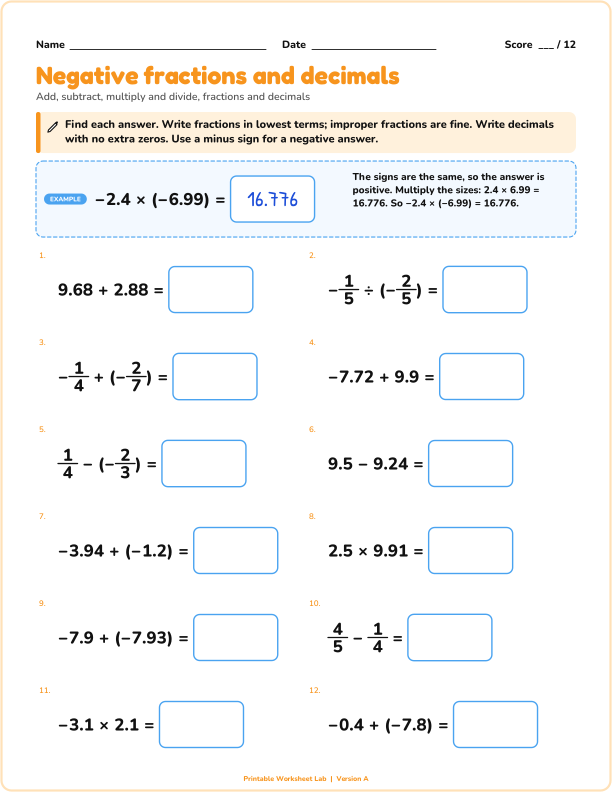
Add, subtract, multiply and divide positive and negative fractions and decimals, with answers in lowest terms.
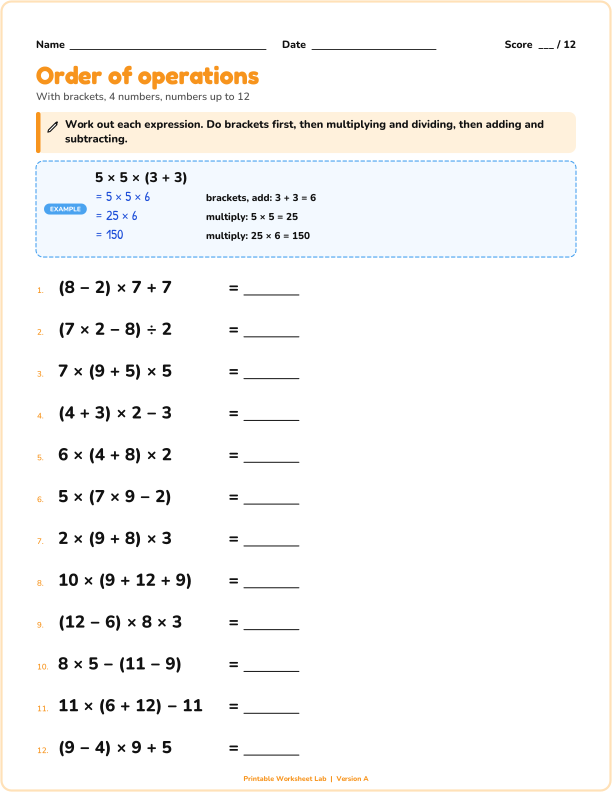
Evaluate expressions with brackets and exponents. Every expression has exactly one value.
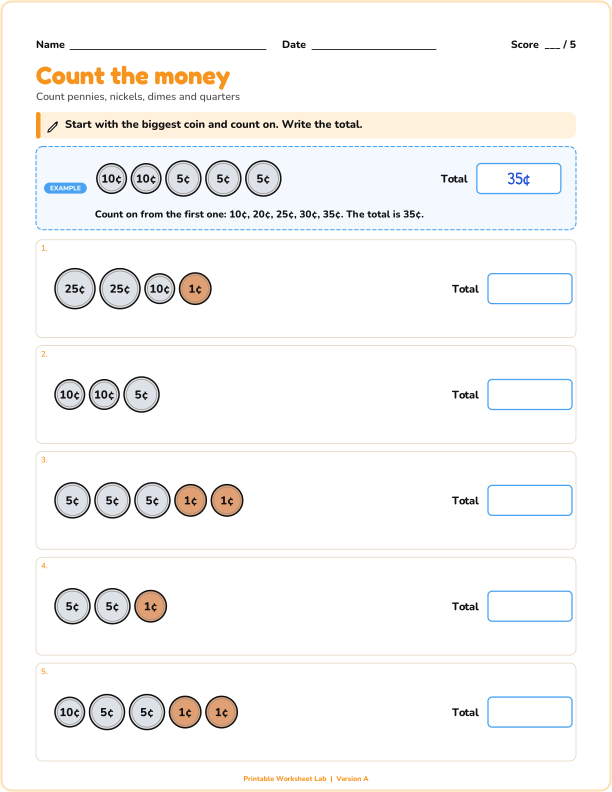
Count a set of coins and bills, circle the coins that make an amount, or find the change.
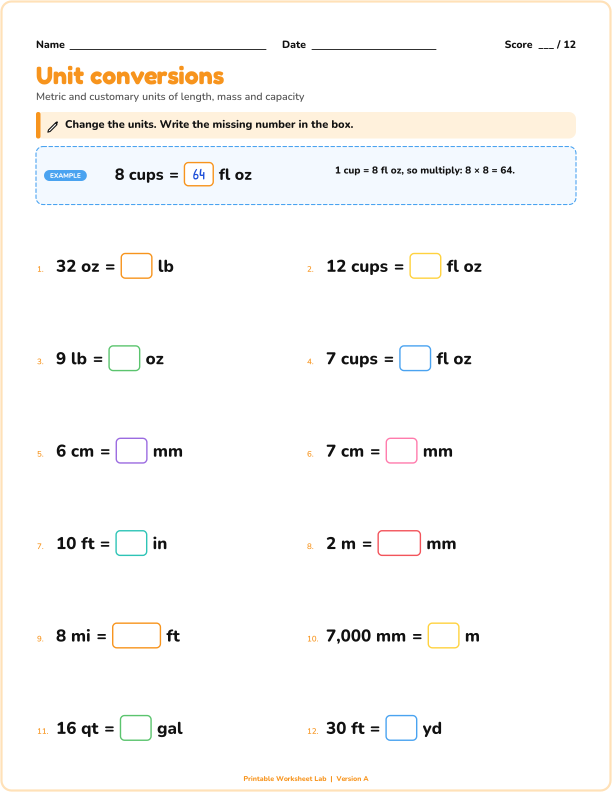
Change between metric or customary units of length, mass and capacity, one fact per row.
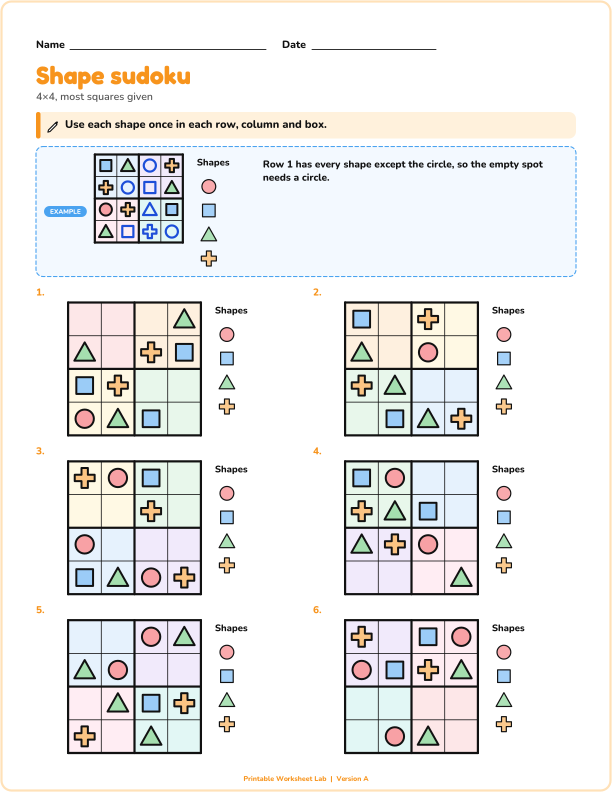
Logic grids with no arithmetic: fill each row, column and box with every shape or number once, with one solution for each puzzle.
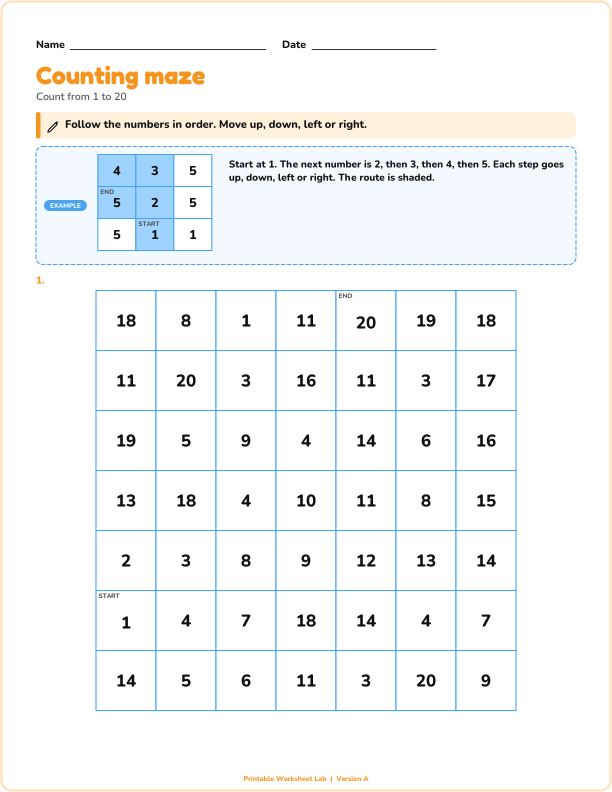
Mazes that follow the counting order: 1 to 20, or skip counting by 2s, 3s, 5s and 10s.
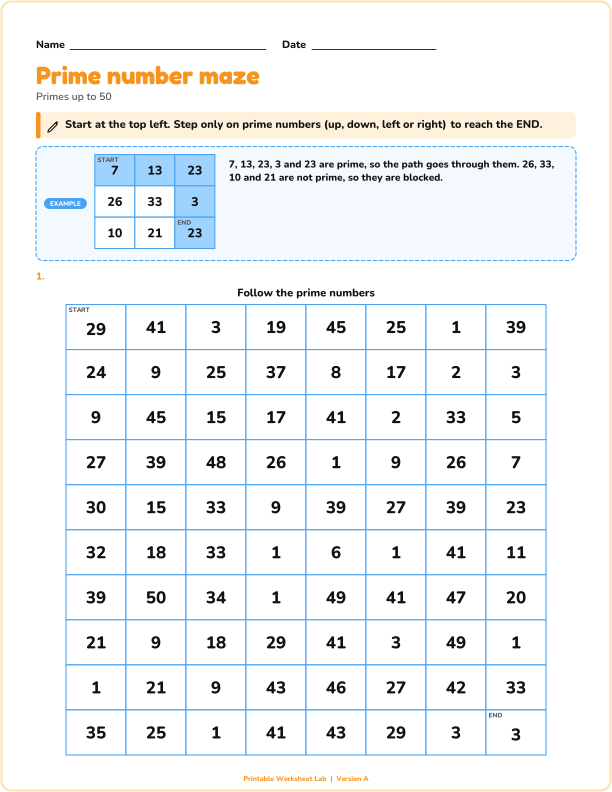
Mazes where you may only step on prime numbers, with one route and no guessing.
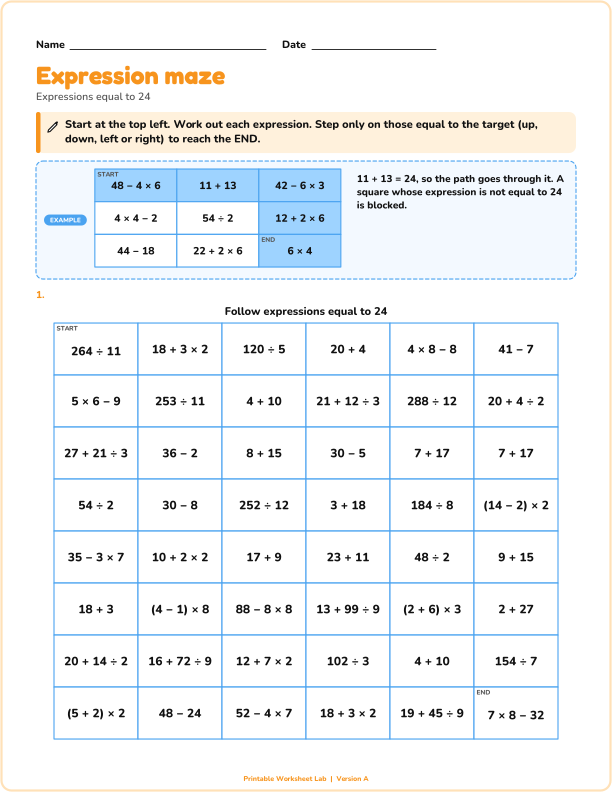
Mazes where every square is an expression and you step only on the ones equal to the target.
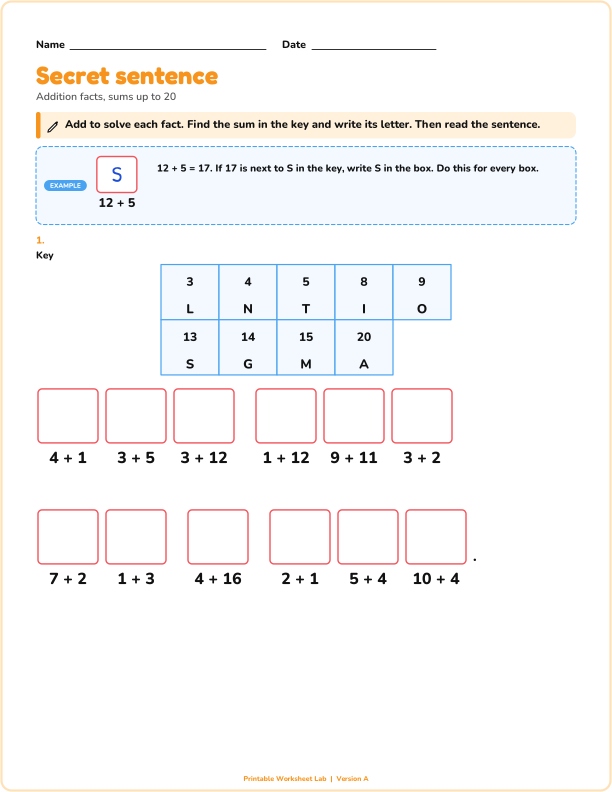
Solve addition facts to decode a short, readable sentence.
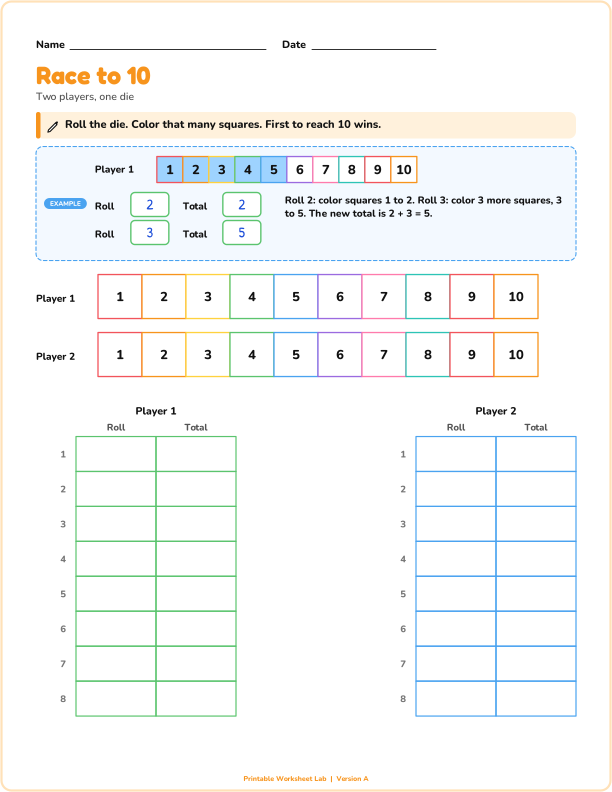
A two-player counting race with one die: roll, color that many squares and write the new total.
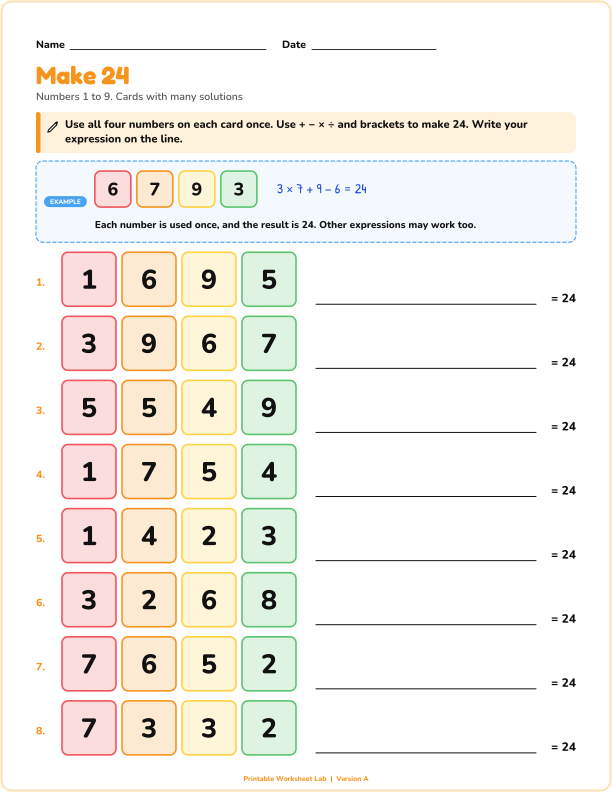
Use four numbers once each, with plus, minus, times, divide and brackets, to make 24 on cards that all have a solution.