DrillGrades 3 to 4Grades 5 to 6
Multiplication facts worksheets
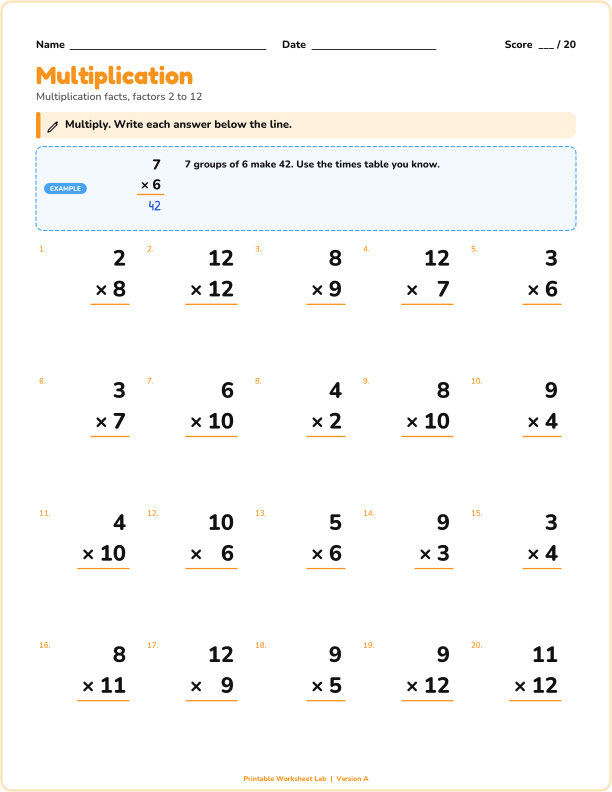
Times-table drills: one table, a range of tables, squares or anchor facts, in order or shuffled.
Facts, multi-digit methods and fluency. Printable worksheets, puzzles, games and mini books with answer keys.
Times-table drills: one table, a range of tables, squares or anchor facts, in order or shuffled.
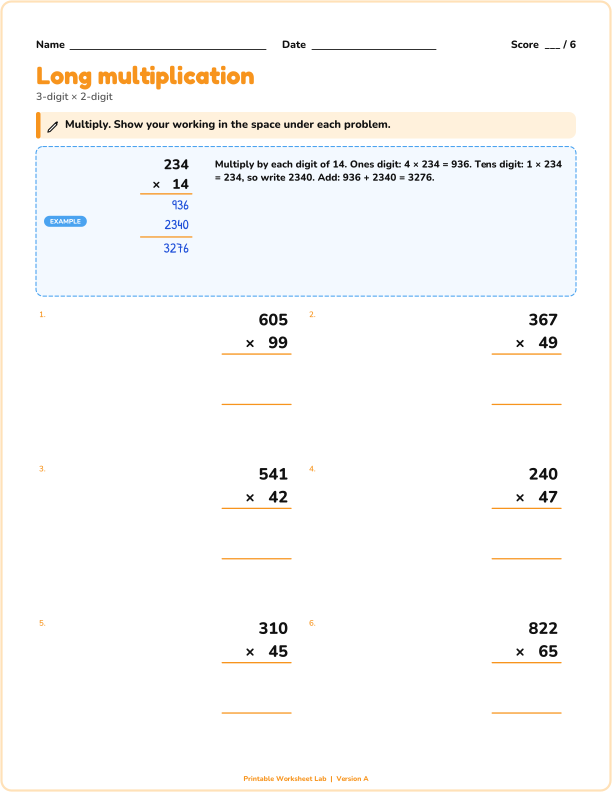
Multi-digit multiplication with room to show every partial product, from 2 × 1 digits up to 5 × 3.
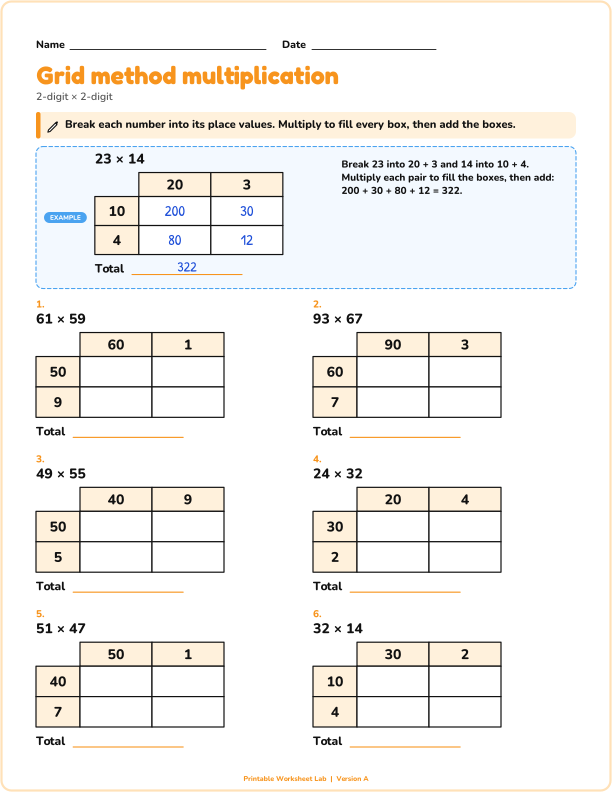
The area model: break each number into place values, fill the boxes and add them up.
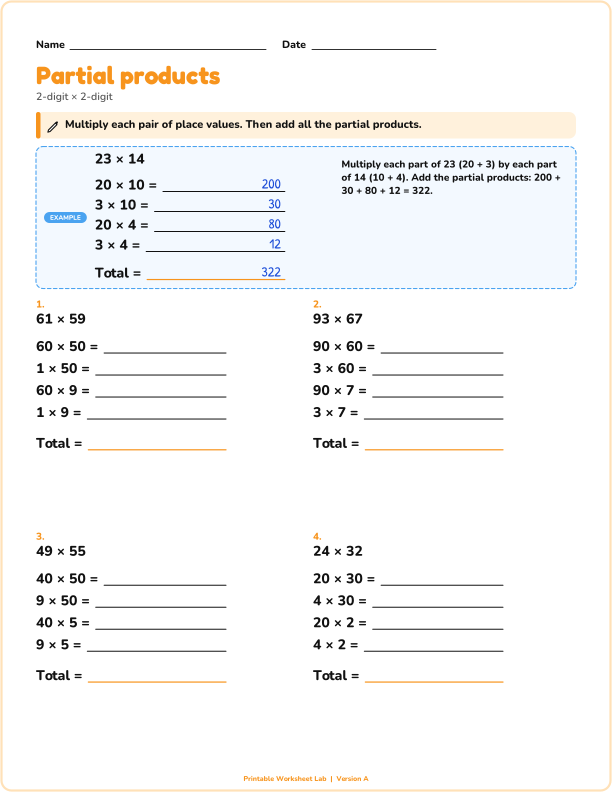
Multiply each place value pair on its own line, then add the partial products.
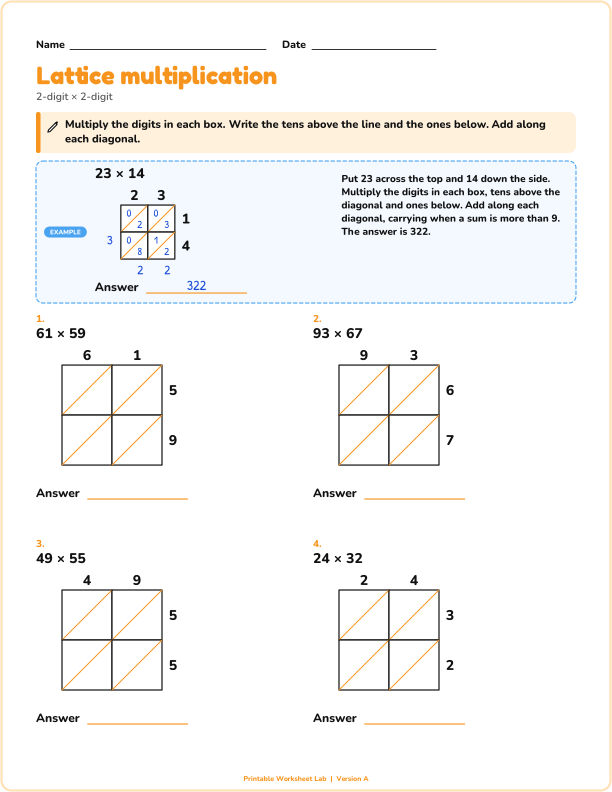
The lattice (gelosia) method: one small multiplication per box, then add along the diagonals.
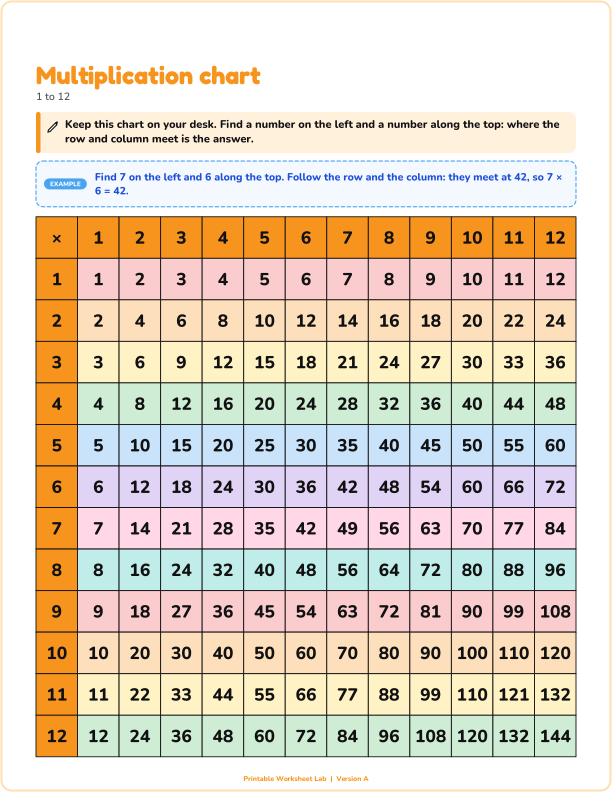
A printable times-table chart in color-coded rows, Montessori bead colors or plain, up to 12 × 12.
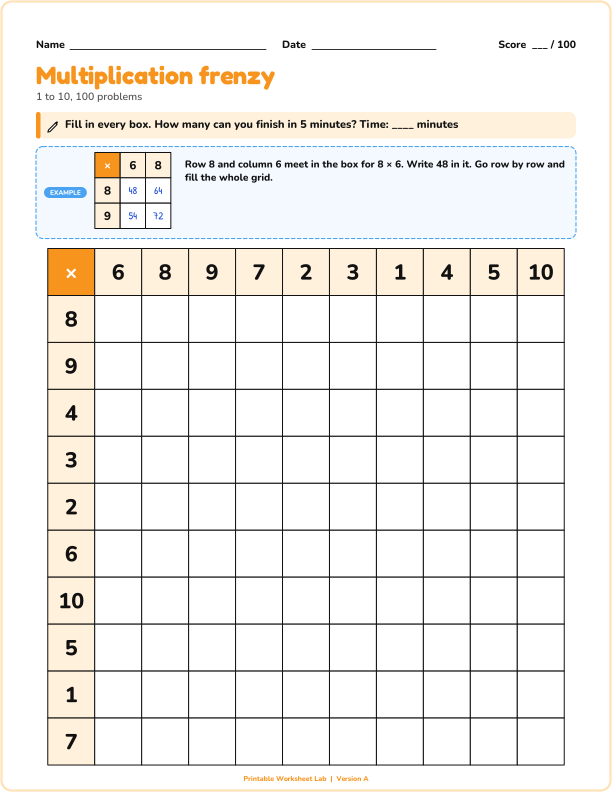
A timed times-table grid: fill in all 100 products. Headers are shuffled so every version is different.
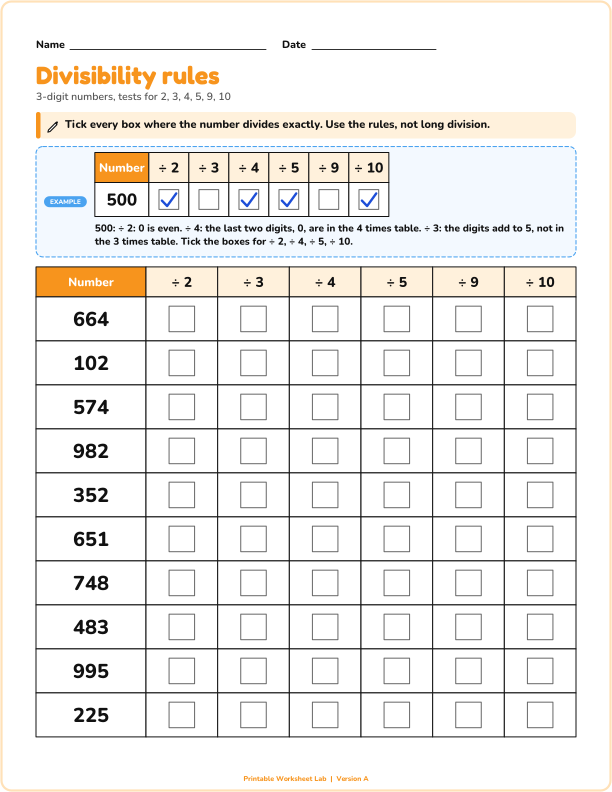
Tick the boxes for every number a given number divides by, using the rules for 2, 3, 4, 5, 6, 8, 9 and 10.
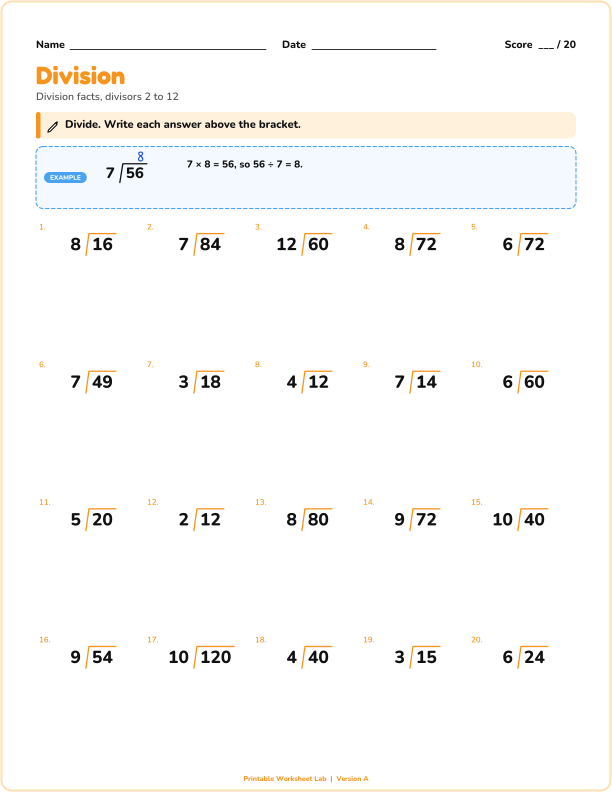
Division facts and long division with or without remainders, in bracket or inline layout.
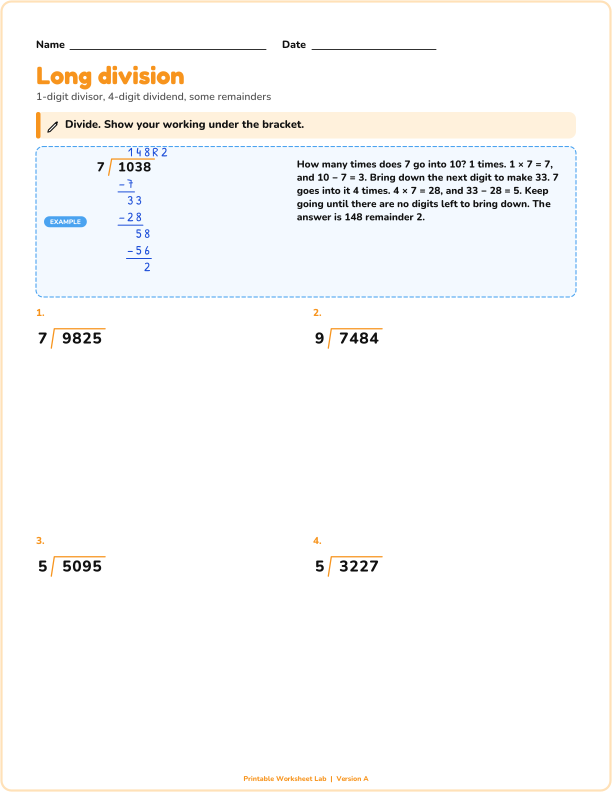
Long division with one, two or three-digit divisors, with or without remainders or decimal answers, and every step shown on the answer key.
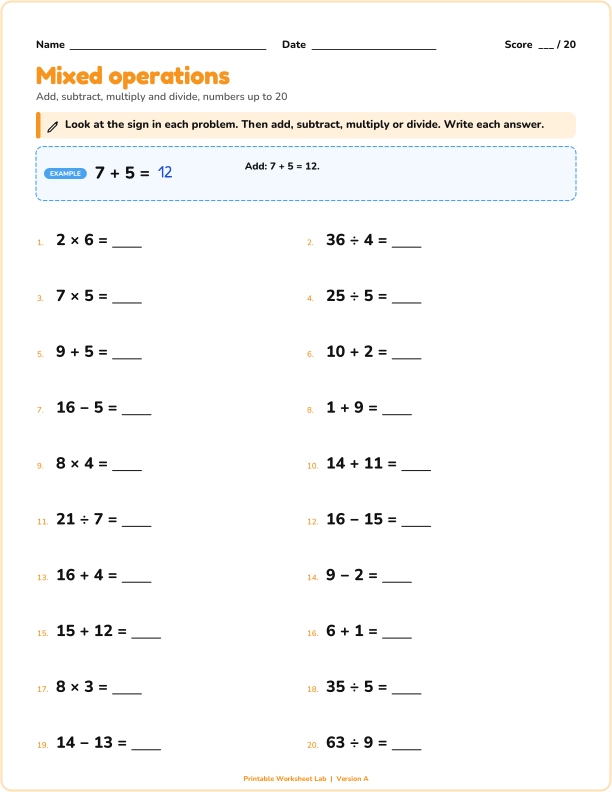
Addition, subtraction, multiplication and division on the same page: read the sign, then work the problem.
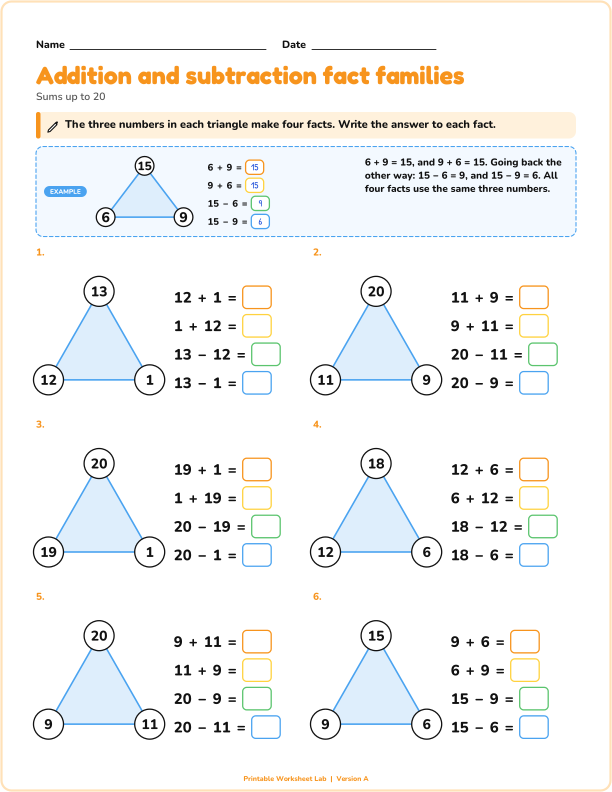
Three numbers in a triangle make four facts: two to add or multiply and two to subtract or divide.
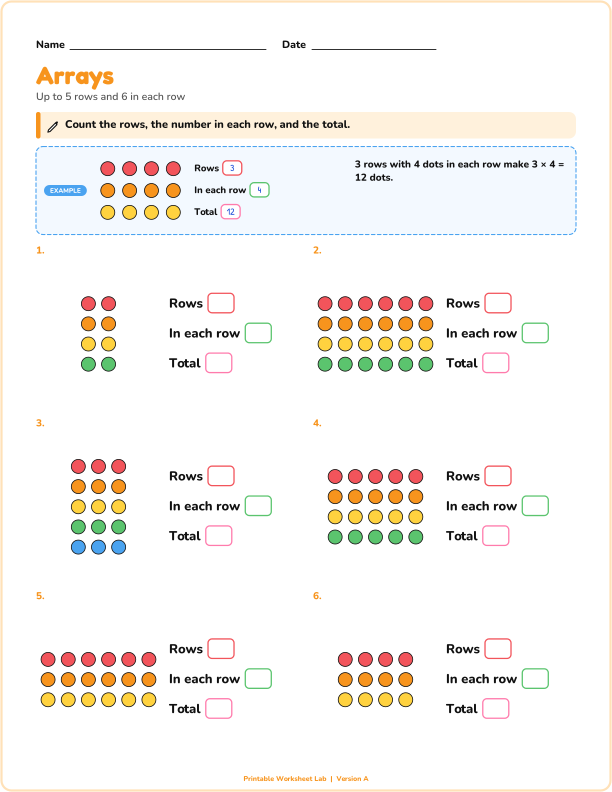
Count rows and columns of dots, or equal groups, and write the multiplication sentence that matches.
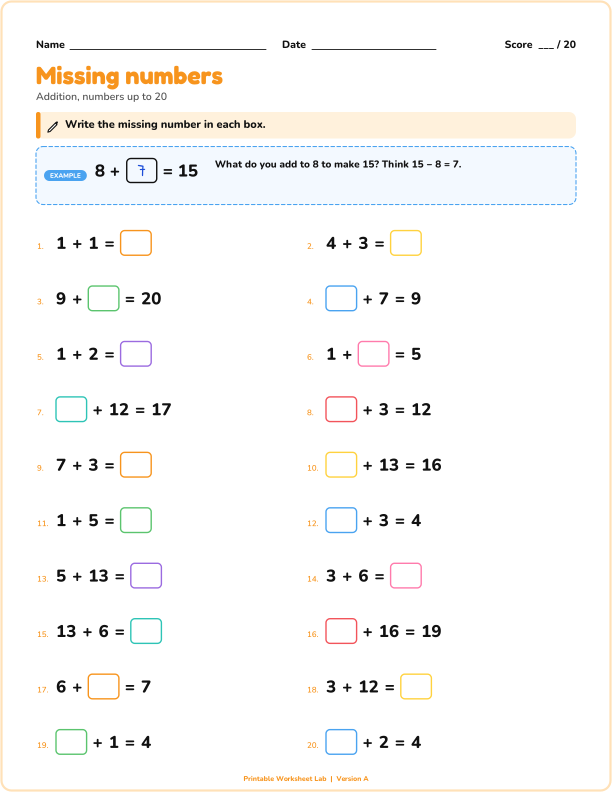
Equations with one empty box, for addition, subtraction, multiplication, division or a mix.
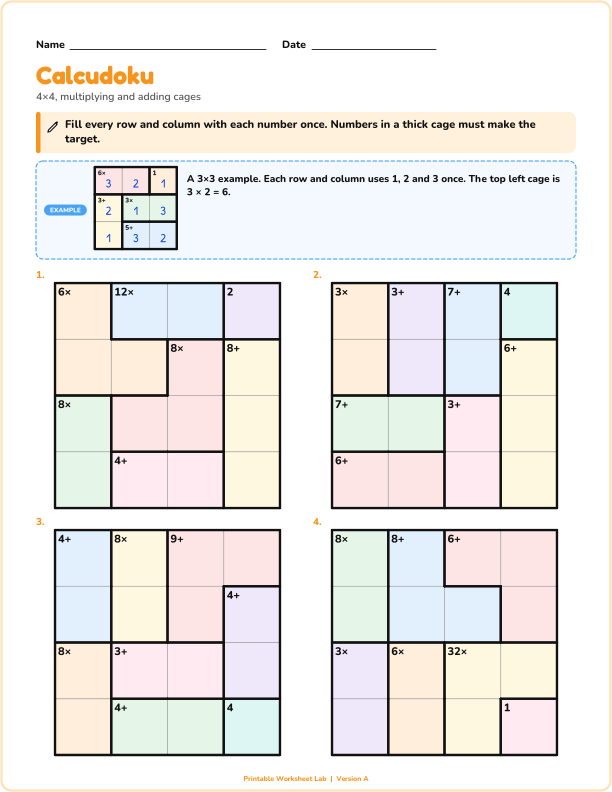
Arithmetic Latin-square puzzles: fill the grid so every cage hits its target. Each puzzle has exactly one solution.
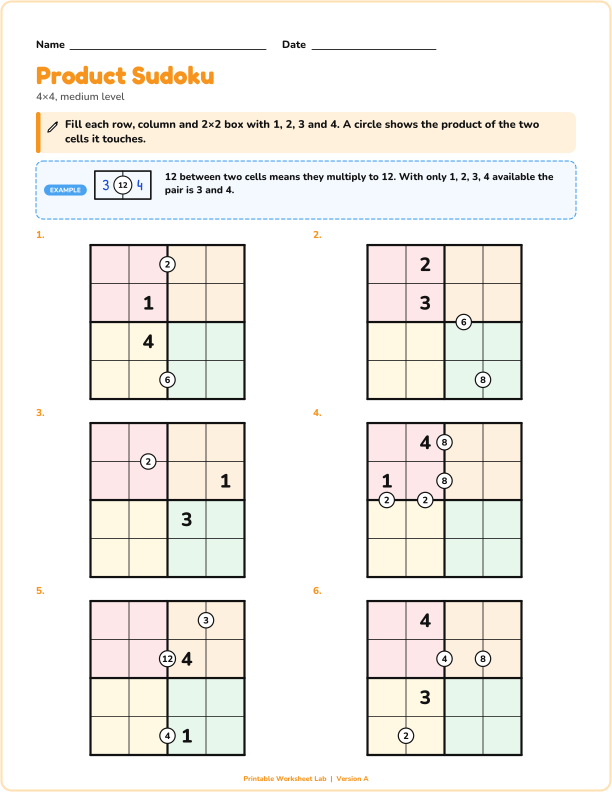
A 4×4 sudoku where circles show the product of two neighboring cells. Practices factors and logic together.
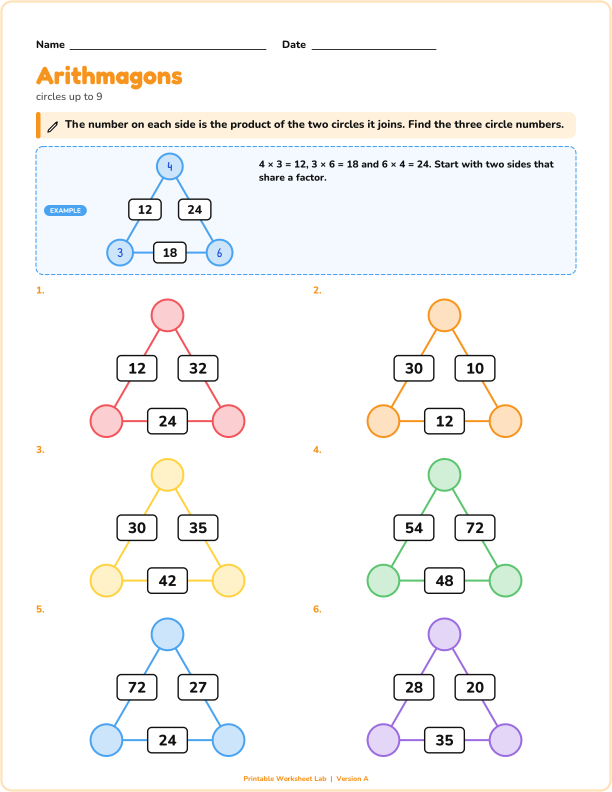
Triangles where each side is the product of two circles. Find the circle numbers.
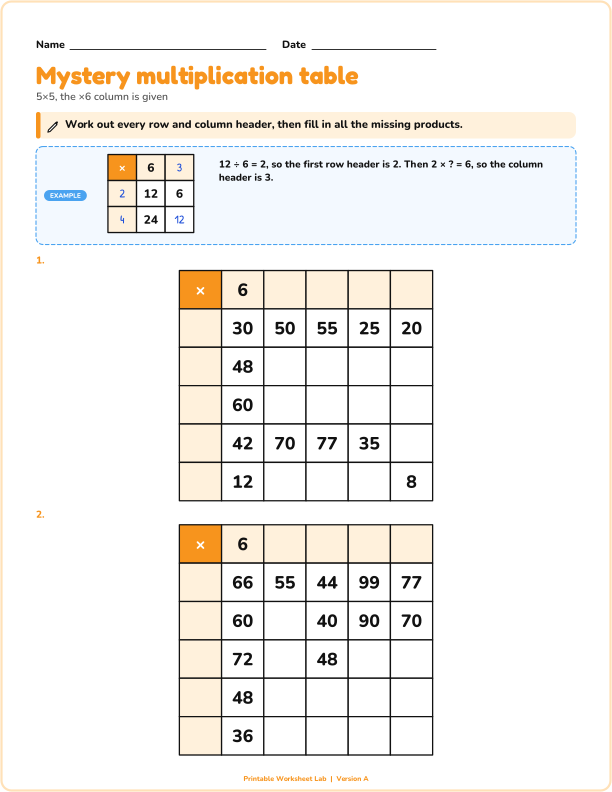
Multiplication tables with the headers hidden. Work out the headers, then fill the table.
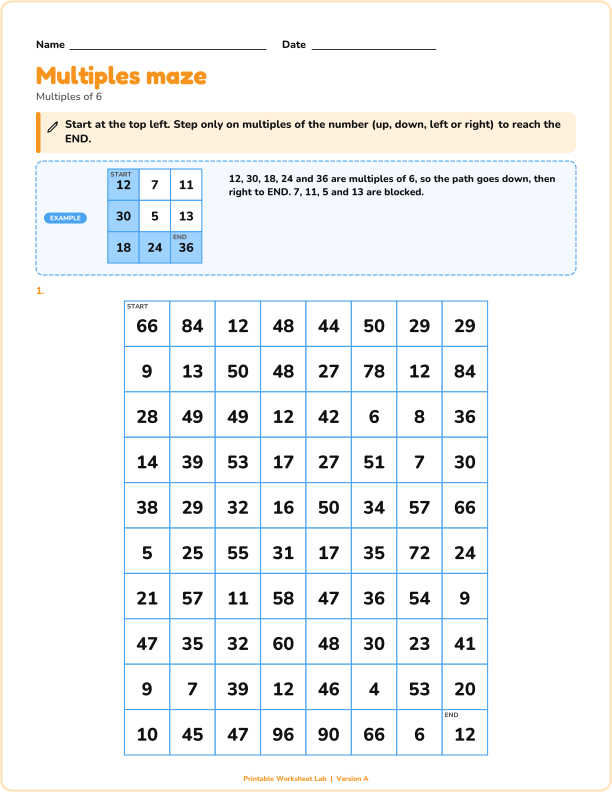
Mazes where you may only step on multiples of a chosen number. One route, no guessing.
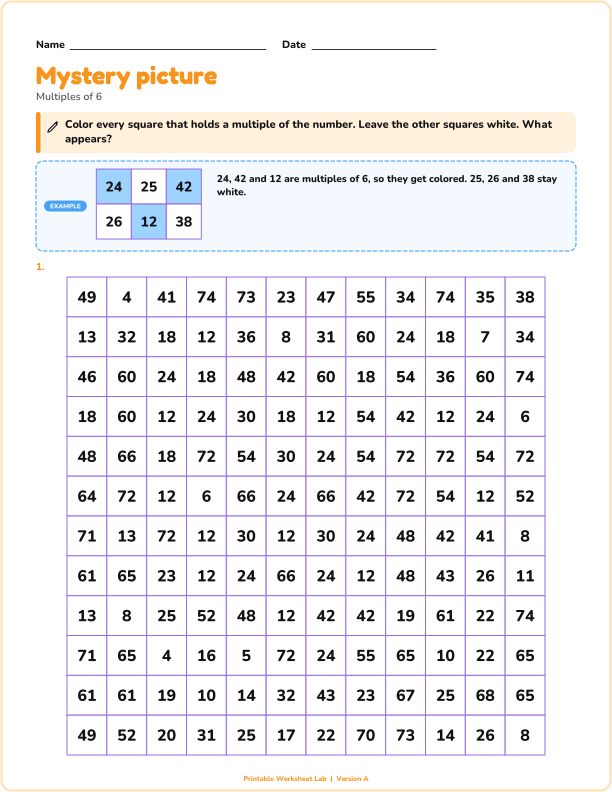
Color every multiple of a number to reveal a hidden picture.
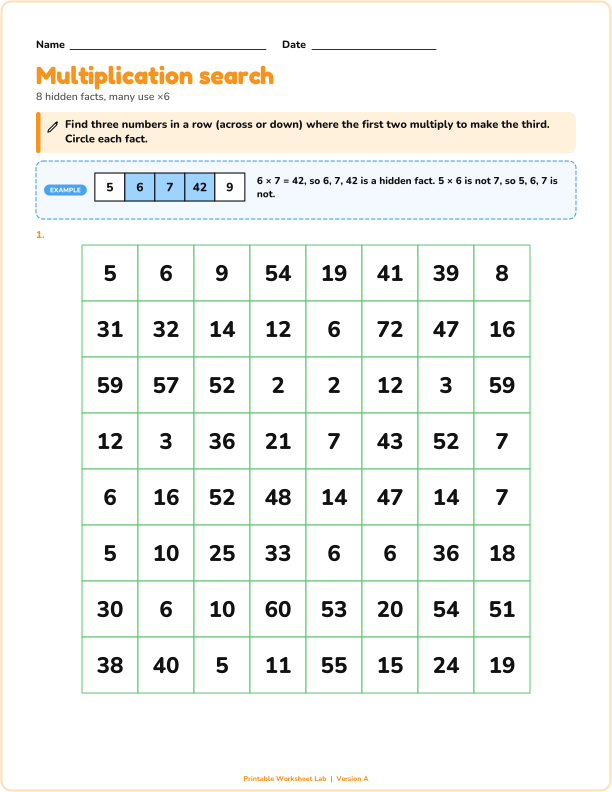
Find hidden multiplication facts in a grid of numbers: two factors followed by their product.
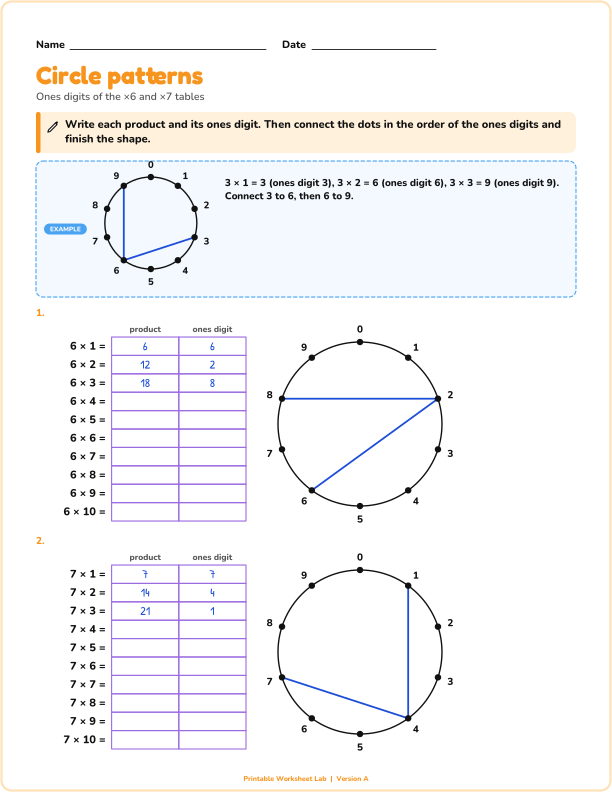
Connect the ones digits of a times table around a circle to draw a star or polygon.
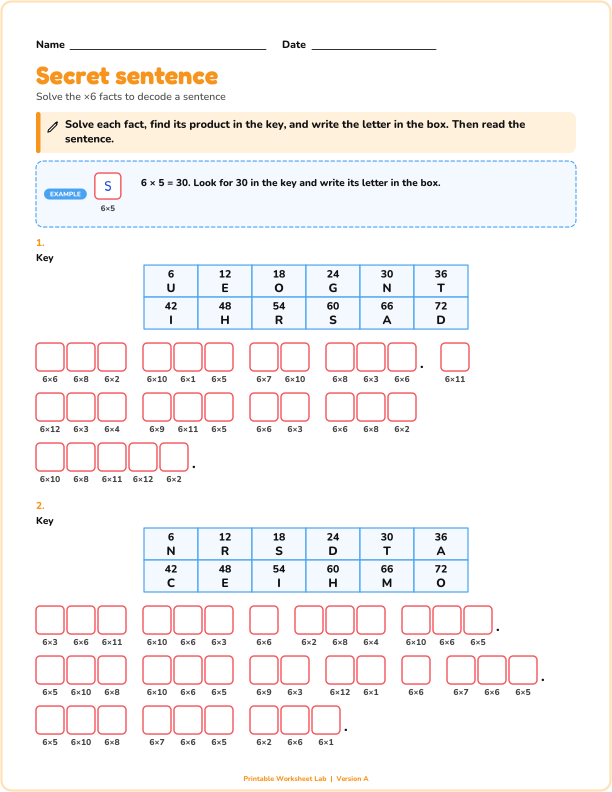
Solve multiplication facts to decode a short, readable sentence.
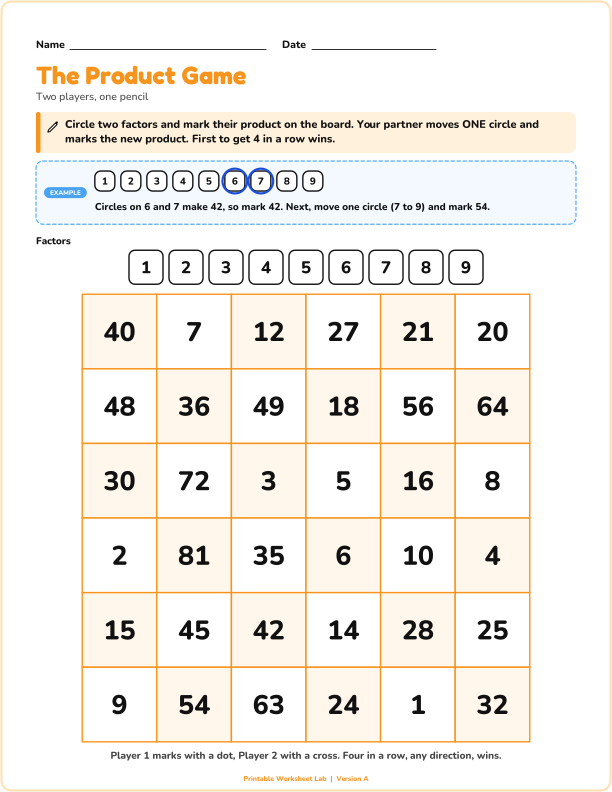
A classic two-player multiplication strategy game. All you need is a pencil.
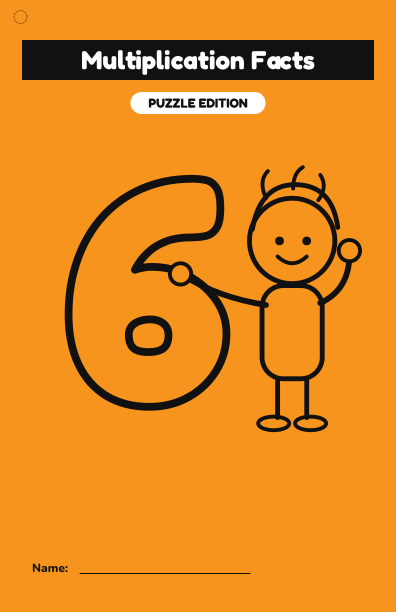
A complete 18-page print-and-fold puzzle booklet for one times table: a warm-up, eleven puzzles, a game, answer key and progress tracker.
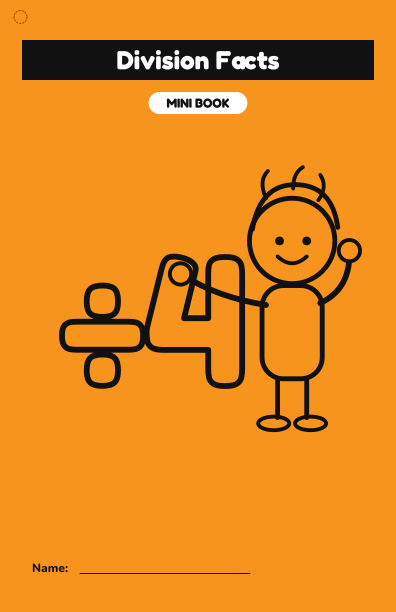
A 14-page print-and-fold booklet for dividing by one number, such as ÷4: ten activities, an answer key and a progress tracker.
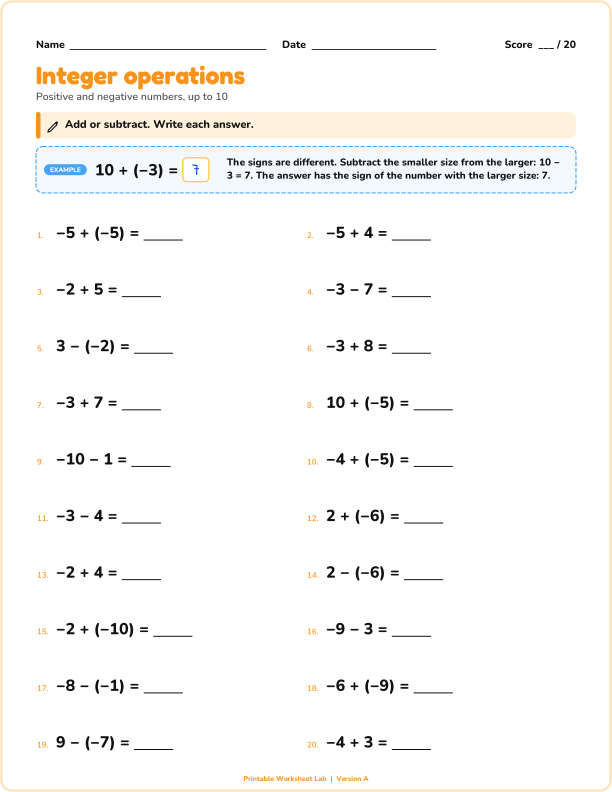
Add, subtract, multiply and divide positive and negative numbers, one operation or all four.
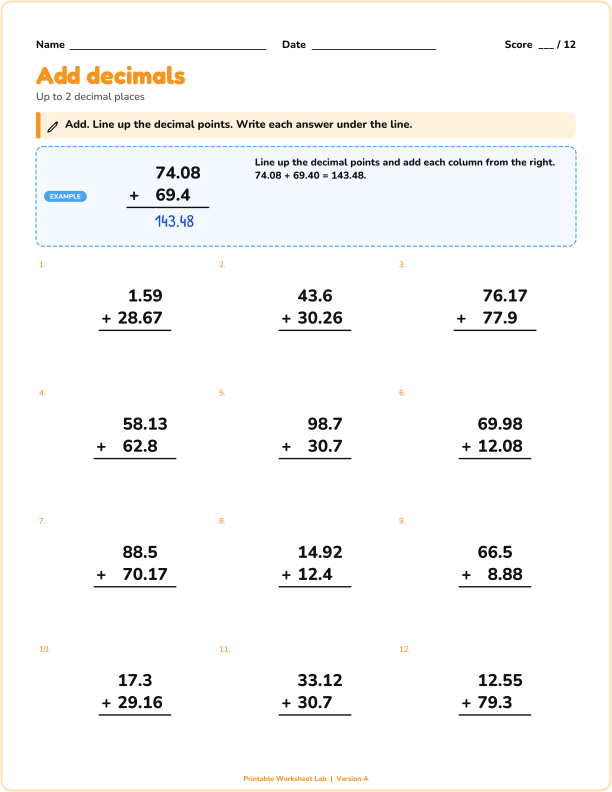
Stacked decimal addition and subtraction with the points lined up, plus multiplying and dividing decimals with exact answers.
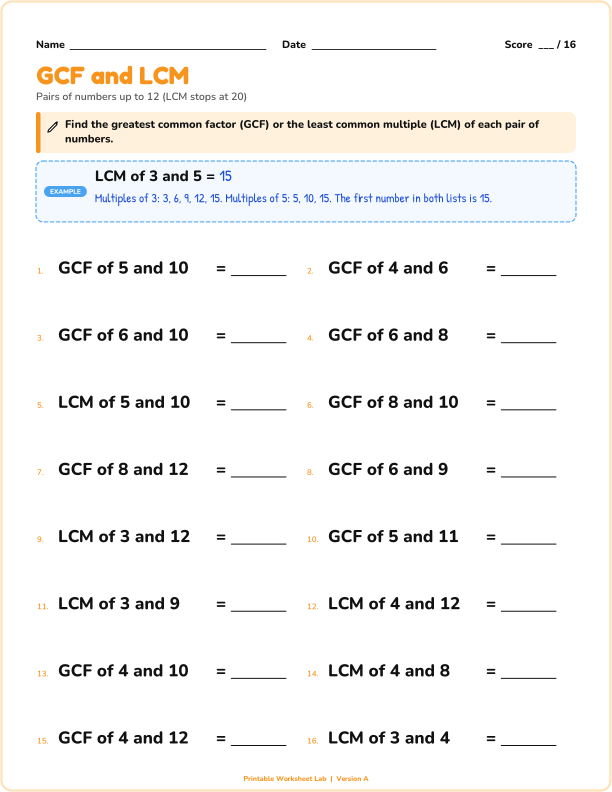
Find the GCF, the LCM, or both for pairs of whole numbers.
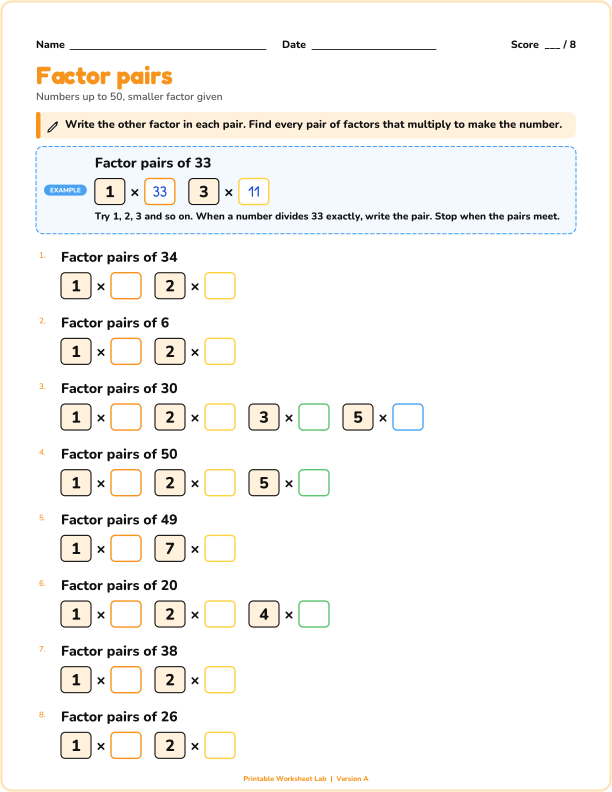
Find every pair of factors that multiply to make a number.
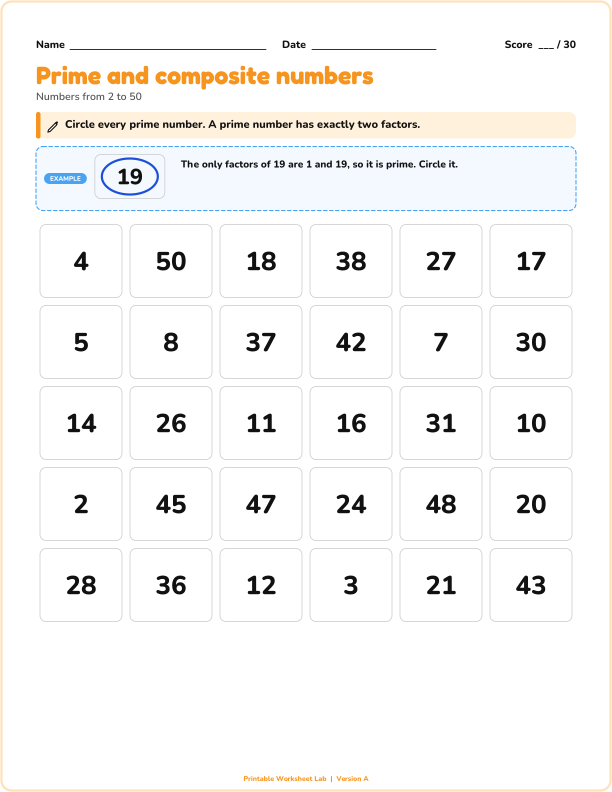
Circle the prime or composite numbers, or tick prime or composite for each number.
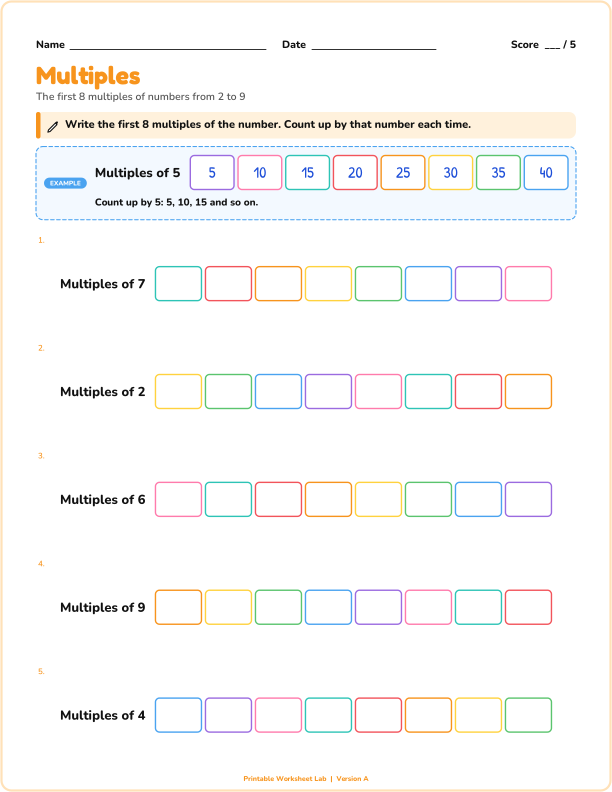
Write the multiples of a number, or the multiples two numbers have in common.
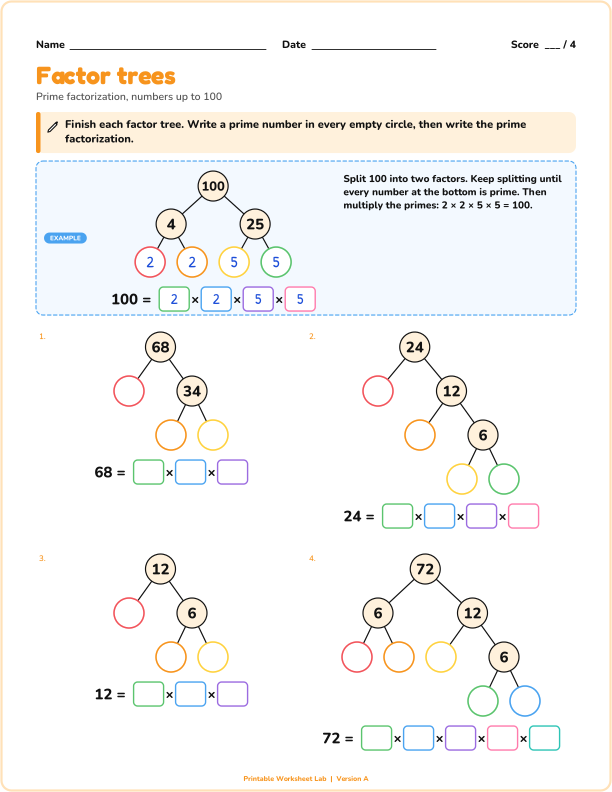
Finish each factor tree, then write the number as a product of primes.
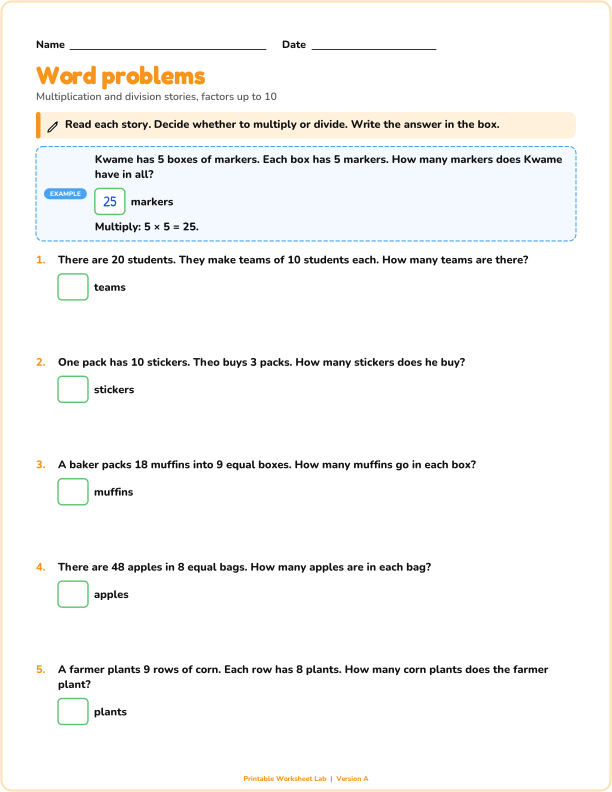
One-step stories about equal groups, rows, sharing and grouping, with factors up to 5, 10 or 12.
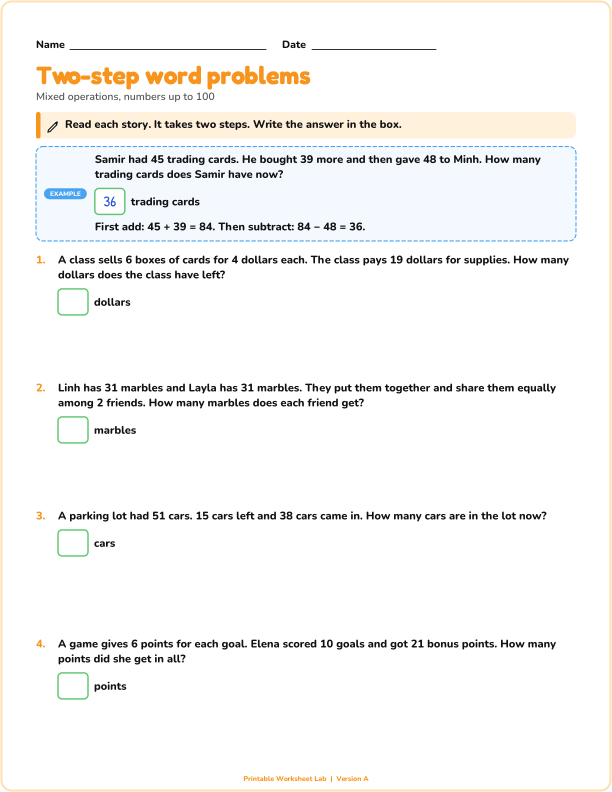
Stories that take two steps: add and subtract, multiply then add or subtract, or divide.
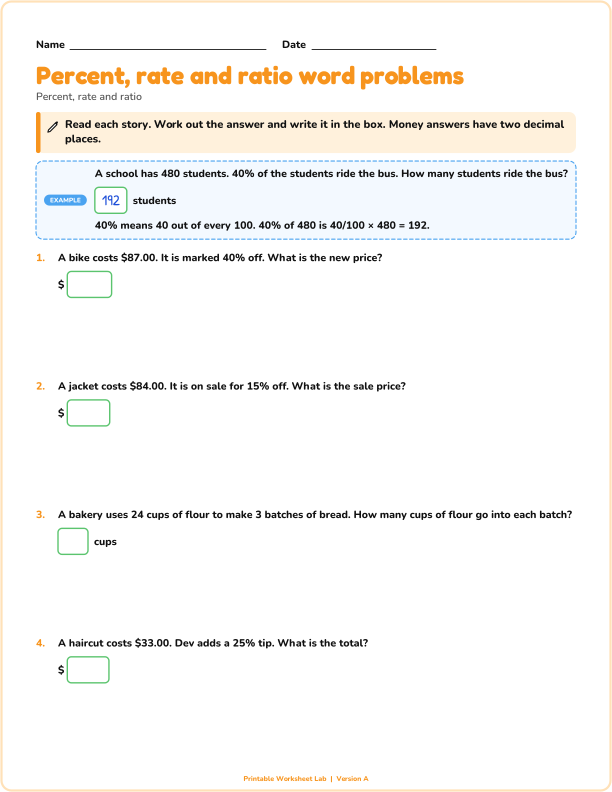
Stories about percent of an amount, discounts and tips, rates and unit rates, and ratios.
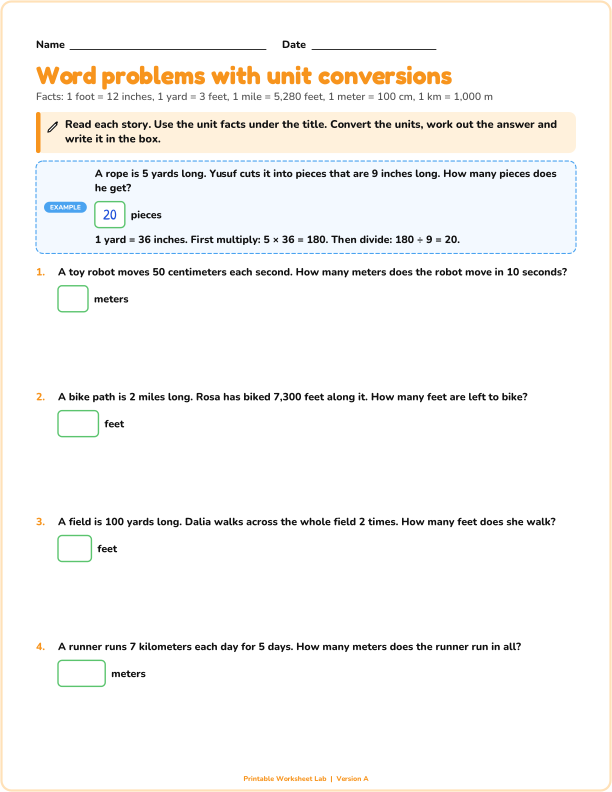
Stories that mix a calculation with a change of units: length, weight and volume, or time.
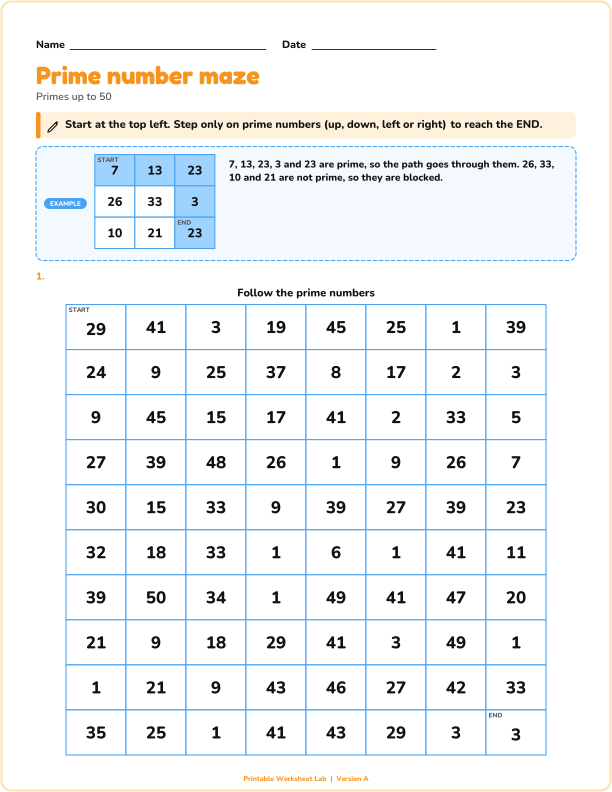
Mazes where you may only step on prime numbers, with one route and no guessing.
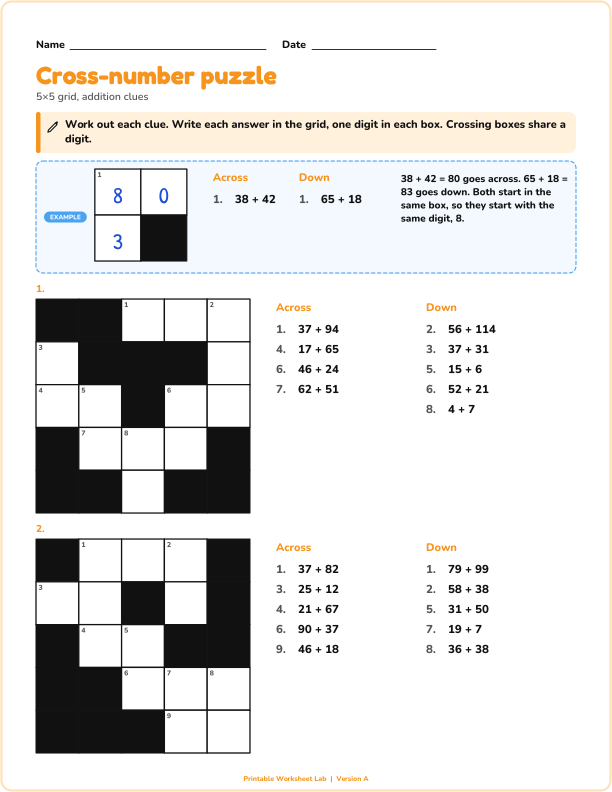
A crossword where every clue is a calculation and every answer is a number written one digit per box.
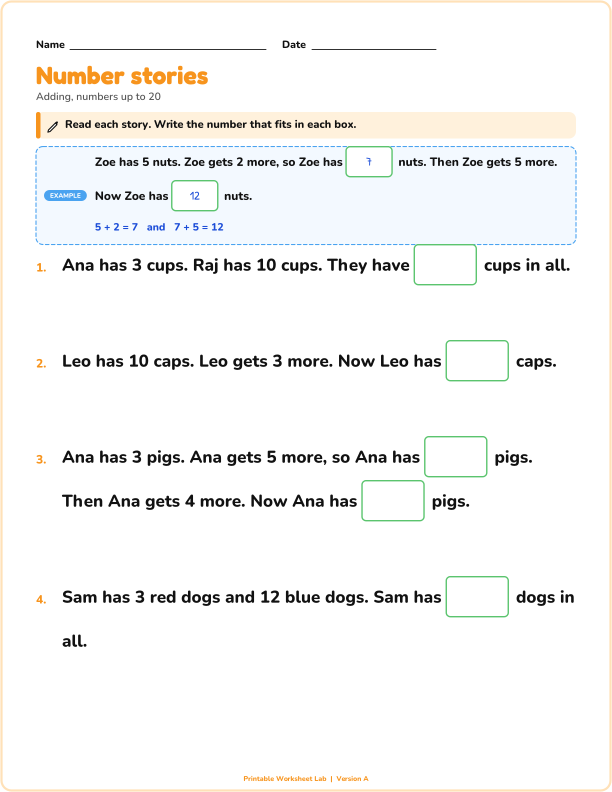
Short stories with boxes to fill: each box is the result of an addition, subtraction, multiplication or division fact.
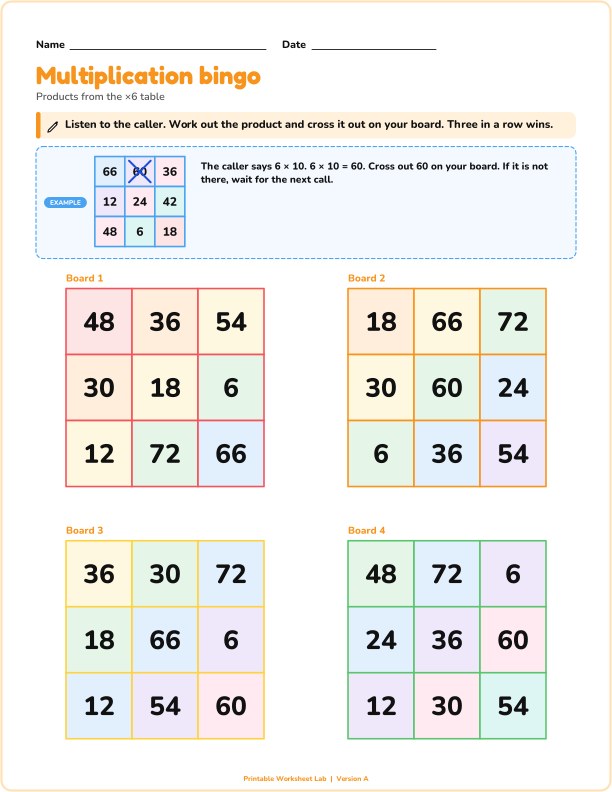
Bingo boards of products for any times table, with a caller's list of facts to read out.
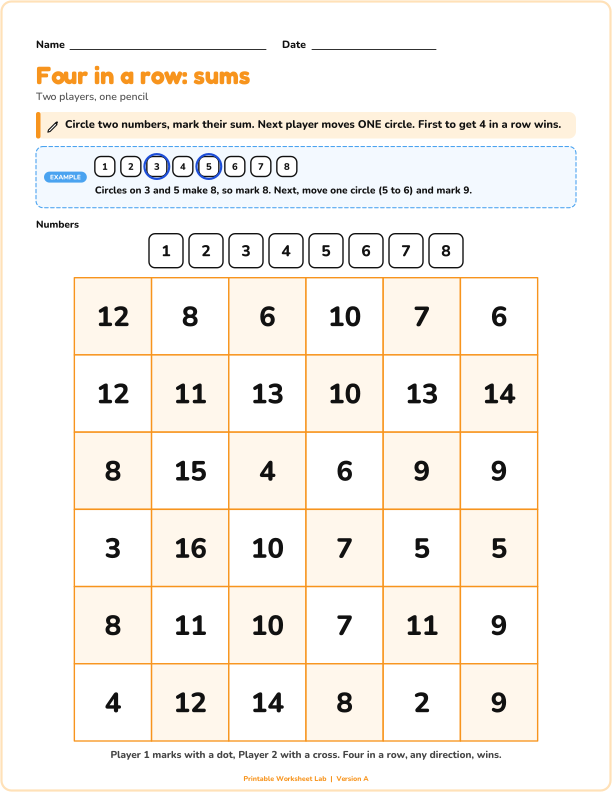
A two-player strategy game: circle two numbers, mark their sum or product, and get four in a row.
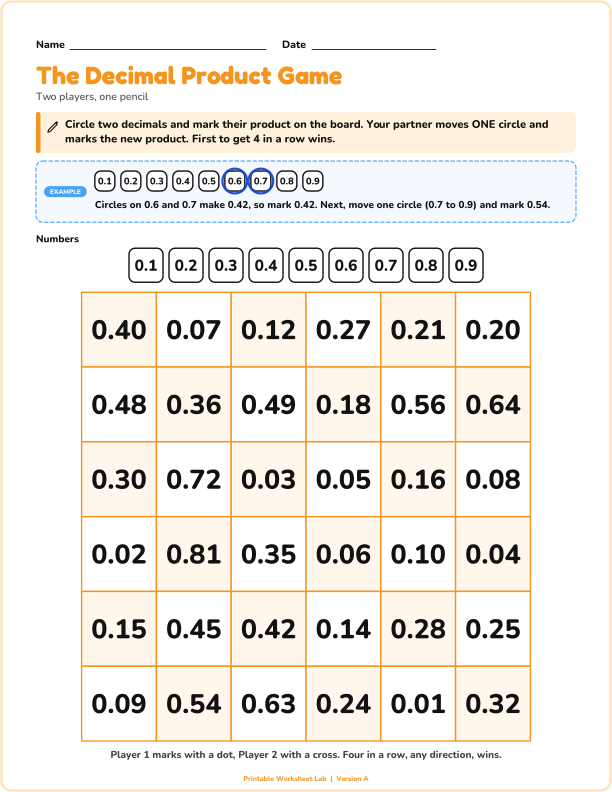
A two-player strategy game with tenths: circle two decimals, mark their product, get four in a row.