DrillPre-K to K
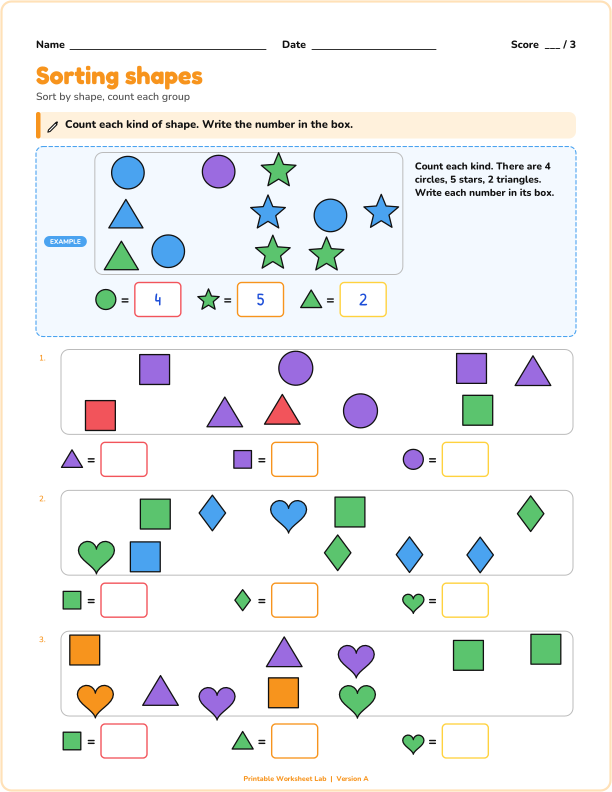
Sorting and classifying shapes
Sort a group of shapes by one attribute: count each kind, or circle every shape that matches.
A table lists the 36 outcomes of rolling two dice, and students count cells to find the probability of sums and other events.
A table lists the 36 outcomes of rolling two dice, and students count cells to find the probability of sums and other events.
You can change any of these settings above. Press "New problems" for a fresh set with the same settings, or pick Version A to Z to print different sheets for neighboring desks. The answer key always matches.
The table on each page lists every possible outcome of two events: the sums of two dice, the sums of two spinners, or a coin flip with a die roll. Students count the cells that match an event and write the probability as a fraction in simplest form.
Each page asks five questions with five different answers, and none is certain or impossible. Pick one set-up or mix all three. The answer key shows every answer in simplest form.
US Letter or A4, portrait: choose your paper size above. Print at 100 percent (actual size). Use "Black and white" for the copier, or "Color" for display pages and mini books.
Sort a group of shapes by one attribute: count each kind, or circle every shape that matches.
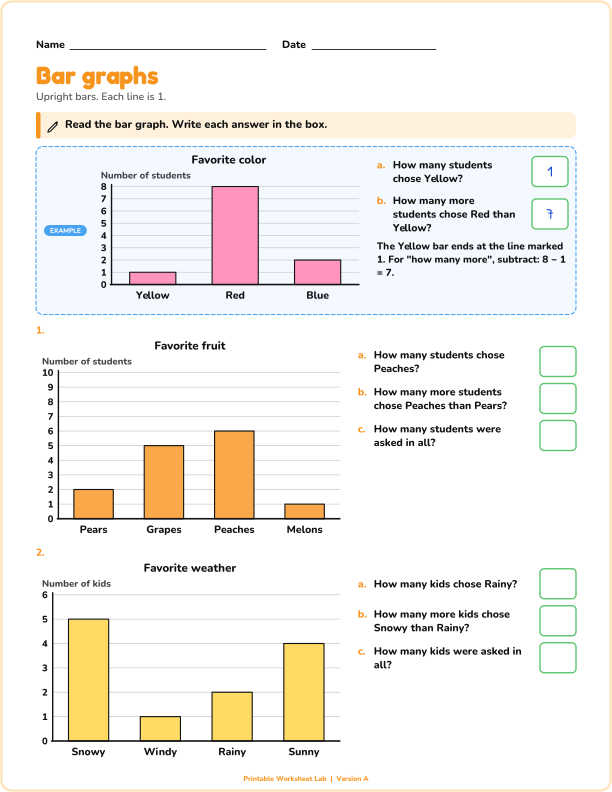
Read a bar graph and answer questions, or shade the bars to match a table.
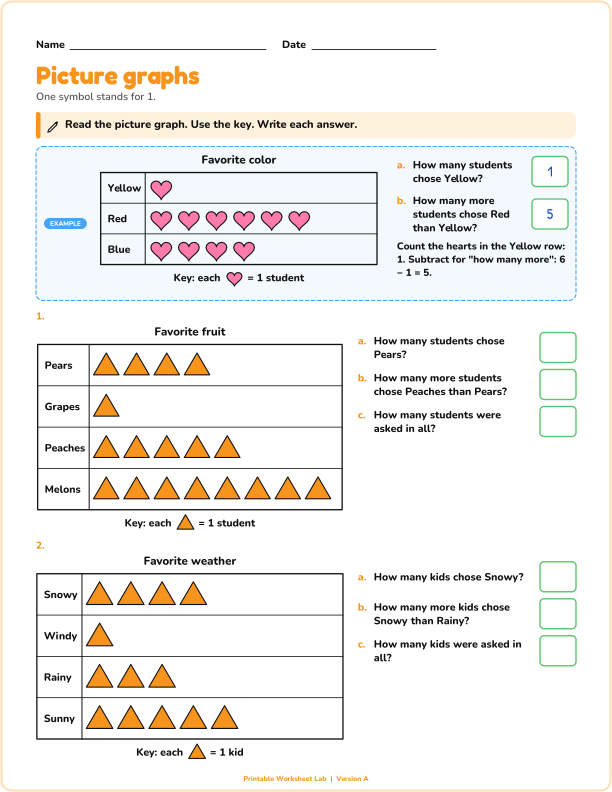
Read a picture graph where one symbol stands for 1, 2, 5 or 10 and answer questions.